"Course he isn't safe. But he's good."Mr. Beaver on Aslan, The Lion, the Witch and the Wardrobe, C.S. Lewis (1950)
That one line holds most of the genre. Christian fantasy books put the sacred inside a world that isn't ours, so it can be met fresh, without the Sunday-school varnish. The best of them work as stories first, and the faith is what you feel in your bones after you close them.
Where they differ, enormously, is how loudly the faith speaks. Some name God on the map. Some hide him so thoroughly that critics still argue whether he is there at all. Pick the wrong end of that spectrum and you either feel preached at or wonder why the book was shelved as Christian. So instead of a top-ten countdown, the list below is arranged on a dial, from "God is a character" to "God is the weather."
Scope: this page is for invented worlds and the supernatural. For faith stories set in real history, see our Christian historical romance picks; for whodunits with a pastor holding the magnifying glass, the Christian mystery books list. None of the titles below appear on either.
🎚️The visibility dial
"Supposal" is Lewis's own word. He objected when readers called Narnia an allegory and said he had imagined what Christ might do if a world like Narnia existed. That distinction is the hinge of this whole page.
God on the map
Hinds' Feet on High Places
A crippled young woman named Much-Afraid leaves the Valley of Humiliation for the mountains with the Shepherd, and he gives her two guides she does not want: Sorrow and Suffering. Every place name is a lesson, which sounds tiresome and somehow isn't. Readers in a season of fear tend to underline half of it. If allegory makes you itch, skip it. If you have ever hand-copied a verse onto an index card, this is your book.
Gentle. No violence to speak of. Reads in two evenings.
God in disguise
The Lion, the Witch and the Wardrobe
You know the wardrobe. What adults rereading it notice is how much of the book is about Edmund, a sulky boy sold out for Turkish delight, and how unearned the rescue is. The Stone Table scene is still the cleanest picture of substitution in children's literature. Start here, not with The Magician's Nephew, whatever the box-set numbering says.
All ages. A battle and a sacrificial death, told plainly.
Out of the Silent Planet
A philologist named Ransom is kidnapped and shipped to Mars, which its inhabitants call Malacandra. He expects monsters and finds three gentle species who have never fallen, ruled by a spirit-being called an Oyarsa. Earth, it turns out, is the silent planet, cut off because its own ruler went bad. It is science fiction on the surface and theology underneath, and the first book of the Space Trilogy is by far the most readable.
Adult but clean. Slow first third, worth it.
A Wrinkle in Time
Meg Murry, a stubborn misfit, goes looking for her scientist father across the universe and finds a planet where everyone bounces their balls in the same rhythm. Jesus is named in a short list of those who fought the darkness, alongside artists and scientists. That single line has drawn complaints from both directions: some readers find the book too religious, others not orthodox enough. Read it and decide which camp you're in.
Middle grade and up. Mild peril.
Old stories, your own soul
Till We Have Faces
The myth of Cupid and Psyche, retold by Psyche's older sister, Orual, a queen who writes the whole book as a legal complaint against the gods. Lewis considered it his best novel and almost nobody bought it. It is the one Christian fantasy on this page that is properly adult: possessive love, grief, and a final turn that rereads everything before it. Not a starter. A destination.
Adult. Grief, self-deception, no explicit content.
Phantastes
A young man named Anodos wakes to find his bedroom turning into a forest and walks into Fairy Land. Plot is loose and dreamlike, more a string of episodes than a story. Lewis wrote that reading it baptized his imagination, and you can see Narnia's seed in every chapter. It rewards a slow week, not a deadline.
Public domain. Dreamy, wandering, occasionally eerie.
Grace like weather
The Lord of the Rings
No church, no prayer scenes, no one says God. Tolkien still called it a fundamentally religious and Catholic work in a 1953 letter, and once you look you see it: the Ring destroyed not by Frodo's strength but by mercy shown to Gollum hundreds of pages earlier. Some readers argue it belongs on a general fantasy shelf, not a Christian one. Both camps are right, which is why it sits at this end of the dial.
Teen and up. Battle violence, no romance heat.
On the Edge of the Dark Sea of Darkness
The three Igiby children, Janner, Tink and Leeli, live under the lizard-like Fangs of Dang in a town called Glipwood. Book one is silly, with footnotes and made-up creatures, and it gets serious fast in books two through four. Faith sits in the songs and in the Maker, never in a lecture. This is the series to read aloud to a family where the parents want a story they'll enjoy too.
Family read-aloud. Peril grows across the series.
Black
Thomas Hunter is shot in a Denver alley, falls asleep, and wakes in another world. Every time he sleeps in one reality he wakes in the other, and a deadly virus is about to break out in ours. It's the only thriller-paced pick here, short chapters and cliffhangers all the way down. The allegory gets heavier in later books, so if you like book one's pace more than its symbolism, stop there happy.
Older teen and adult. Violence and menace, no sex.
🧭Where to start tonight
You want to feel something by bedtime: Hinds' Feet on High Places. It's short and openly devotional, and it doesn't pretend otherwise.
You're reading with kids: the Wingfeather Saga over The Lion, the Witch and the Wardrobe if your kids already know Narnia from the films.
You want a page-turner: Black. Then check the fantasy books hub for secular reads with the same pace.
You want the book you'll still be thinking about next year: Till We Have Faces. Give it a quiet weekend.
If none of those fit your mood, the what-should-I-read-next quiz will narrow it down in a minute, and the books-like finder takes any one of these titles and returns neighbors.
📖Faith with a supernatural edge, free on NanoReads
Christian fiction shelf →A straight answer first: NanoReads doesn't yet have a Narnia-style faith fantasy set in a fully invented world. What the catalog does have is Christian fiction where the supernatural breaks into this one, which is the same instinct at a smaller scale. Five to try, each labeled for what it actually is.
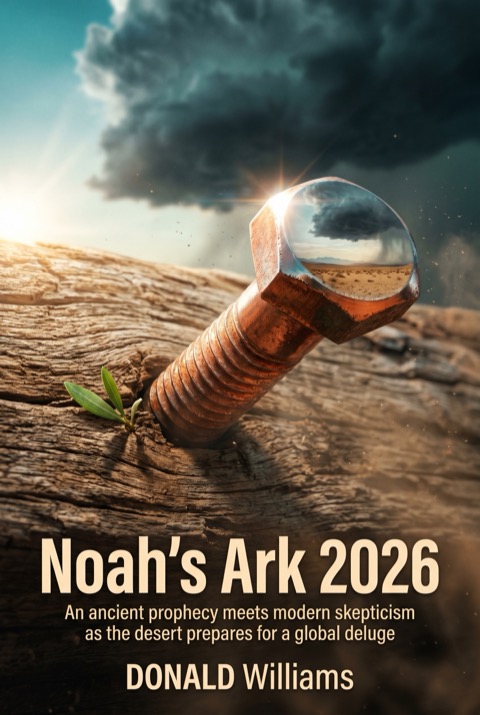
Noah's Ark 2026 sits furthest left on the dial: God speaks directly to a successful pastor in Phoenix and gives him the dimensions of an ark. He resists, gives in, and starts building in secret. It is tagged both fantasy and survival thriller, and it's the closest thing in the catalog to Dekker's "what if this happened now" premise. Chapter one is free.
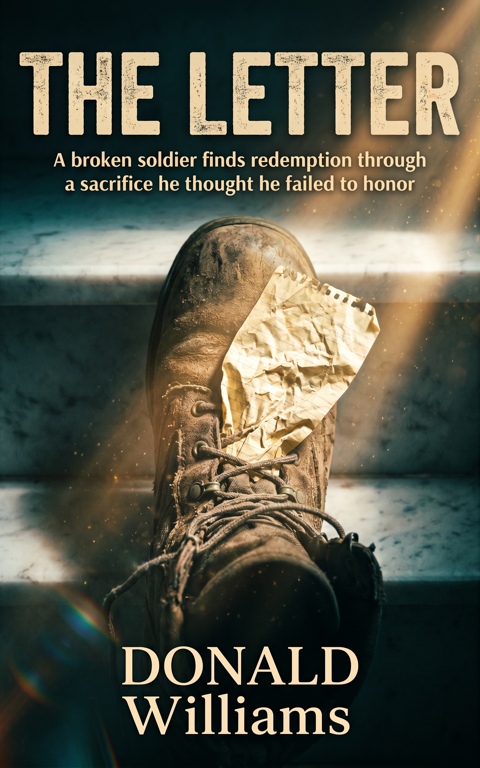
Readers who came for the spiritual-warfare side of fantasy should open The Letter. A Christian squad leader in Afghanistan takes on a furious recruit from the LA streets, and the book is tagged for ghosts, demons and PTSD alongside the war. It runs heavier than anything above, so go in expecting combat, not Narnia. The first chapter's free.
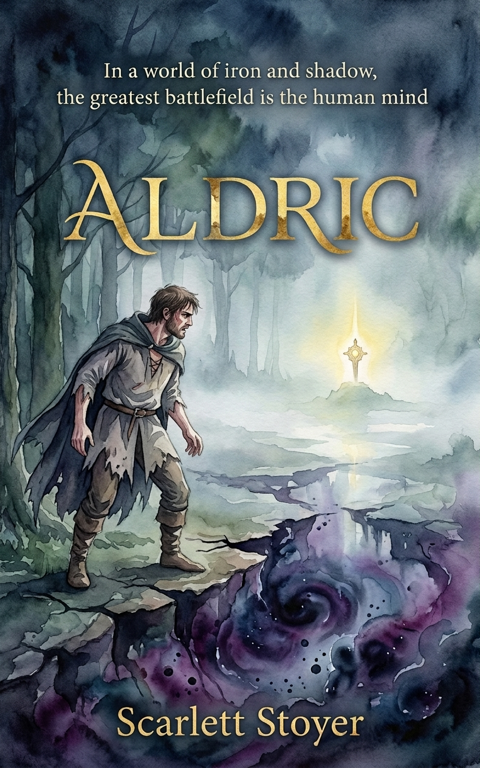
Aldric is the one we know least about. Its author calls it a Christian psychological thriller, and it is tagged medieval and paranormal; that's the whole public description. If a medieval setting with something uncanny in it is what you were hoping Black would be, try the free first chapter and judge.
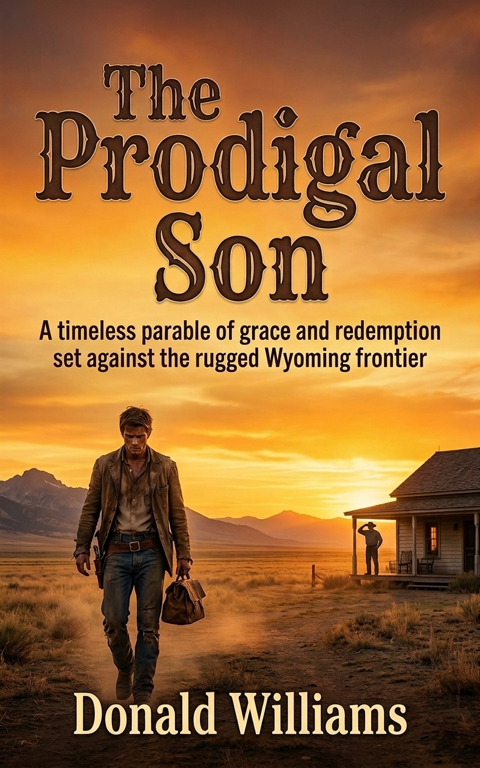
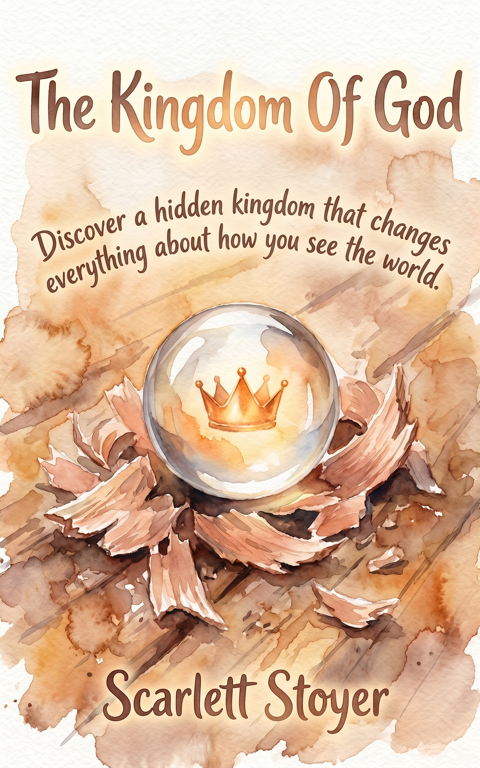
The last two aren't speculative at all, and we'd rather say so. The Prodigal Son moves the parable to the Old West, a retelling in the Till We Have Faces spirit, minus the myth. The Kingdom Of God is a short, warm teaching, not a story, and it suits a reader who just finished Narnia and wants the plain-language version of what Aslan's country was pointing at. Both open free.
For the genre's boundaries, our Christian fiction definition covers what counts and what doesn't. If faith fantasy has you curious about faith nonfiction, spiritual warfare books is the natural next stop for Peretti fans, and Christian self-help books covers the practical side.