A friend asked me last month to recommend "a fantasy book." I asked what kind. She said, you know, fantasy. Dragons optional. We went back and forth for twenty minutes before I realized the question was unanswerable, because the person who wants a cursed jungle temple and the person who wants a librarian quietly cataloguing the last words of the dead are both, technically, asking for fantasy books.
So this page is organized as a map instead of a countdown. NanoReads carries about 260 bite-size serials in total (everything from romance to cookbooks, which still surprises people), and 36 of them wear a fantasy tag, with a few more filed under urban fantasy. The six below are the ones our editors keep handing to new readers. Every chapter runs about ten minutes, and chapter one never costs anything.
Find your territory, then walk in.
Why fantasy works in ten-minute chapters
There is a stubborn belief that fantasy has to be heavy. A thousand pages, three maps, a pronunciation guide. I love those books too, but the belief gets the genre backwards. Fantasy predates the doorstopper by a few thousand years; it started as serial entertainment told in installments around fires, and the installment is still its natural shape.
Think about what actually keeps you in a fantasy novel. It is rarely the worldbuilding lecture. It is the unanswered question: what is behind the temple door, what does the locket know, where does the portal go next. A serial chapter is built around exactly one of those questions and ends on it. You get the hook without the hundred pages of throat-clearing that fantasy publishing has somehow normalized.
Short chapters also change what kinds of fantasy get written. Nobody writes a ten-minute chapter about the history of a fictional currency. What survives the format is incident: a deal with a tribe that goes wrong, a confession playing out of a locket, a rootworker who does not come home. Every book on this shelf moves, because the format punishes books that don't.
The honest trade-off: you lose some of the slow immersion a fat epic gives you, the feeling of living in a world for a month. If that is the feeling you are chasing, a serial will frustrate you, and you should go read our ranked list of the big traditional fantasy novels instead. Both lists exist because both hungers are real.
🗺️The shelf at a glance
The map, territory by territory
Five regions. Some books sit on borders, and we say so.
A note on method before the tour. These six were not chosen by an algorithm or a popularity contest. Our editors read openings, checked the tags against what the chapters actually deliver, and kept the books where the premise and the execution agree. That last part matters more than it sounds: half the fantasy serials we passed on had a great pitch and a first chapter that belonged to a different book. The six below open the way their covers promise.
Portal & parallel worlds
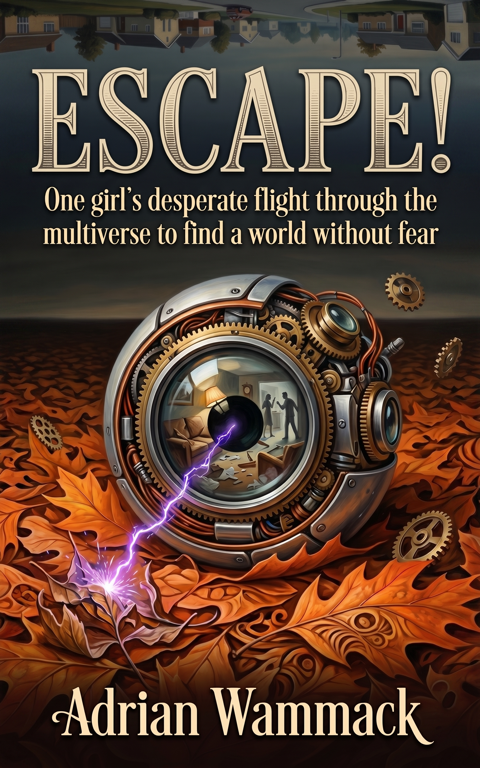
The oldest engine in fantasy: someone who needs another world more than this one, and a door that opens. Escape! by Adrian Wammack runs on exactly that engine, and runs it dark. The heroine is nine years old, the home she flees is abusive (the book does not soften this, so know it going in), and the portal never lets her choose where she lands. Each world she falls into has its own climate, geography and rules, which turns the book into a tour of miniature settings rather than one long stay. The tags read dark fantasy, time travel, post-apocalyptic, parallel worlds, which should tell you this sits closer to the grim end of portal fantasy than to Narnia.
What the premise quietly promises, and what makes portal fantasy endure, is the double reading: every strange world is also a picture of the one she left. A nine-year-old with no control over where the door opens is a child with no control, full stop. Whether Wammack lands that resonance is for you to judge, but the setup is doing more than scenery. Test the first door with a free chapter one.
Quest & treasure
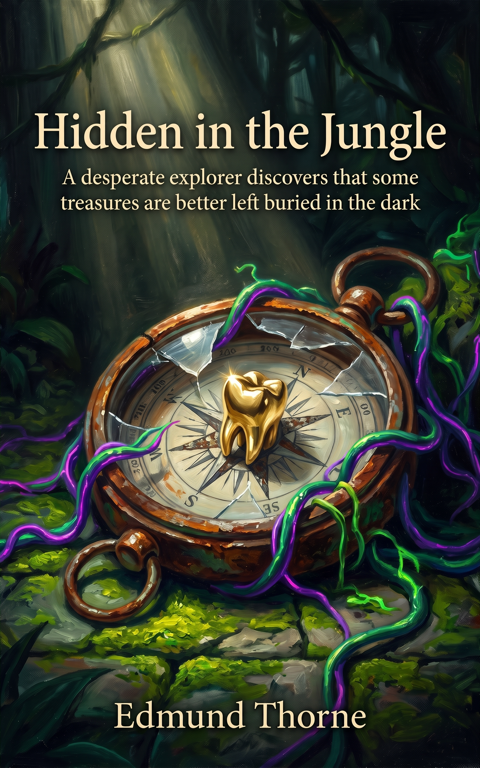
Sometimes you want a straight line: a map, a rumor of gold, a warning everyone ignores. Hidden in the Jungle by Edmund Thorne follows a Danish explorer through newly charted South America, cutting deals with some tribes and fighting others, toward an abandoned temple that every local voice calls cursed and every ledger calls full of gold. Treasure hunt, jungle, wilderness. It is the purest quest story on this shelf, and it knows what it is.
The pleasure of a quest serial is arithmetic: distance to the temple divided by chapters remaining. Thorne, who also writes the age-of-sail adventure on our historical fiction shelf, clearly enjoys the machinery of expeditions, the negotiations and provisioning and slow accumulation of dread as the warnings pile up. Read it for the same reason people rewatch heist movies. You know the temple will be reached. The how is the point. The expedition starts free, chapter one is open.
Urban & occult
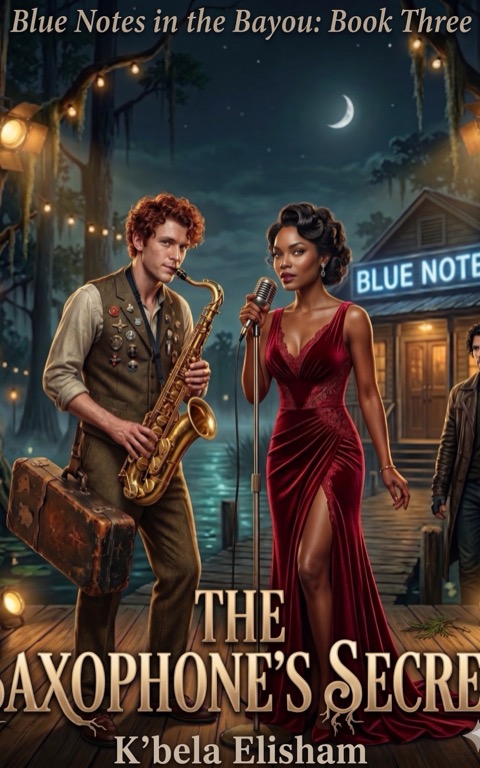
Fantasy that smells like a real city. In The Saxophones Secret by Kabela Elisham, New Orleans rootworkers are vanishing from the French Quarter, only the powerful ones, and the survivors have to ally with rivals they would normally hex on sight while the city's ley lines strain toward collapse. There is a traitor inside the alliance. Southern gothic stacked on an occult mystery, with the paranormal procedural bones showing through in a good way.
Urban fantasy lives or dies on whether the magic feels native to the place, and rootwork in New Orleans is about as native as magic systems get; Elisham did not have to invent a tradition, only aim one. The detail that sold me on the premise is the targeting: whoever is taking practitioners is taking the most powerful first, which means the survivors' alliance is an alliance of the second-rate, plus at least one liar. That is a better engine than most traitor plots start with. Walk into the Quarter, first chapter free.
Cozy, with secrets
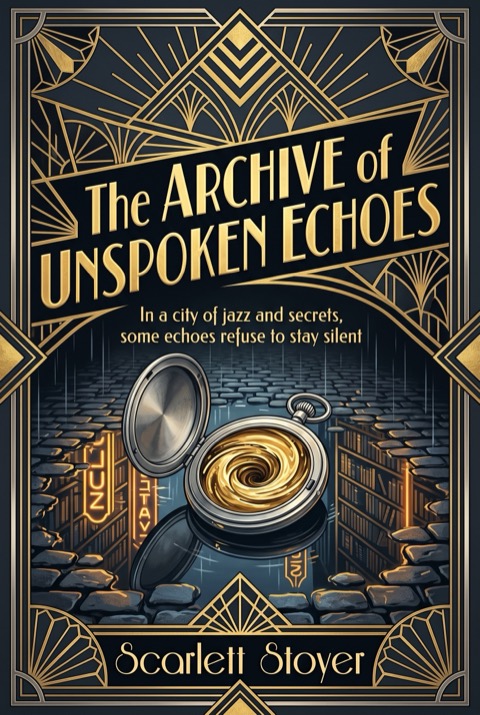
Two books share this region, both gentle on violence and generous with wonder. The Archive of Unspoken Echoes by Scarlett Stoyer gives you a quiet librarian in 1920s Chicago who manages a secret collection of objects holding the last words of the dead, until a silver locket plays a confession from a man who is still alive and walking the city. Cozy fantasy crossed with historical mystery, and my pick for anyone who has never read fantasy at all. Open the archive free.
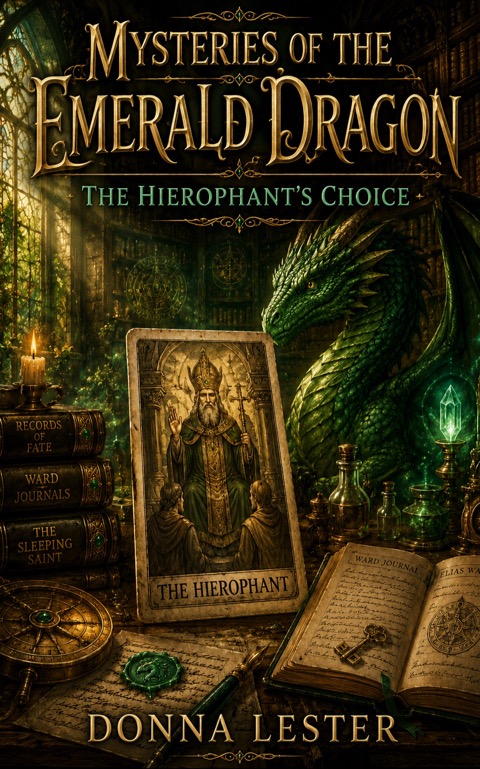
Mysteries of the Emerald Dragon by Donna Lester is the neighboring door: book two of her Archive series, picking up after the events of the first, with hidden rooms reappearing, deliberately buried records surfacing, and a tarot card (the Hierophant) announcing that a new lesson is ready. Dragons, grief, and a mystery with cozy manners. The Hierophant, if your tarot is rusty, is the card of received teaching, of institutions that decide what you are allowed to know, which is a pointed card to hang over a story about an archive that has been concealing its own history for centuries. If starting mid-series bothers you, that is fair; if it doesn't, chapter one is waiting.
Cozy fantasy gets dismissed as low-stakes, and these two books are a decent rebuttal. The stakes are not armies. They are worse: what the dead confessed, what the archive hid, who gets to keep a name. Quiet is not the same as small.
Epic in street clothes
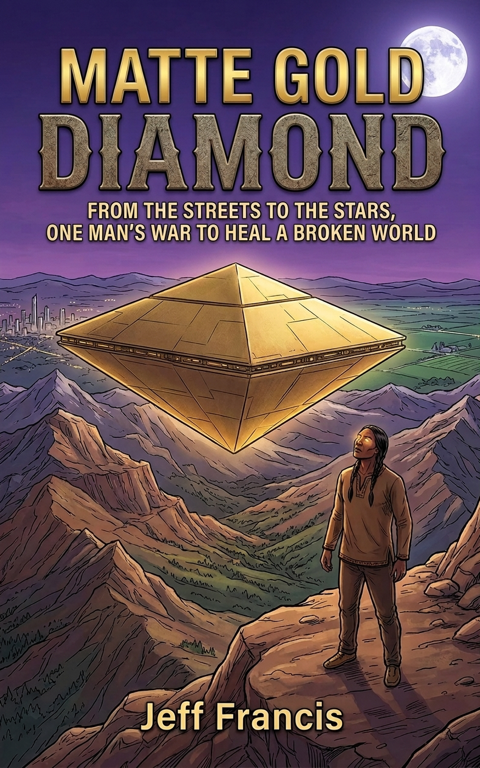
Matte gold diamond by Jeffrey Francis is the hardest book here to file, which is partly why I like it. A suppressed genius born into a poor Indigenous American family; an uncle who makes the NBA and turns his back on them when they need him most. From that contemporary wound the story bends toward heists, kidnapping, war and survival, with epic-fantasy tags riding on top of a modern premise. Expect a genre blender rather than a comfort read.
Every fantasy shelf needs one book that refuses the map, and this is ours. The epic-fantasy tag next to an NBA subplot looks like a filing error until you remember that epic fantasy is structurally just a story about a gifted nobody, a betrayal, and a long war to reclaim what was taken. Francis keeps the structure and swaps the furniture. Readers who need genre purity will bounce; readers who liked it when The Dark Tower put a gunslinger on a subway will not. See where it bends, starting free.
How to read a fantasy tag list
Every book on NanoReads carries tags, and in fantasy the tags are a contract. Learning to read them saves you from the wrong book faster than any review. A short decoder, using this shelf as the worked example:
Dark fantasy promises that the magic will cost something and the book will not look away while it is paid. On Escape! it is a warning label as much as a genre label. Take it seriously; when we say a book carries heavy themes, we mean it, and if we are not sure what a book contains we say that instead of guessing.
Cozy fantasy promises the opposite: nobody you love will be tortured, the violence stays mostly offstage, and the ending will not punish you for hoping. It does not promise nothing happens. The Archive books are cozy and still deal in death confessions and stolen names.
Urban fantasy promises a real city with a hidden layer, and it fails when the city is generic. Ask one question of any urban fantasy: could this story move to another city without changing? If yes, skip it. The Saxophones Secret could not survive being moved out of New Orleans, which is exactly the compliment.
Portal fantasy promises a threshold and a return question: can you go home, and do you want to? Its anime cousin isekai usually answers "no, and that's fine." The darker western tradition, where Escape! lives, keeps the wound of the left-behind world open on purpose.
Epic promises scale: wars, generations, a world remade. When you see it on a contemporary-set book like Matte gold diamond, read it as a statement of ambition, the author telling you the small opening is going somewhere large.
Four things people get wrong about fantasy
"It's all medieval Europe." Not one book on this shelf is set in medieval Europe. We have 1920s Chicago, the French Quarter, a South American jungle, a chain of parallel worlds and a contemporary America with a heist problem. The castles-and-kings mode is one province of the genre that marketing departments mistook for the whole country.
"You have to commit to a series." You have to commit to a chapter. That is the entire wager on this page. The serial format exists so you can find out in ten minutes whether a book is yours, instead of finding out on page 200 of a trilogy you bought in a box set.
"Fantasy is escapism, and escapism is soft." Read the first territory above and tell me it is soft. A portal story about an abused child is using the fantastic to look directly at something most realist fiction politely walks past. Tolkien had the right answer to this charge decades ago: the people most hostile to escape are jailers.
"The magic system is the point." Sometimes. But notice what the books here actually hinge on: a confession, a betrayal, a curse everyone was warned about, a traitor in an alliance. Magic sets the price of things. People still do the buying. If a fantasy book bores you, it is almost never the magic's fault.
🚪 Never read fantasy? Three doors
Skip the thousand-page epics for now. Serials were built for testing the water.
The gentle door. The Archive of Unspoken Echoes. A mystery, a librarian, a locket that should have stayed quiet. If you like tea with your magic and you want to be eased in rather than thrown, start here. It is also the book we hand to mystery readers who claim they don't like fantasy; the case structure gives them something familiar to hold while the strangeness accumulates.
The adventure door. Hidden in the Jungle. If you grew up on Indiana Jones and want that feeling in ten-minute pieces, this is the one. No homework, no glossary, a temple at the end of the road.
The deep end. Escape!. Heavy themes, strange worlds, no guarantee of comfort. Some readers should start here precisely because it proves fantasy is not all elves and banter, and those readers usually know who they are.
Still stuck? Our what-should-I-read-next quiz takes about a minute and does not care how you answer the dragons question. Or feed a book you already love into the books-like finder and see what the catalog throws back.
Where fantasy borders other shelves
Fantasy is the biggest fiction shelf on NanoReads after romance, and it leaks at every border. Readers who liked the machine-and-magic feel of our stranger entries usually get on well with the best sci-fi books of 2025 list. If it turns out the part of fantasy you love is really the dread, the horror shelf shares more DNA with territory one than either genre admits. Younger protagonists and faster openings live on the YA fantasy shelf, where three of the books above also appear. And if what you actually wanted all along was magic plus a love story, that is a different hub entirely; the paranormal love story list is the honest place to start, and the dark romance hub is where the morally gray immortals hang out.
For the traditionally published canon, Sanderson and Jemisin and the rest, we keep a separate ranked list: the best fantasy books to read right now. This page is for the serials you can start in the next sixty seconds.
One scenario we see constantly, because it describes half our editors: it is 11pm, you finished a fat fantasy novel two days ago, the next book in that series is eight months away, and everything else on your shelf feels like commitment. That gap is what a serial shelf is for. Start something free, read one chapter, and either it carries you to midnight or it cost you nothing. The catalog behind this page is wider than most people expect from a reading app, roughly 260 serials across fantasy, romance, thrillers, horror, YA, plus a genuinely odd nonfiction wing with self-help and cookbooks in it. The point being: when the fantasy well runs dry some night, the building has other floors.
🧭Nearby shelves
Questions readers actually ask
Are these full novels or serials?
Serials, written in short chapters you can read in about ten minutes each. Some are complete, some are still publishing new chapters. Each book's page shows where it stands.
What is the gentlest entry point on this shelf?
The Archive of Unspoken Echoes. It is cozy fantasy crossed with a 1920s mystery: low violence, high wonder, and a librarian heroine who would rather be shelving than sleuthing.
Is there romantasy on this page?
Not on this shelf. The books here are quest, mystery and portal fantasy without a central love story. If you want romance with your magic, start with our paranormal love story list or the dark romance hub.
Does free actually mean free?
Chapter one of every serial on NanoReads is free to read, no card and no trial. If the book hooks you, you keep going; if not, you have lost ten minutes.
Do I need to read Mysteries of the Emerald Dragon's first book first?
It helps but is not required. The book opens after the events of book one and tells you so; readers comfortable picking up context as they go can start with the free first chapter and decide. If mid-series entry bothers you on principle, begin with The Archive of Unspoken Echoes instead, which shares the cozy-mystery register.
Why is a book with an NBA subplot on a fantasy shelf?
Because its author tagged it epic fantasy and the story earns the scale the tag implies. Matte gold diamond is a genre blender: contemporary premise, fantasy architecture. We flag it as the shelf's wildcard rather than pretending it is a standard quest story.