It is 1892. A taxidermist nobody will hire anymore has taken the only work left to him, digging rare peat out of an Appalachian valley for a wealthy collector, when his spade knocks against a hollowed tree trunk. Inside the trunk is a woman. Preserved. And within days she has begun to copy his heartbeat.
That is the opening situation of one of the seven serials on this shelf, and it is also the entire argument for historical fiction: a date, a place, and a problem that could only happen then. Move that story to the present and it dies. The valley gets cell coverage, the collector gets arrested, the woman in the tree becomes a podcast. Set it in 1892 and every escape route is closed, and the dread has room to breathe.
Good historical fiction books are time machines with the safety off, and the ones on this page were built for ten-minute rides. NanoReads is a serial platform, meaning short chapters, free first chapters, and stories that earn the next installment or lose you. Thirteen of our roughly 260 serials carry the historical fiction tag. These seven are the ones we would put in your hands first.
Why the past binges so well
Historical fiction has a reputation as the slow genre, the one you read in an armchair with a blanket and a long weekend. The reputation comes from the page count of the famous examples, not from the material. Strip the genre to its working parts and it is built almost entirely out of serial fuel.
Consider what an era actually gives a storyteller. Letters that take months to arrive, so a misunderstanding can rot into a tragedy. Illnesses nobody can name. Reputations that die from one whispered sentence. A sea voyage that removes every character from help for half a year. These are constraint machines, and constraint is what cliffhangers are made of. When the cabin boy's ship is attacked in Shadows in the Mist, no one is coming, and the chapter break knows it.
The modern thriller has to work hard to strand its characters; the writer disables phones, arranges storms, invents dead zones. The historical novel gets stranding for free. That is the quiet reason two of the scariest books on NanoReads are set in 1892 and an alternate 1777, and it is why this shelf converts thriller readers more reliably than any brochure about "immersive period detail" ever will.
And there is the other pleasure, the one this page unapologetically romanticizes: texture. Tar and hemp on a gun deck. Peat smoke in a valley with one road in. The specific rattle of a silk loom you have stood beside for nine hours. A serial chapter is short enough that texture never becomes wallpaper; you get one room of the past at a time, fully furnished, and then the door shuts behind you.
🕰️ The timeline these books walk
Read this shelf end to end and you cover something like seven hundred years. Some readers pick an era and stay; the ones we recognize as our own kind hop, medieval to 1920s to the deck of a man-of-war, chasing the moment a period clicks into focus. The itinerary, in period order rather than shelf order:
The medieval world. Aldric, a psychological thriller with faith at its center, set in the age of cold stone and colder confessions.
1777, sideways. Dr. Shrimply: Out of Time drops a combat medic from the year 3026 into an alternate American Revolution. Deliberately unfaithful history, and gleeful about it.
The age of sail. Shadows in the Mist rides a British man-of-war toward the Spanish colonies, tar and gunpowder and a fourteen-year-old learning fast.
1892. The Echo of the Blackwood Still, the Appalachian valley from the opening of this page. Gaslight-era America at its most remote.
The 1920s. The Weight of Watered Silk, where the roar of the twenties is the roar of mill machinery, heard by a worker who cannot speak but can read a ledger.
2026. Two books, American Patriotism and Noah's Ark 2026, treat the present as history being written. Purists can argue with us in the FAQ-shaped section below; we kept them because the historical instinct, the sense of an era observed, is the same.
If you want the past invented rather than researched, our fantasy shelf keeps a 1920s Chicago where a librarian archives the last words of the dead. The border between the shelves is thinner than either genre admits.
📜The shelf, annotated
Numbered for convenience, not a verdict. Start wherever the century pulls you.
-
Free start
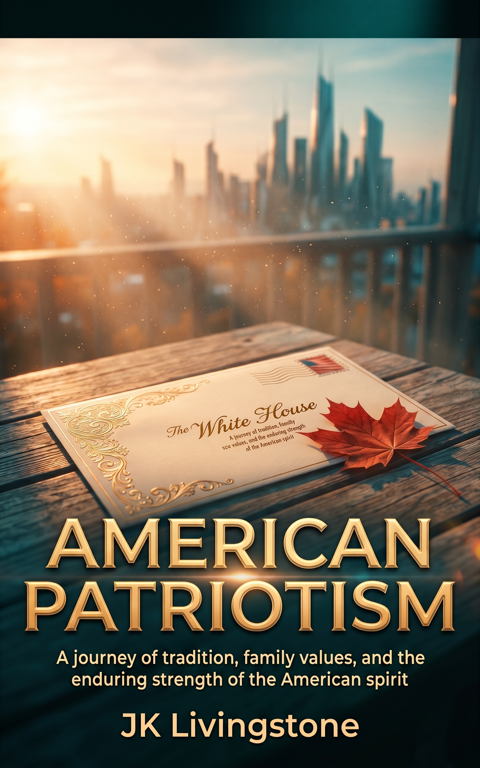 2026 · Coming of age
American Patriotism — JK Livingstone
A young-adult coming-of-age set in the America of 2026, written in an earnest, flag-forward voice that treats the present day as a chapter of history worth being proud of. It is unabashedly patriotic and does not hedge that with irony, which makes it the most tonally distinct book on this shelf. Readers who share the register will feel at home immediately; readers who don't will know by the end of the first chapter, which conveniently costs nothing.
Read the opening chapter free → -
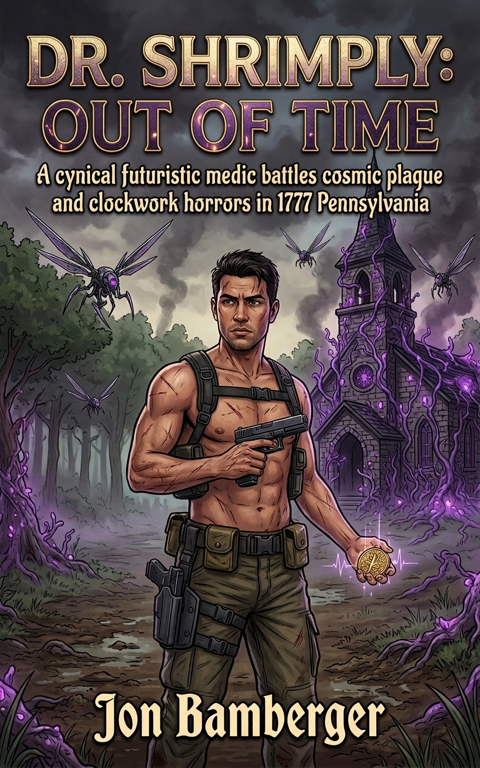 Alternate 1777 · Time travel
Dr. Shrimply: Out of Time — Jon Bamberger
A brilliant, socially detached combat medic from 3026 is yanked through a temporal rift into an alternate 1777 carrying a 9mm pistol, his father's tactical gear and a medallion he does not understand. His mission, in the book's own spirit: science his way through the eighteenth century and stop a future plague before something cosmic notices him. The title tells you the tone is pulp; the cosmic-horror tag tells you the pulp has teeth. History as playground rather than museum, and better company for it.
Fall through the rift, chapter one free → -
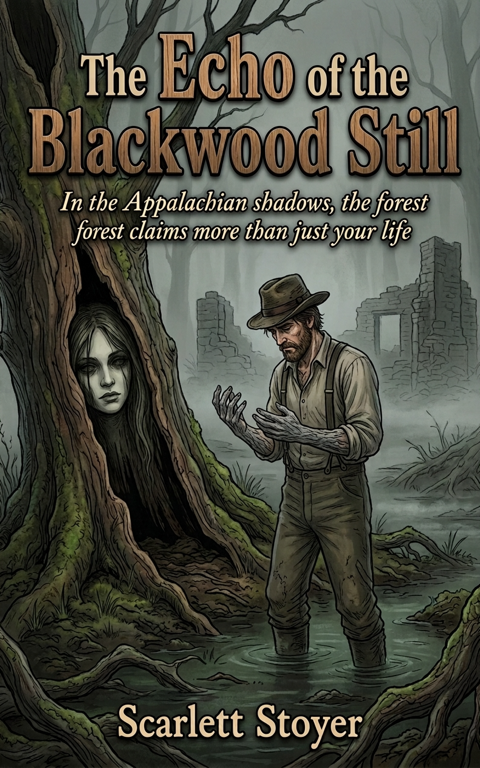 1892 · Folk horror
The Echo of the Blackwood Still — Scarlett Stoyer
You met this one in the first paragraph of the page. The disgraced taxidermist, the peat contract, the abandoned moonshine distillery, the woman in the hollow trunk who mimics his heartbeat and then his speech. Folk horror and gothic horror tags, Victorian-era setting, and the slow local-knowledge dread of a valley that clearly knows more than it says. It also anchors our horror shelf, which is the most honest thing we can tell you about how it reads after dark.
Start digging, first chapter free → -
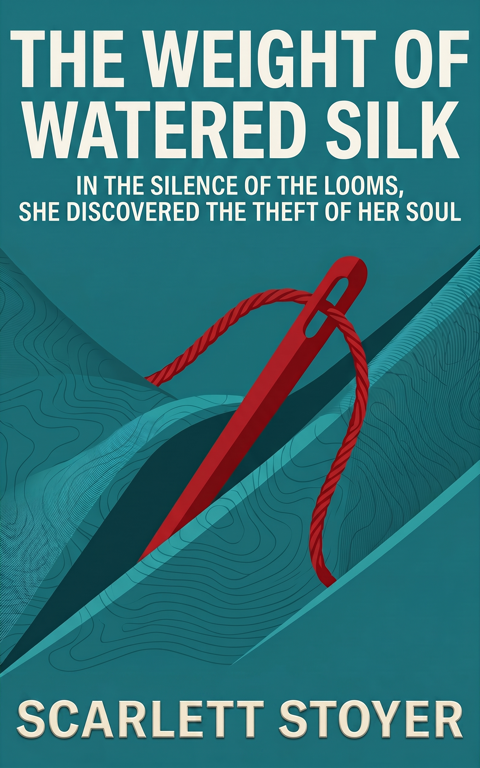 1920s · Literary
The Weight of Watered Silk — Scarlett Stoyer
A mute textile worker in a 1920s silk mill finds a ledger sewn into the lining of a luxury dress. It shows the factory owner systematically forging the identities of young immigrant workers to collect their inheritance money, and her own legal name is already in it. Stoyer in full literary mode: generational saga, character study, no ghosts anywhere. The horror here is bureaucratic, a woman who cannot speak discovering she may no longer legally exist. Notice the cruelty of the pairing: the one worker who cannot testify is the one holding the evidence. Quietly the strongest premise on the shelf, and the book we would enter in arguments about whether serials can be literary.
Unpick the lining, chapter one free → -
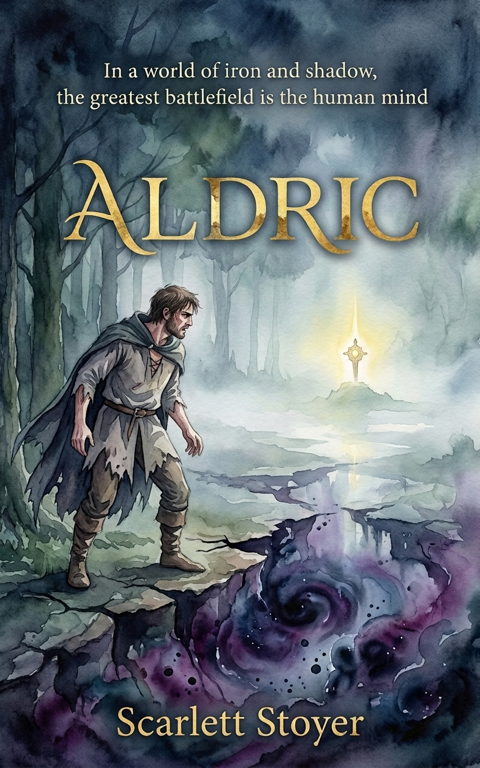 Medieval · Psychological thriller
Aldric — Scarlett Stoyer
The catalog description is three words long: Christian psychology thriller. The tags add medieval, survival, paranormal. That is genuinely all we know, and we would rather admit it than invent a synopsis. Sometimes a locked door is its own recommendation; Stoyer's other two books on this page suggest the hand behind it is steady. The free first chapter is the fastest way to find out what she is not telling us.
Open the locked door → -
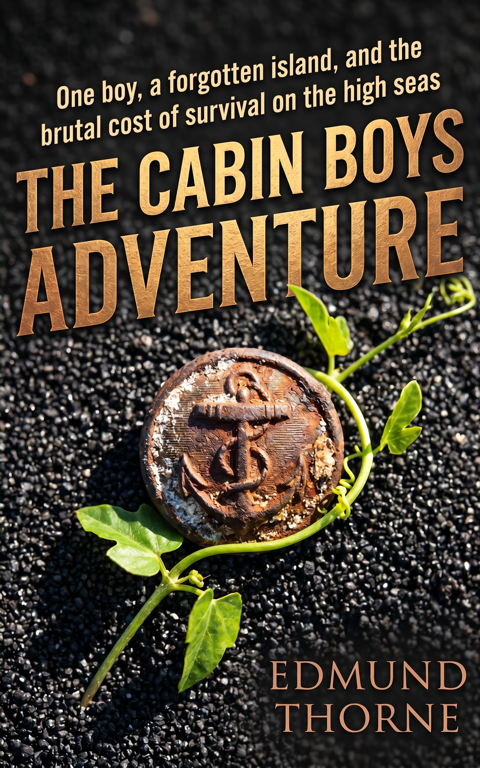 Age of sail · Adventure
Shadows in the Mist — Edmund Thorne
A fourteen-year-old cabin boy serves a stern captain on a British man-of-war ordered to the Spanish colonies to find out what Spain is up to in the New World. The Spanish navy finds them first. Thorne, whose jungle adventure sits on our fantasy shelf, writes the sea version here: survival, war, grief and loss, and a boy doing his growing up in the worst possible classroom. The age-of-sail novel has always secretly been a workplace story, orders and hierarchy and the sea as an indifferent manager, which is why it suits chapters read on a commute. If Hornblower or Master and Commander live anywhere in your heart, this is your first pick.
Ship out with a free first chapter → -
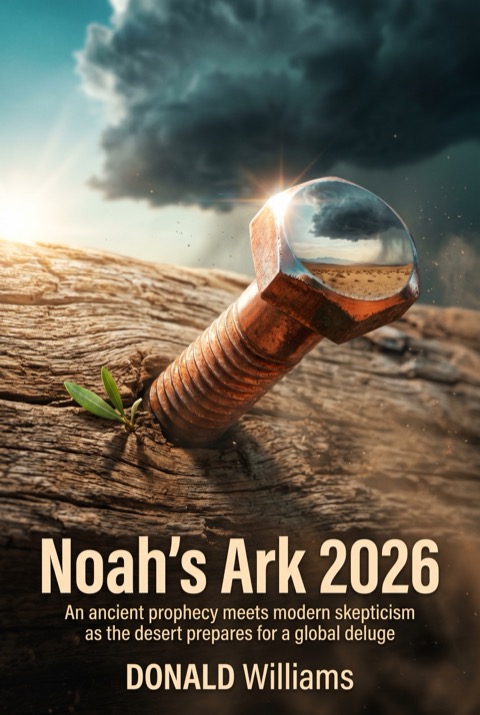 2026 · Parable retold
Noah's Ark 2026 — Donald Williams
The flood story relocated to Phoenix, Arizona: a successful pastor is told by God to build an ark, receives the dimensions and the details, and after a hard inward battle starts building, secretly at first. Williams keeps the beats of Genesis close and lets the modern setting do the arguing. Tagged literary fiction, thriller and Christian, and readable as any of the three. Whether 2026 counts as "historical" is a fair fight; a retelling of humanity's oldest flood narrative surely does.
Watch the ark go up, chapter one free →
How we shelve "historical"
Our rule: the past has to be load-bearing. If you could lift the story out of its era and nothing breaks, it does not belong here, whatever the costume budget. The taxidermist needs 1892's isolation. The silk-mill worker needs the 1920s' paper-thin identity records, an era when a forged name on a ledger was a life sentence nobody would check. The cabin boy needs an empire that sends children to sea. Take the era away and there is no story left to tell.
You will also notice this shelf keeps mixed company. Two of its books moonlight on the horror shelf, one is literary fiction with a thriller's spine, one is scripture retold, and one is a time-travel joke with cosmic-horror teeth. We considered curating a purer line-up and decided against it, partly because this is what our historical catalog honestly looks like right now, and partly because era-hopping readers are rarely genre-loyal anyway. The person who loves 1892 dread usually also wants to know what a 1920s ledger is hiding.
A note on accuracy, since historical readers care: serial fiction bends dates and details more freely than the researched doorstoppers do, and two books here bend them on purpose. Dr. Shrimply is an alternate 1777 by design. Noah's Ark 2026 is a parable wearing the present. The other entries play their eras straight as far as their descriptions tell us, and where we have not read deeply enough to vouch for the details, we say so on the book page rather than bluff.
A field test for the first free chapter
Since every book here lets you in free, use the sample the way an editor would. Three things to check in chapter one of any historical serial, ours included:
Does anyone touch anything? Weak period writing describes clothes; strong period writing makes characters handle rope, peat, silk, powder. Objects are where research either lives or is revealed to be missing.
Is the problem period-locked? Ask whether the opening crisis could survive a phone, a bank, an antibiotic. If yes, the era is a costume. Every book we shelved above passes this test except the two 2026 entries, which pass a different one: their crises could only happen now, which is the same discipline pointed at the present.
Do people think like their century? The hardest trick in the genre. A 1920s mill worker should not have 2020s instincts about institutions, and a ship's boy should find cruelty normal that would horrify us. When a serial gets this right, ten minutes in it will feel longer, in the best way, than an hour in a lazier book.
Run the test on Blackwood's free opening and you will see why it leads this page.
The eras we haven't filled yet
Honesty about the gaps, because era readers notice them immediately. There is no Tudor court on this shelf. No Regency ballroom, no Roman legion, no WWII resistance cell, and the nineteenth century is represented by one haunted Appalachian valley rather than anything with a bonnet in it. If your era is missing, we would rather tell you now than let you scroll for it.
Two consolations while the catalog grows. First, the adjacent shelves cover more ground than the tags suggest: the fantasy shelf holds a fully furnished 1920s Chicago and a colonial-era jungle expedition, both of which read as historical fiction that happens to believe in magic. Second, the nonfiction wing of the catalog carries actual history serials alongside the memoirs and cookbooks, which is not the same pleasure but is sometimes the right one. NanoReads' range, fiction to nonfiction to the frankly uncategorizable, is wider than a single shelf shows.
If there is an era you want serialized, that information is genuinely useful to us; the catalog is commissioned partly by watching what readers hunt for and fail to find.
Which century is calling you?
- Cold stone, candle smoke and a troubled conscience → Aldric
- Tricorn hats meeting future medicine → Dr. Shrimply
- Salt spray, cannon smoke, a boy at the rail → Shadows in the Mist
- Lantern light on something that should have stayed buried → The Echo of the Blackwood Still
- Mill lint, jazz through a wall, a ledger that knows your name → The Weight of Watered Silk
- The present, watched the way historians will watch it → American Patriotism or Noah's Ark 2026
Questions era-hoppers ask us
Do I need to know the history first? No, and be suspicious of any historical novel that requires it. These books carry their own context; the period detail is seasoning, not a prerequisite. Nobody on this shelf will quiz you on the Treaty of Paris.
What if I mostly read thrillers? Then you already read historical fiction with the labels torn off, and Aldric or The Echo of the Blackwood Still will feel like home. When you want the modern-day equivalent, our psychological thriller list is the same pleasure with less candlelight.
Is any of this actually scary? Two of the seven, yes. The Echo of the Blackwood Still is folk horror first and historical fiction second, and Dr. Shrimply keeps cosmic horror in its back pocket behind the jokes. Both carry their genre tags openly on their book pages. The rest of the shelf trades in tension rather than fear; the ledger in The Weight of Watered Silk is chilling, but it will not follow you to bed.
What does reading free look like in practice? Chapter one of every serial is free, no card, no trial countdown. If a book takes you, you continue in the app or on the site; if it doesn't, you spent ten minutes in 1892 and came back with your wallet untouched. We think sampling eras should work like sampling cheese.
How do I find more once I finish these? Two ways. The books-like finder takes a title you loved, Outlander, All the Light We Cannot See, whatever broke you, and matches it against the catalog. Or take the read-next quiz and let it argue with you. Both are free and neither asks for an email first.
If you only start one
Pressed for a single answer, we split by temperament. The reader who wants to feel an era close around them like weather starts with The Echo of the Blackwood Still; 1892 has never been less decorative. The reader who wants the past as a moral pressure chamber starts with The Weight of Watered Silk. And the reader who suspects this whole genre takes itself too seriously gets handed Dr. Shrimply and is usually back within the week asking what else we have. All three openings are free, so the argument settles itself in half an hour.