"So it goes."Kurt Vonnegut, Slaughterhouse-Five, after every death in the book
Vonnegut repeats those three words more than a hundred times, and by the end they read less like a shrug than a refusal to look away. The best WW2 historical fiction books do the same thing in different ways. Each one is rooted in a particular place: a village in Burgundy, a railway in Thailand, a meat locker under Dresden.
That is how this list is organised. Most WW2 lists are really lists of France and London, so here each front gets its own shelf. A few of the most famous titles, The Book Thief, All the Light We Cannot See and The Nightingale, are already reviewed on our best historical fiction novels list, and Code Name Verity and Salt to the Sea are on the YA historical fiction list, so they are left off here to make room for books from the rest of the war.
🗺️The fronts
The fall of France and the years of occupation: the war as something that happens to a town, not to an army.
Suite Française, Irène Némirovsky
Two finished parts of a planned five: Parisians fleeing south in the chaos of June 1940, then a village living alongside the German soldiers billeted on it. Némirovsky wrote it as it happened. In July 1942 she was arrested and deported to Auschwitz, where she died, and her daughters kept the notebook for decades without reading it. The prose is cool and unsparing about the French middle class.
Start here if you want the war seen by someone who did not survive it.
The Guernsey Literary and Potato Peel Pie Society, Mary Ann Shaffer and Annie Barrows
A London writer begins corresponding with islanders on Guernsey, the only British soil the Germans occupied. The book is warm and often funny, which is the point: the occupation, the deportations and the hunger come out sideways, in letters from people who are still deciding what they can say.
The gentlest entry on this page, without being light.
Where most of the war's dead died. Novels from this front are rarer in English and heavier.
Life and Fate, Vasily Grossman
Grossman was a Red Army war correspondent at Stalingrad and among the first to report on Treblinka. His novel moves between the ruined city, a German camp, a Soviet labour camp and a physicist's Moscow flat, and it puts Nazism and Stalinism in the same frame. The KGB confiscated the manuscript in 1961; a copy was smuggled out after his death. Long, and worth every page.
For readers who want the one great novel of the war.
City of Thieves, David Benioff
Two young men, a looter and a deserter, are given a week by an NKVD colonel to find a dozen eggs for his daughter's wedding cake, in a city where people are eating wallpaper paste. Benioff keeps it fast and darkly funny, and then the horror arrives in plain sentences.
The most readable book here. Good for someone who says they don't read war fiction.
Books that go inside the machinery. Read these with time to sit afterwards.
Schindler's Ark, Thomas Keneally
Published in the US as Schindler's List. Keneally built it from interviews with the people Oskar Schindler saved, and he keeps Schindler morally untidy: a profiteer, a drinker, a womaniser who spent his fortune buying lives. Written as a novel, very close to the record.
If you saw the film, the book gives you the people the film had no time for.
The Zone of Interest, Martin Amis
Narrated partly by the camp commandant and partly by an officer who falls for his wife. Amis makes the voices petty, vain and domestic, and that ordinariness is the horror. Not every reader can stand inside those heads for a whole book, and it is fair to stop.
Read it after Schindler's Ark, not before.
The war of islands, deserts and Italian hill towns, written by people who were not interested in glory.
Catch-22, Joseph Heller
Yossarian, a bombardier, wants to stop flying missions, and every time he gets close to the required number, the colonel raises it. The jokes are the delivery system: the book gets less funny as it goes, and one death that it keeps circling back to is told in full only near the end.
For readers who want the absurdity of it before the grief.
The English Patient, Michael Ondaatje
A nurse stays behind in a bombed villa with a man burned beyond recognition, a thief and a Sikh bomb-disposal sapper. The story of who the patient was comes back in fragments. It is the most beautiful prose on this page and the least interested in plot.
Read it slowly, ideally in summer.
The half of the war that English-language lists tend to forget.
The Narrow Road to the Deep North, Richard Flanagan
Dorrigo Evans, an Australian surgeon and prisoner of the Japanese, tries to keep his men alive while they are worked to death on the railway. Flanagan's father was a survivor of it. The railway chapters are among the hardest reading on this list; the book also follows the guards after the war, which most novels would not dare.
For readers ready for the full weight of it.
Empire of the Sun, J. G. Ballard
Jim, a British boy, is separated from his parents when the Japanese take Shanghai and spends the war in an internment camp. Ballard lived it as a child, and the book keeps a child's strange logic: Jim admires the Japanese pilots and treats the camp as the world. Disorienting in the best way.
A good pair with City of Thieves: two young narrators, two besieged cities.
The home front and the bombs, from both ends.
Atonement, Ian McEwan
A thirteen-year-old's lie in 1935 sends a young man to prison and then to the war. The middle section, the retreat to Dunkirk, is as precise as any battle writing in recent fiction, and the London hospital chapters that follow are just as unflinching about wounds. The ending will make you reread the whole book in your head.
Start here if you came from the romance shelf. There is a love story, and it costs everything.
Slaughterhouse-Five, Kurt Vonnegut
Billy Pilgrim, an American prisoner of war, survives the firebombing of Dresden in an underground meat locker, as Vonnegut did. Billy has also come unstuck in time, so the book jumps between Dresden, his suburban life and an alien zoo. It sounds like a gimmick. It is the only way Vonnegut found to tell it.
Short enough for a weekend. Not light enough for one.
Before you start one
These books ask different things of you. A short check before you pick:
Still undecided? The what should I read next quiz picks by mood, and if one of these has already hit you hard, books like… finds the next one from a title you loved.
Where to begin
If you have read none of these, start with City of Thieves for pace or Atonement for prose, and then go to Suite Française. If you have read the usual ones, go east: Life and Fate is the book most often missing from these lists, and it is the best one. For readers who came here from romance, Atonement and The English Patient both have love stories at their centre, and our historical romance hub has the happier versions. If you want to know where the line is between this and literary fiction, the glossary has short entries for historical fiction and literary fiction.
📖Read war and historical fiction free on NanoReads
To be straight with you: there is no WW2 novel in the NanoReads catalog yet. These three are the closest, all written by independent authors, and chapter one of each is free. None of them is set in the Second World War.
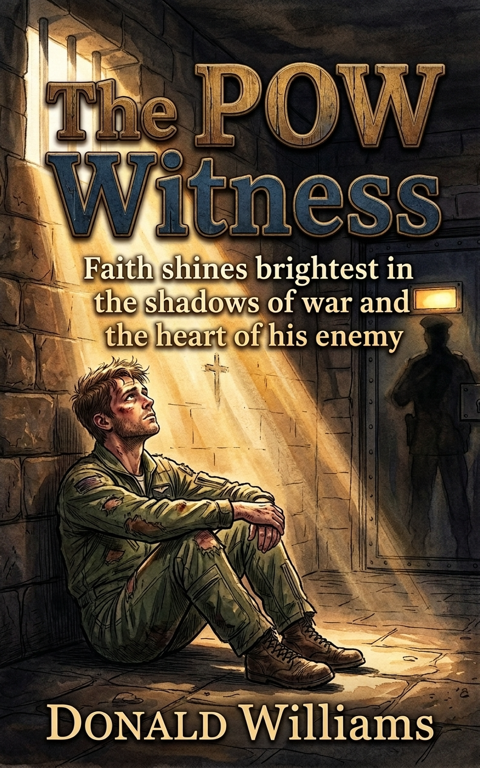
A pilot shot down behind enemy lines holds on to his Christian faith through torture as a prisoner. The description does not name the war. Read chapter 1 free
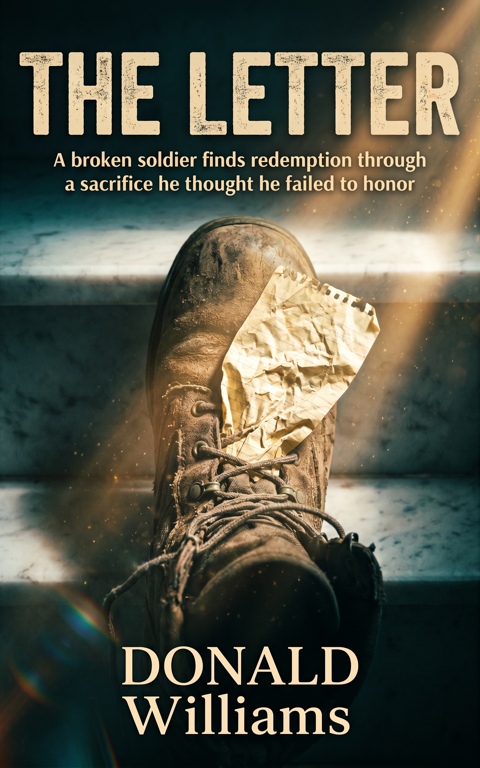
Afghanistan, not WW2: a Christian squad leader and an angry recruit from LA. Military fiction with PTSD and faith themes. Start the first chapter
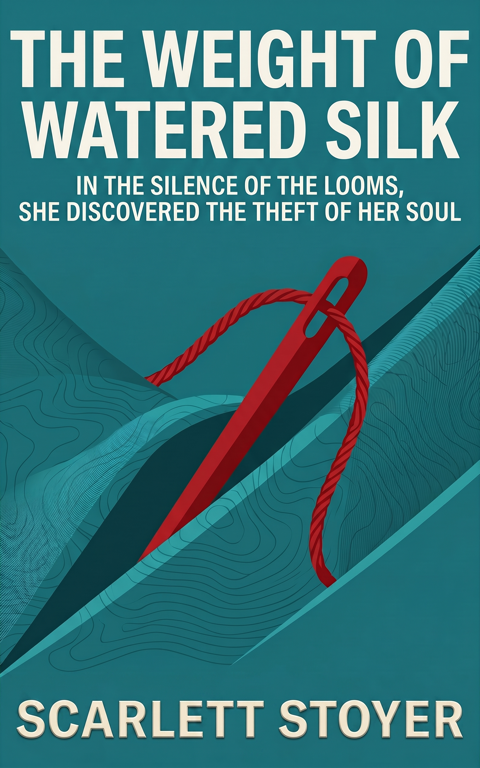
A mute worker in a 1920s silk mill finds a ledger sewn into a dress that exposes forged immigrant identities. Interwar, literary. Open chapter one
More from the same shelf on the historical fiction hub, and for faith-led wartime stories, the Christian historical fiction list.