A train stops in the snow outside Munich. A nine-year-old girl watches two men bury her little brother in frozen ground, and when they leave she picks up the small black book one of them dropped. It's a gravedigger's manual. She can't read it. She keeps it anyway, and the narrator, who has just introduced himself as Death and promised not to be dramatic about any of this, notes that it's the first book she ever stole.
That is how The Book Thief opens, and it's the whole argument for YA historical fiction novels in one scene. The war isn't a chapter heading. It's a child on a railway siding with a book she can't read yet. Every title below does some version of that trick, so instead of ranking them by which is "best" (an argument I lose with my own students every year), I've ranked them by how far each one sits from the curriculum. Number one is history you were probably taught. Number nine is history almost nobody is taught.
How the distance is measured
I teach history. The books that change a fifteen-year-old aren't usually about the events on the exam. They're about the event next to it, the ship nobody names, the girl under the newspaper office. Each pick gets a plain label: on the syllabus (the era is taught, the book gives you the human inside it), in the margins (the era is taught, this corner of it isn't), or off the map (I've never seen it in a school curriculum). Ordering is by that label, not by quality.
"YA" here means a teenage protagonist and a teen shelf. It does not mean gentle. A few of these are as hard as anything on our adult historical fiction list, and I've flagged those.
📜The nine, nearest to farthest
1. The Book Thief, Markus Zusak
On the syllabus · Nazi Germany, 1939 to 1943 · the Second World War from a German street
Liesel Meminger grows up on Himmel Street outside Munich, fostered by a house-painter who teaches her to read in the basement and a foster mother who calls everyone a pig with enormous affection. Then a Jewish boxer named Max arrives to hide in that basement, and the book he makes for Liesel is painted over the whitewashed pages of a copy of Mein Kampf. Every student knows the war; almost none have thought about being a German kid who liked her neighbours. Death narrates, spoils the ending on purpose, and hurries nothing. It will wreck a classroom in the good way.
2. Chains, Laurie Halse Anderson
On the syllabus · New York, 1776 · the Revolution, seen by an enslaved girl
Isabel is thirteen, promised freedom in her late owner's will, and sold anyway to a Loyalist couple in Manhattan as the city fills with soldiers. She spies for the Patriots because they promise her freedom too, and the moment the book stops being a school-friendly adventure is the punishment scene: a letter branded on her cheek, and a court that treats it as an ordinary sentence. Each short chapter opens with a real period document, so the story keeps bumping into the paperwork of a country that talked about liberty while owning children. It reads angry and moves fast, and though it opens a trilogy it stands alone.
3. Code Name Verity, Elizabeth Wein
In the margins · Occupied France, 1943 · women pilots and agents of the SOE
A captured British agent is writing a confession for the Gestapo in a requisitioned French hotel, telling them everything in far too much detail, in a voice that keeps cracking jokes. The confession is mostly about her best friend Maddie, the pilot who flew her in. The second half hands the story to Maddie, and you find out what the first half was doing. The Air Transport Auxiliary women and the female SOE agents are a footnote in most WWII teaching; here they're the spine. Content flag: the interrogation is not softened. The book looks slow until page 200, at which point you go back to page one.
4. Revolution, Jennifer Donnelly
In the margins · Brooklyn now, Paris 1795 · the lost dauphin
Andi Alpers is a grieving Brooklyn music student dragged to Paris by her geneticist father, who is testing a small preserved heart said to belong to Louis-Charles, the boy king who died in a Temple prison cell. In an old guitar case she finds the diary of Alexandrine, a street performer hired to entertain that boy. The Revolution is on every syllabus; what happened to a ten-year-old heir after the guillotine took his parents is not. Andi's chapters are all headphones and sarcasm, Alex's tighter and older. Long, occasionally overwrought, and I have never had a student give it back unfinished.
5. Fever 1793, Laurie Halse Anderson
In the margins · Philadelphia, 1793 · the yellow fever epidemic
Mattie Cook is fourteen and bored of her mother's coffeehouse when the fever comes up from the docks and empties the capital of the United States in about six weeks. Anderson's real subject is logistics: who fetches water, who buries whom, what happens when the doctors disagree (bleeding versus rest, and the bleeding camp was winning). The Free African Society volunteers who nursed the sick get their due, which almost no textbook manages. Younger in tone, so this is the one for a twelve-year-old, and it moves at the speed of a fever chart.
6. Between Shades of Gray, Ruta Sepetys
Off the map · Lithuania to Siberia, 1941 onward · Stalin's Baltic deportations
Fifteen-year-old Lina is taken from her home in Kaunas in the middle of the night with her mother and little brother, loaded into a cattle car, and shipped first to a labour camp and then above the Arctic Circle. She keeps drawing, and hides the drawings, hoping they'll travel. I have taught the Second World War for years and never learned about the Soviet deportations of Lithuanians, Latvians and Estonians in any classroom; Sepetys, whose father's family was Lithuanian, wrote the book partly because of that silence. Short chapters, flat declarative sentences, the cold coming off every page. Some readers find the prose too plain. Plain is the right call for a book about being erased.
7. Under a Painted Sky, Stacey Lee
Off the map · the Oregon Trail, 1849 · a Chinese American girl and a runaway enslaved girl, disguised as boys
Samantha, a violinist and a Chinese shopkeeper's daughter in Missouri, kills a man in self-defence the night her father dies in a fire, and runs west with Annamae, who is escaping slavery. They cut their hair, call themselves Sammy and Andy, and fall in with three young cowboys who never quite work out what they're travelling with. The trail is on the syllabus; Chinese Americans on it in 1849, before the railroad, are not. Lee keeps the danger real (a girl passing as a boy in a wagon camp is one wrong glance from disaster) and the tone light. It's the funniest book on this list, and the romance never gets past longing, which is right for it.
8. The Downstairs Girl, Stacey Lee
Off the map · Atlanta, 1890 · Chinese Americans in the Jim Crow South
Jo Kuan is seventeen, a lady's maid to a rich girl who hates her, and secretly lives with her guardian in a hidden basement under a struggling newspaper whose owners have no idea they're there. She starts writing that paper's anonymous advice column as "Miss Sweetie", and Atlanta loses its mind over who she is. The Chinese population of the post-Reconstruction South barely exists in school history, and Lee makes the legal limbo concrete: Jo can't ride at the front of the streetcar or the back. The column entries themselves are good enough that I've read them aloud in class.
9. Salt to the Sea, Ruta Sepetys
Off the map · East Prussia, January 1945 · the sinking of the Wilhelm Gustloff
Four teenagers, four voices, chapters rarely more than two pages: Joana, a Lithuanian nurse; Florian, a Prussian with a stolen artefact in his pack; Emilia, a pregnant Polish girl who lies about everything; and Alfred, a German sailor whose chapters are imaginary letters to a girl back home and get more disturbing every time. All of them are walking toward a ship that promises evacuation. The Wilhelm Gustloff went down with an estimated nine thousand people aboard, the deadliest sinking in maritime history, and I've yet to meet a student who had heard of it. The last fifty pages are why the four-voice structure exists. If you read one book off this list, read this one.
📖The YA shelf on NanoReads, honestly labelled
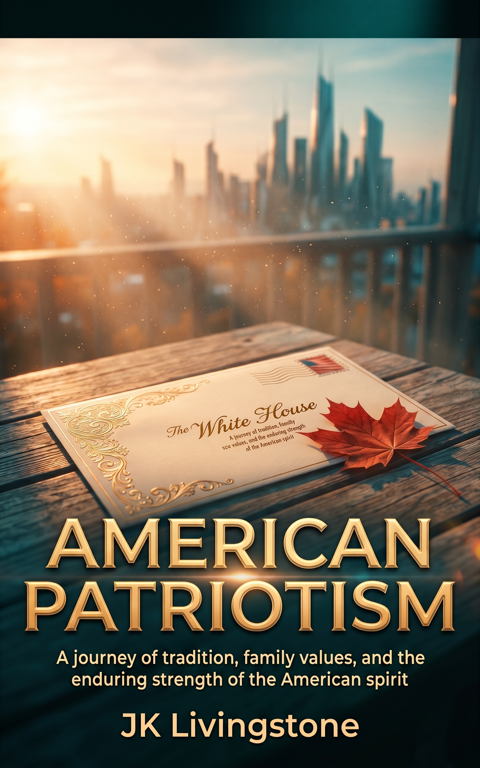
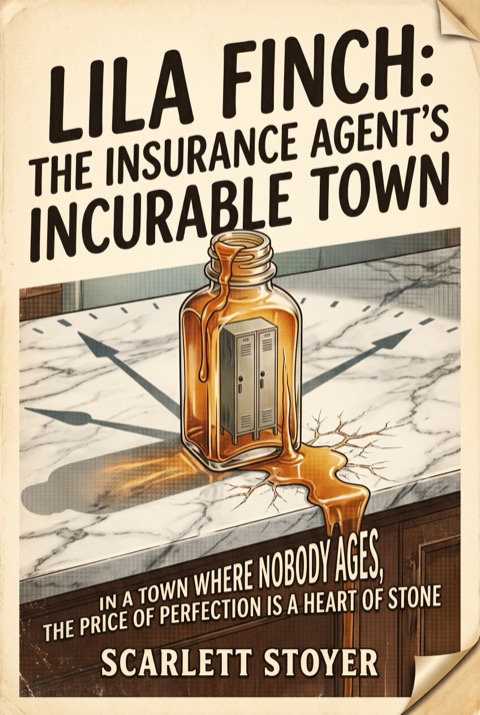
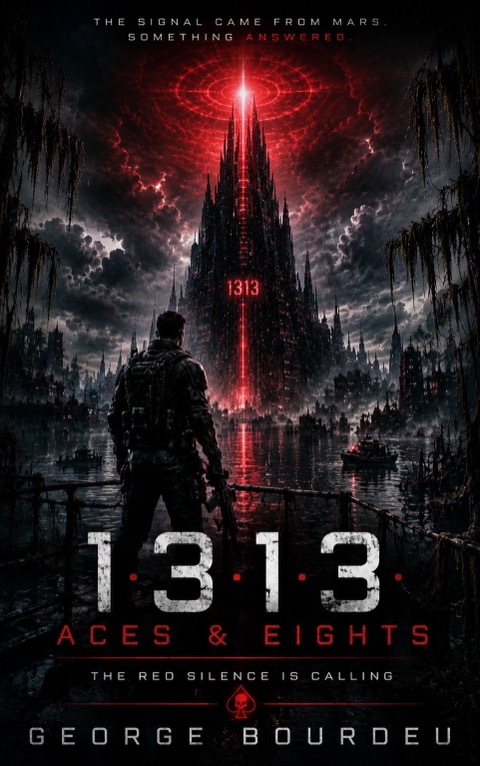
Straight answer first: NanoReads has ten young-adult serials in English and exactly one is tagged historical fiction. None of the five below is a period novel in the sense the list above uses. They're what the catalog has for a teen reader who wants a past that presses on the present, described from their own blurbs and nothing more. Chapter one of each is free, so checking costs a few minutes.
American Patriotism carries the historical fiction tag, but its blurb is set in 2026 and reads as a reflection on national pride rather than a story about a dated past; treat it as an essayistic coming-of-age and judge the free first chapter yourself. Lila Finch is the closest thing to a time-slip: an insurance agent audits a valley town where nobody has aged in forty years and finds the same teenagers enrolled in tenth grade since the 1980s, a cosy YA mystery with a decade stuck inside it. The A-XIS Initiative is superhero sci-fi built on a mansion in upstate New York and a catastrophe "the world never learned to fear"; the two George Bourdeu serials, 1313: Aces & Eights (a fortress floating over a flooded Louisiana) and Ash and Bones (a dying Mars), are future history, not past. For the period shelf across all ages, the historical fiction hub lists the twelve serials the catalog tags that way; most run novella length, which suits a reader who's just been through a 400-page war.