Verona, deep in the Renaissance, and the Montague boy is about to ruin everything on schedule. You know this part. Everyone knows this part. Except in Oh Romeo, when his gaze crosses the Capulet household it doesn't land on Juliet. It lands on another Capulet girl entirely, one the play never thought to warn, and the fourteen lovesick lines Shakespeare gave him curdle into something much less quotable. This Romeo doesn't pine under balconies. He studies her. He circles. The feud that should keep him out becomes the game he plays to get in, and the courtship reads less like a sonnet and more like a hunt in which the girl works out, a half-step too late, that she has been chosen.
It's a kidnapping thriller in doublet and hose. It's also, tag for tag, a slow-burn forbidden romance with BDSM and dark-erotica warnings stitched right into the label, which tells you what kind of shelf you just walked onto. If that premise made you sit forward rather than flinch, keep reading. Everything below is aimed at you.
Which shelf you're actually on
A quick sorting, because the labels get slippery. Historical fiction treats the past as the subject; the love story, if one appears, is garnish. Historical romance flips the ratio. The couple is the plot, and the century mostly supplies wardrobe, etiquette, and reasons the two of them can't simply talk to each other. The field test is easy to run: delete the couple and see whether a book is left. Delete the couple from anything on this page and you'd be holding nothing but very good tailoring. Our historical fiction books shelf holds the first kind, seven serials where the era does the heavy lifting. This page holds the second kind: five serials where the era's main job is candlelight and bad decisions.
Read this before the candles go out
The disclosure, stated once and plainly so nobody gets ambushed. All five books here are published under erotica tags, and BDSM and dark erotica appear on every single one. The scenes are explicit and the doors stay open. The heroes court by surveillance, captivity, and worse. A reader raised on gentle regency, where the rake reforms by chapter ten and the gravest sin is waltzing twice, should treat this shelf like the locked wing of the house. If dark romance is already your genre, this is that, in period dress. Still calibrating your own ceiling? The spice-level checker will grade any of these before you start, and if "smut" is a word you want defined honestly first, the glossary entry does exactly that. The per-book notes further down repeat the specifics, because a warning you have to hunt for is not a warning. Consider all of this a feature if you came here for it, and a fire alarm if you didn't.
🎬If you binge it on screen, start here
Nobody arrives at historical romance cold. You've been streaming it for years; the algorithm just never mentioned that the books go further. So match the rewatch to the read. (The shows and films named below are signposts and nothing more; none of them have anything to do with us, and these serials are not adaptations of any of them.)
If Bridgerton is your comfort watch and your quiet complaint is that the camera always cuts away too soon, The Stolen Princess is the unsanitized regency. Same ballrooms, same marriage-market arithmetic, except the bride is carried off on her own wedding eve and the man in the mask is the boy she once grieved for. The scheming survives the transfer intact; the restraint does not. No streaming service would touch the second half.
Phantom of the Opera people, the ones who defend the masked man in the comments: The Phantom keeps the opera house, moves nothing, and gives the letters in the dressing room a body count. That comments-section argument about whether the masked man deserves the girl transfers here fully loaded, with an age gap and a murder raising the stakes. You will feel seen, then slightly worried about what that says about you.
If your formative crush was a beast in a castle library and you have made peace with that, The Beast of Gevaudan is the Beauty and the Beast you were never supposed to imagine: rococo France, a stolen black rose, a monster who stays one. The rose is roughly the last polite thing that happens.
Crimson Peak did something permanent to you? Or you sit through every Jane Eyre adaptation strictly for the brooding lord and the house that hates its guests? Velvet Midnight is your Victorian door in, and the manor behind it does everything you have ever wanted a manor to do.
And if you're the viewer who mutters through every Romeo and Juliet adaptation that this is a story about obsession, not romance, you already met Oh Romeo at the top of the page. You were right, for what it's worth.
No strong screen allegiance, just a standing weakness for anything with candles and consequences? Skip the matching and read the shelf in the order below; it was built to be walked front to back.
🕯️The shelf, in reading order
The numbering is an argument, not a ranking. The boldest premise sits first, because if Oh Romeo clears your bar, the other four will too. The most conventional arc sits last, a door back in for anyone who bailed early. In between, the shelf hops centuries without apology; the books share no characters, only a temperament.
-
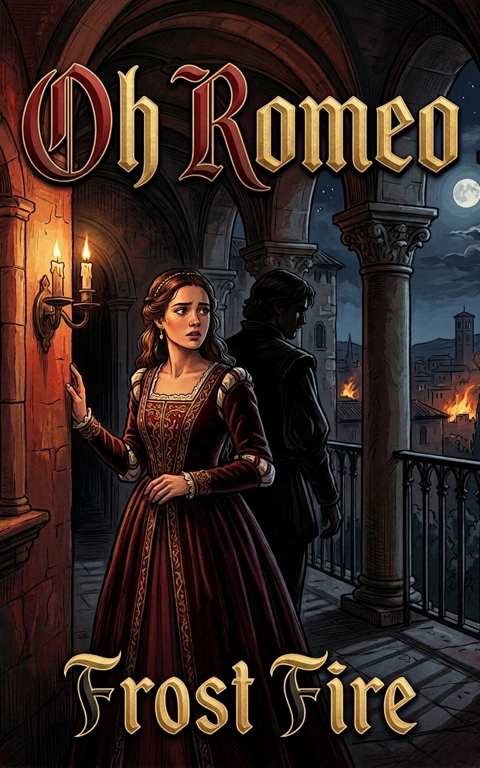 Renaissance Verona · Romeo retelling
Oh Romeo
The nerve of this retelling is that it never changes Romeo; it just stops flattering him. A boy who falls that hard, that fast, for a girl whose family would kill him on sight was never a safe person, and Frost Fire lets the fixation do what fixation does. The Capulet girl at the center is not Juliet, knows precisely what the name Montague costs, and watching her map the cat-and-mouse a beat too slowly is the engine of the whole serial. The burn is genuinely slow, which somehow makes the stalking worse.
Heat and warnings: explicit, BDSM and dark-erotica tags, stalking, kidnapping, obsession played straight. Forbidden love with the safety rails removed.
Test your nerve on chapter one, free → -
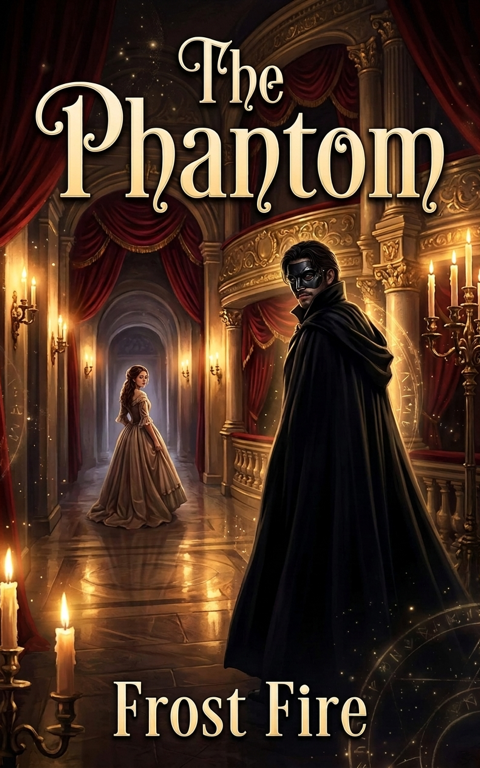 Paris, 1890s · belle époque
The Phantom
Celeste Moreau sings in the chorus at the Opéra Garnier, the most gossip-dense building in 1890s Paris, and the anonymous letters appearing in her dressing room read like patronage right up until they read like possession. The serial keeps the ghost question open longer than you expect: a man, a phantom, or a conspiracy with beautiful handwriting. An age gap, then a murder. And underneath both, the slow, uncomfortable realization that the person watching her may be the only one telling her the truth. Leroux fans will recognize the bones; no one will accuse it of being faithful.
Heat and warnings: explicit with BDSM and dark-erotica tags, older obsessive hero, stalking, murder on the page. Slow burn.
Open the first letter — chapter one is free → -
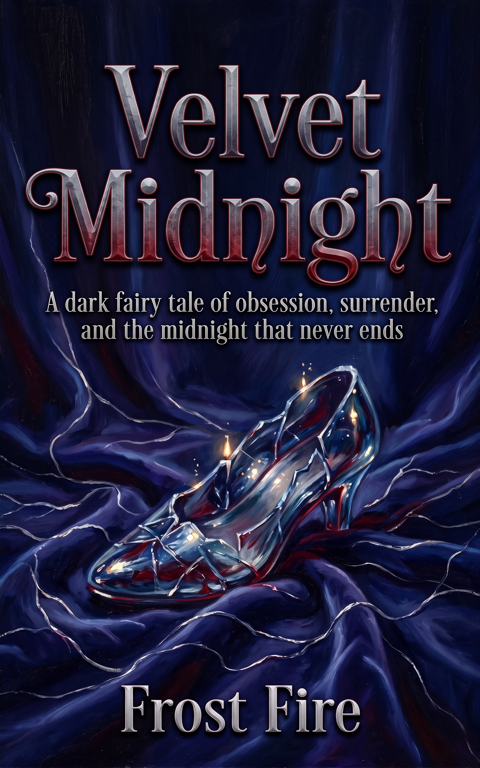 Victorian England · dark fairy tale
Velvet Midnight
Every Victorian melodrama needs its cursed lord, and Adrian Valemont of Blackthorne manor arrives with the complete rumor kit: cruel, says the village; obsessive and possessive, whisper the servants; and the midnight visitors are never discussed at breakfast. This is the shelf's purest costume-drama hit, made for viewers who watch haunted-house period films quietly rooting for the house. Our gothic romance shelf reads this same book for its architecture; the draw here is simpler. It's the brooding-lord fantasy with the restraints taken off. Sometimes literally.
Heat and warnings: high heat, explicit, BDSM, possessive hero, forbidden love. Dark-fantasy elements, so the curse is not a metaphor.
Knock at Blackthorne (chapter one is free) → -
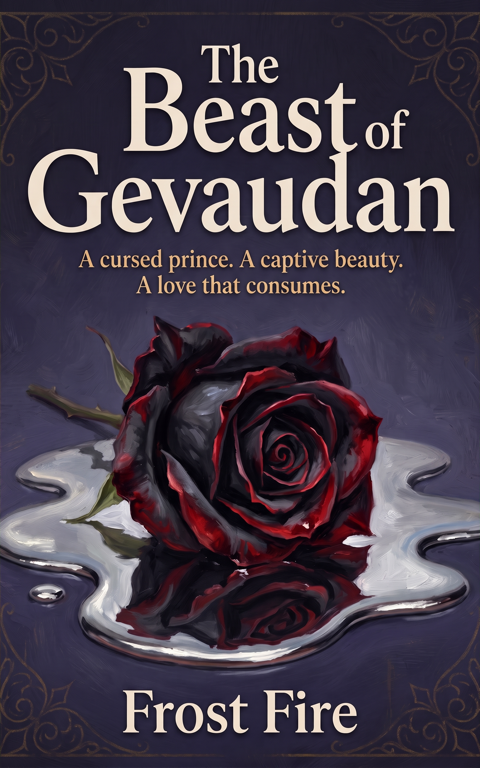 Rococo France · monster romance
The Beast of Gevaudan
Belle's father steals a single black rose from a castle that should be empty, and then he is gone, which any fairy-tale reader recognizes as the opening of a debt. What follows is Beauty and the Beast retold over the bones of a real French panic; Gévaudan was an actual place where, in the 1760s, something with too many teeth killed real peasants. The Beast here trades on that history and doesn't soften on a Disney schedule. The romance is a slow burn across a bargain neither party names honestly.
Heat and warnings: dark-erotica and BDSM tags, monster romance meant literally, a captivity bargain. Slow burn, fully explicit when it arrives.
Steal the rose yourself, chapter one costs nothing → -
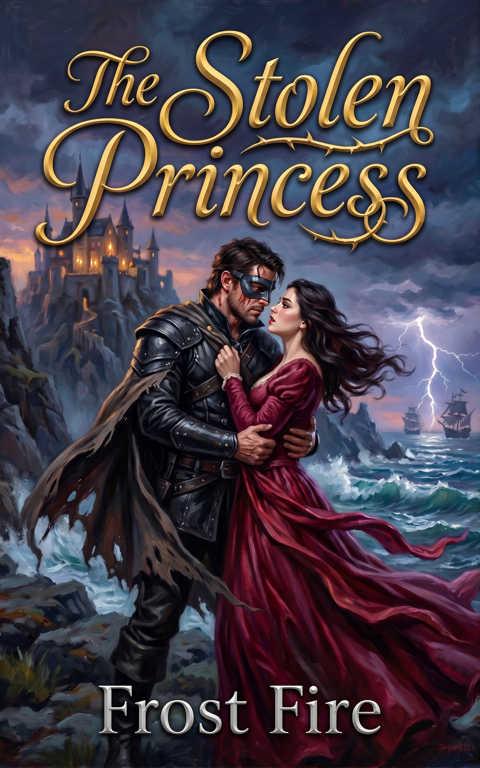 Regency England · second chance
The Stolen Princess
Lady Arabella is promised to a prince with a cruelty problem, and the ton's machinery is grinding her toward the altar when a masked mercenary takes her off her own wedding eve. The mask comes off and it's Rowan, the stable boy who vanished at sea years ago and came back with a grudge and a plan. Friends to lovers, second chance, and revenge, all folded into one kidnapping; efficient plotting by any era's standard. Of the five, this sits closest to a conventional regency arc, wearing this shelf's usual darkness.
Heat and warnings: explicit, BDSM tags, kidnapping by the love interest, revenge plot. The prince is the villain, but nobody in this book is gentle.
Ride out with the mercenary — first chapter free →
One atelier, five costumes
Worth knowing before you commit: every book on this shelf comes from the same pen. Frost Fire writes historical dark romance the way a costume house cuts for one leading lady, where the silhouette never changes and only the fabric does. Renaissance Verona, belle-époque Paris, a Victorian manor, rococo France, a regency wedding eve: five fittings, one hand. In practice this is useful. The heat holds steady across all five and the darkness sits in the same register, so if you finish one and it worked on you, the other four are pre-vetted. One house style also means the same fixations recur wherever the story is set: patient set-ups, heroes who cross lines the text owns rather than excuses, heroines with more spine than their circumstances were designed to hold. The reverse is equally true. If one is too much, they will all be too much, and prettier scenery won't change that.
Candlelit cliffhangers
Historical romance and serialization are not a modern arranged marriage; they grew up together. The Phantom of the Opera itself first reached readers in installments, running in the Paris daily Le Gaulois from 1909 into 1910, and most of the Victorian novels we now shelve as doorstops arrived in monthly parts. Even the classic three-volume shape existed to serve suspense: circulating libraries rented novels out one volume at a time, so authors learned to end volume two on a cliff. Courtship plots suit the format almost suspiciously well. A courtship already is a series of episodes: the ball, the letter, the interrupted confession, the long enforced wait before the next meeting. A chapter break lands in the same place a chaperone does, exactly when things get interesting.
There's a second, sneakier reason the pairing works, and it matters on a shelf this dark. Slow burn runs on denial, and the past manufactures denial better than any modern setting can: propriety, watchful households, letters that take a week each way. A serialized historical gets to stack the era's enforced waiting on top of the format's enforced waiting, then break both at once. By the time a door finally closes behind two characters in one of these books, you have usually waited for it twice.
NanoReads chapters run about ten minutes each, which restores that rhythm rather than inventing it. You read one candle's worth, the door closes, and you either wait or you don't. Chapter one of everything above is free; the rest is your own weakness. And if the eras themselves hook you harder than the courtships, our editors ranked the best historical fiction novels of the wider canon over on the blog, a deeper and considerably better-behaved rabbit hole.
How to audition the shelf tonight
Here's the cheap way to settle it, borrowed from how you already treat television. Take the two books furthest apart in temperament: Oh Romeo, the shelf at its most predatory, and The Stolen Princess, the shelf at its most romantic. Read chapter one of each. Both are free, and together they'll cost you about twenty minutes, which is less than you spent deciding what to watch last night. If Rowan charmed you and Romeo made you want a bath, work the shelf back to front and brace before book one. If it's Romeo you catch yourself thinking about two days later, start at the top and angle your screen away from your coworkers. And if both chapters landed, Frost Fire has three more waiting, and you have a very specific kind of week ahead of you.
Still hovering between the five?
The read-next quiz asks a minute's worth of questions about how dark, how hot, and how patient you like your reading, then hands you a title. No email demanded, no wrong answers, though some answers will tell you things about yourself.
Take the read-next quiz