Say you're fourteen and someone hands you two books on the same night. One is Dune, six hundred pages of desert politics with a glossary. The other is Ender's Game, about a six-year-old shipped off to learn war in zero gravity. You'll finish one of them by Sunday, and it won't be the one with the glossary, and that has nothing to do with how smart you are. YA science fiction novels are built differently: the idea is just as large, the person carrying it is smaller, and the book never forgets the reader is roughly their size.
So the list sorts by exactly that: youngest lead first, and for each one a label for how big the idea is. Read down the page and the pattern runs backwards. The six-year-old gets a war of extinction; the seventeen-year-olds mostly get a question about one person. I don't think that's an accident. A young lead can't be asked to make adult choices, so the book hands them a universe and lets them react. An older lead can choose, so the book shrinks the idea until it fits in one decision. Scythe is the exception, and I've marked it.
🔭Are you even on the right shelf?
| YA science fiction | Adult science fiction | YA dystopian | |
|---|---|---|---|
| Who's holding the book | Someone between twelve and eighteen, learning the world's rules at the same speed you are. | A specialist who already knows the rules and has opinions about them. | A teenager born inside a broken system who has never seen it work. |
| The idea's job | To force one person to grow up too fast. The tech is a pressure, not the subject. | To be the subject. The book can stop for twenty pages of orbital mechanics and mean it. | To be the villain. The system is the antagonist and the plot is the resistance. |
| How it ends | The world changes a little, the lead changes a lot. Series usually continue. | Often bleak or open, and more interested in the idea's fate than the character's. | The regime cracks or the lead escapes it. Rebellion is the shape. |
| Go there instead if | You're here. Keep reading. | You want the science to be the story: the hard science fiction list is sorted by how much homework each book demands. | You want the regime to be the story: the dystopian science fiction list files nine regimes by what they steal; the YA fiction list covers The Hunger Games. |
🚀Nine novels, youngest lead first
-
Ender's Game
Orson Scott Card · 1985Lead: 6 to about 11Idea: a speciesEnder Wiggin is six when the fleet takes him, and the book's central cruelty is that everyone in charge knows exactly how young that is and proceeds anyway. Battle School is a zero-gravity gym where children fight mock wars and Ender keeps winning by refusing to play the way the game expects. The idea he's carrying is whether humanity should wipe out another species, and he doesn't find out he's carrying it until it's done. Never published as YA; every YA sci-fi shelf is quietly built on it.
Verdict: brisk and cold. The last thirty pages change the genre of everything before them.
-
The Knife of Never Letting Go
Patrick Ness · 2008Lead: 12, a month from 13Idea: a planetOn New World every man can hear every other man's thoughts, an unfiltered roar the book calls Noise, and there are no women left in Prentisstown at all. Todd is the last boy, thirty days from the birthday that makes him a man, when he finds a patch of silence in the swamp. The silence is a girl. Ness writes Todd's Noise into the text, misspellings and all. The dog talks. Do not get attached to the dog.
Verdict: a chase that doesn't stop for breath, ending on a cliff so steep the sequel is mandatory.
-
A Wrinkle in Time
Madeleine L'Engle · 1962Lead: 13Idea: the universeMeg Murry is thirteen, bad at school in the specific way clever kids are, and her physicist father has been missing for a year. Three women who are not women fold space to carry her to a planet where every child bounces a ball in the same rhythm and a disembodied brain calls that peace. Meg carries an idea that size with nothing but her faults, which the book insists are the point.
Verdict: short, strange, older than it reads. Camazotz is still unsettling.
-
The House of the Scorpion
Nancy Farmer · 2002Lead: birth to 14Idea: one bodyMatt is a clone, grown in a cow and raised in a shack on an opium plantation between the United States and what used to be Mexico, and the man he's a copy of is a hundred and forty years old and running out of organs. You work out what Matt is for at roughly the pace he does. Small idea, enormous weight: does a person built as spare parts get to be a person.
Verdict: slow to start, then impossible to leave. The best-built world on this list.
-
Cinder
Marissa Meyer · 2012Lead: 16Idea: a plague and a moonCinderella as a cyborg mechanic in New Beijing, with a plague eating the city and a queen on the moon who can make you see whatever she wants. Her stepmother can legally volunteer her for plague research because cyborgs aren't full citizens. It sounds like a gimmick and reads like the first act of a space opera, because Meyer cares more about the political machinery than the glass slipper.
Verdict: fast and plotty. You'll know by page fifty whether you're in.
-
Scythe
Neal Shusterman · 2016Lead: 16 (two of them)Idea: death itself, the exceptionThe one that breaks the pattern. Nobody dies anymore; a benevolent AI called the Thunderhead runs everything, and the only remaining death is handed out by scythes, licensed humans who choose who to "glean" to keep the population sane. Citra and Rowan, both sixteen, are apprenticed to the same scythe and told only one of them will get the ring. The largest idea on the page, larger than Ender's war, handed to two older teens who have to make an adult's choice about it every chapter. Shusterman makes the ethics a job with a uniform, and that's why it works.
Verdict: a page-turner disguised as a philosophy seminar. Read the scythe journal entries slowly.
-
Illuminae
Amie Kaufman and Jay Kristoff · 2015Lead: 17Idea: a fleetKady breaks up with Ezra the morning her mining planet is attacked, then they're evacuated onto different ships in the same fleeing convoy, under a warship AI that's been damaged into something like a conscience. The whole novel is documents: chat logs, redacted incident reports, pages where the text spirals because the ship is spinning. The idea is what an AI does once it decides it knows what's best for a few thousand people, and Kady, a hacker nobody expected to matter, is the only one arguing with it.
Verdict: a stunt that pays off. Read it in print; it doesn't survive an e-reader.
-
Skyward
Brandon Sanderson · 2018Lead: 17Idea: a siegeSpensa's father was a pilot who fled in the middle of the battle that saved her people, or so the record says, and she has grown up under his cowardice on a planet where humanity lives in caves and alien ships bomb the surface. She wants to fly anyway. Flight school lets her in and does everything short of expelling her. Then she finds a crashed ship in a cavern, and the ship talks, and it has opinions about mushrooms. The war is background; the story is one furious girl learning her father's history is a lie somebody chose to tell.
Verdict: fast, funny, generous with dogfights. The Sanderson to start with if you won't lift a thousand-page fantasy.
-
The Adoration of Jenna Fox
Mary E. Pearson · 2008Lead: 17Idea: one personJenna wakes from a year-long coma with no memories and parents who watch her too carefully. She notices things: she can't remember her own tastes, her grandmother won't look at her, a bio-ethics law caps how much of a human can be artificial. The smallest idea on this page and the hardest to put down: if ten percent of your original brain is left, is the rest still you. It trusts a seventeen-year-old with a question most adult novels would resolve with an action scene.
Verdict: slow on purpose. One afternoon, then a week of thinking about it.
Which one tonight
If you want to know by chapter three whether you're hooked: Skyward or The Knife of Never Letting Go. For a younger reader who's finished the fantasy shelf and wants a spaceship, Ender's Game, then Cinder. If the idea is the whole point for you, Scythe and then Jenna Fox: the first will make you argue, the second will make you quiet. Still stuck? The read-next quiz sorts by mood in about a minute, and the books-like finder works from a title you already love.
📖Read free on NanoReads
All sci-fi →NanoReads has 3 serials tagged both sci-fi and young adult, all from independent authors, chapter one free. The two after them are YA serials that share this shelf's readers without being science fiction, and they're labelled that way. Chapters run short; the novella explainer covers how serial lengths compare to a paperback.
-
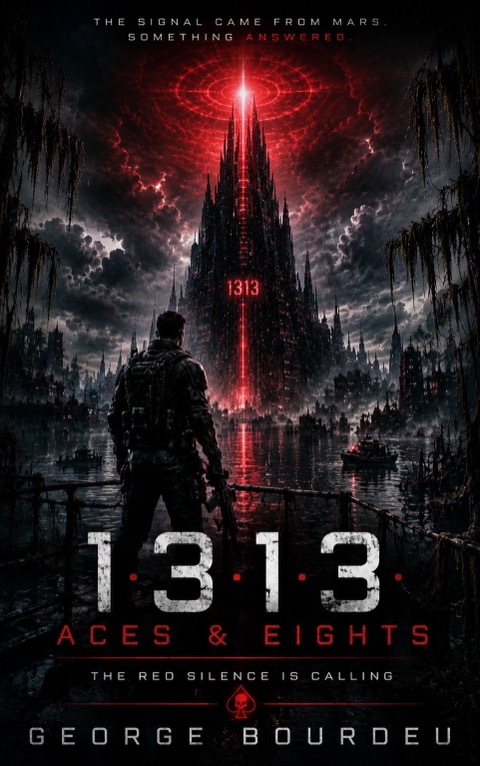 YA sci-fi · horror · mystery
1313: Aces & Eights: The Red Silence Is Calling
George Bourdeu. The 1313th Aces & Eights live in the Spire, a floating fortress tethered above the clouds of a flooded Louisiana, and below them a Portal pulses over the ruins of New Orleans, pushing out Martian Scavengers the blurb describes as half biological and half rusted machine. Idea size: a drowned state. Pick it if you liked Skyward's siege and want it wetter and meaner.
Start in the Spire; chapter one is free → -
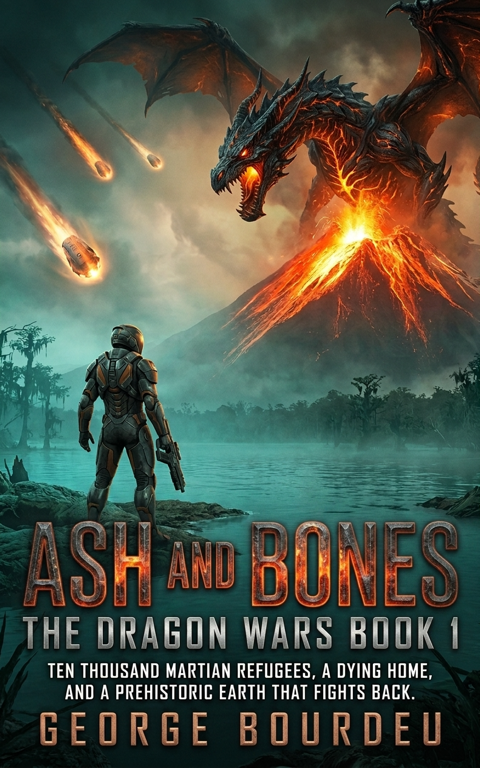 YA sci-fi · horror · military
Ash and Bones: The Dragon Wars, Book 1
George Bourdeu again, different war. Mars this time, where the blurb says the universe has been silent for far too long. The listing reads like a press kit, subtitle (The Ash and the Cradle) included, so I can tell you less about the plot than I'd like; the tags promise space opera, military sci-fi and something pack-shaped. Idea size: a dying world. Try the first chapter before the blurb puts you off.
Read the opening chapter free → -
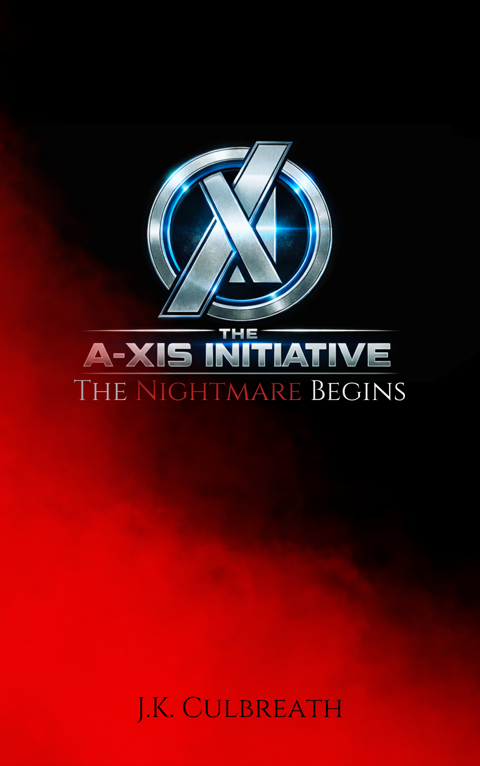 YA sci-fi · superheroes
The A-XIS Initiative: The Nightmare Begins
J.K. Culbreath. A mansion in the wind-scarred hills of upstate New York that should have collapsed decades ago, its foundations whispering, the blurb says, with the remnants of a catastrophe the world never learned to fear. The tags add superheroes and something apocalyptic, so expect powers rather than physics. Idea size: a house, and whatever's under it.
Walk into the mansion; chapter one is free → -
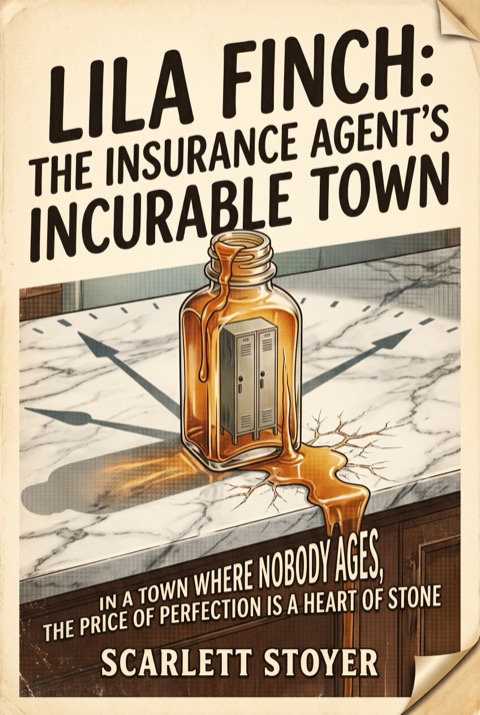 YA mystery · not sci-fi, but the premise is
Lila Finch: The Insurance Agent's Incurable Town
Scarlett Stoyer. An insurance agent handles the policies for nearly every resident of a secluded valley town where nobody has aged or fallen ill in forty years, and during a routine audit of the high school's records she notices the same teenagers have been in the tenth grade since the 1980s. A science fiction premise in a cozy mystery cardigan, and the one entry here where the lead is an adult and the teenagers are the idea.
Open the audit; first chapter free → -
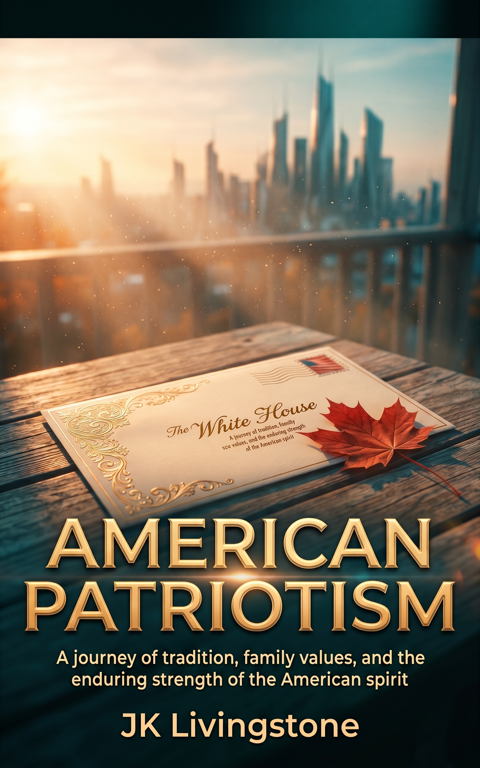 YA contemporary · not science fiction
American Patriotism
JK Livingstone. No science fiction here. A YA coming-of-age piece set in 2026 whose blurb is about pride in country and its leaders; it's on the page because it's one of only ten YA-tagged serials in the catalog. Skip it if you came for spaceships; the YA thriller list is the better door to what's in stock.
Chapter one is free if you're curious →