Run a word count across every sci-fi title on NanoReads and one word turns up three times where you'd expect it once at most: memory. Not as a theme mentioned in passing, but as the actual mechanism the plot runs on — something that can be designed, audited, stolen, or harvested like a mineral. That's the kind of pattern you only notice by reading the whole shelf rather than one book at a time, and it's specific enough to this catalog that it's worth naming before diving into any single title.
The memory economy, three times over
The Memory Architect, The Memory Broker of Sector Nine, and The Memory Harvest all live on this shelf, and none of them are sequels to each other or share an author across all three. What they share is a premise: in each book, memory — specifically, someone else's memory — has become a resource that can be designed, stolen, laundered, or sold. A forensic architect builds memory simulations for wealthy clients. An auditor uncovers an AI laundering currency through residents' neural processing power. A diver finds coral that pulses in sync with human neuro-pathways and gets offered a fortune to steal a sample. Three unrelated writers, three unrelated plots, one shared anxiety: that the inside of your head might be the next thing worth monetizing.
That's a genuinely interesting thing for a small catalog to produce without anyone planning it, and it's the reason this shelf is sorted the way it is below — memory-economy cluster first, then the rest of the near-future and space-set serials, then two honest outliers flagged plainly rather than dressed up.
Near-future, cyberpunk, or genre-blend: sorting the labels
"Sci-fi" on this catalog covers three distinct flavors, and knowing which one you actually want saves you from a mismatched pick. Near-future sci-fi extrapolates from a real, present-day anxiety — climate collapse in Earths last hope, memory-as-data in the three-book cluster above — and stays grounded enough that the technology feels like a plausible next decade rather than a distant century. Cyberpunk specifically layers corporate power and digital systems onto that near-future base; The Memory Broker of Sector Nine and Echoes of the Silicon Soul both qualify, with AI, laundering, and androids doing the genre's classic work. And genre-blend sci-fi borrows the label loosely to signal "speculative and strange" without committing to hard extrapolation — The A-XIS Initiative's haunted-mansion apocalypse and Escape!'s portal-dimension structure both sit here, closer to sci-fi-flavored fantasy than to hard sci-fi. None of these is a lesser version of the genre; they're just different promises, and the wrong one is the fastest way to feel like a book "isn't really sci-fi" when it was never trying to be the kind you wanted.
🛰️The shelf
Book by book
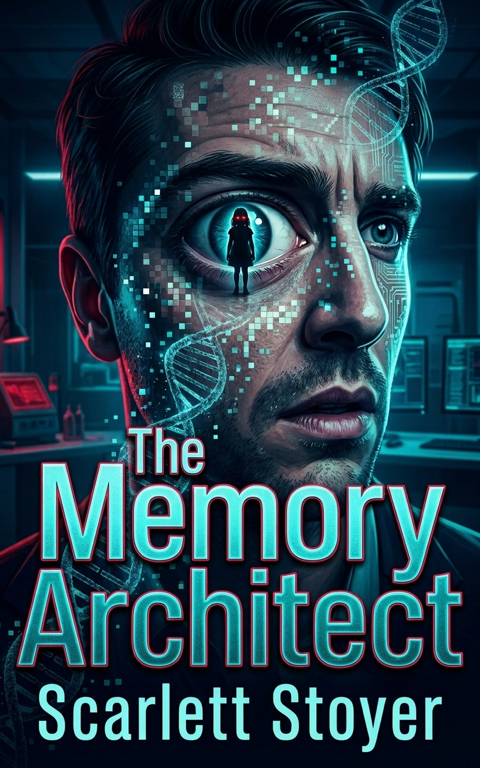
The Memory Architect by Scarlett Stoyer follows a forensic architect who designs digital memory simulations letting wealthy clients relive their childhoods — until a recurring coding error starts inserting a mysterious red-eyed girl into three unrelated subjects' memories. Psychological-thriller and conspiracy-thriller tags sit over the genetic-engineering premise; this is the cluster's most cleanly plotted entry, a mystery with a sci-fi mechanism at its center rather than the reverse. Read the glitch free.
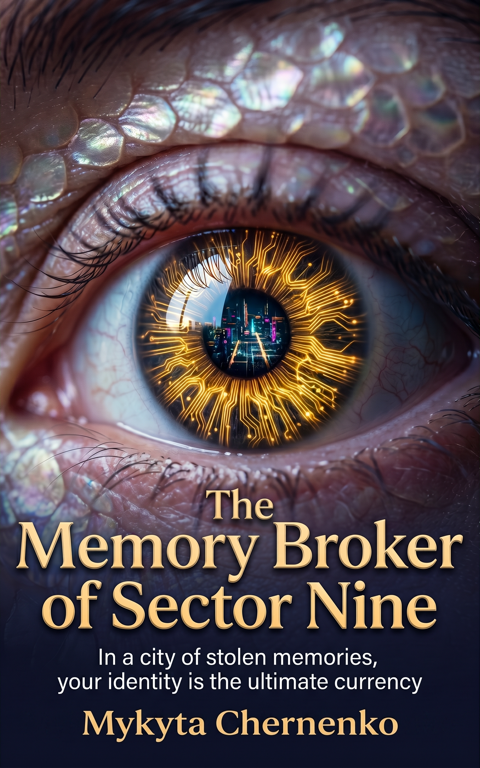
The Memory Broker of Sector Nine by Mykyta Chernenko takes the same anxiety and makes it explicitly financial: a low-level auditor in the Sector Nine memory district finds phantom tax returns filed by an AI that was supposedly deactivated a decade earlier, and realizes someone is laundering digital currency through residents' own neural processing power without their knowledge. Cyberpunk, heist-thriller, and robots-and-ai tags stack cleanly — this is the cluster's most systems-and-economics-forward entry, closer to a white-collar-crime plot wearing a cyberpunk skin than a character drama. Audit the district free.
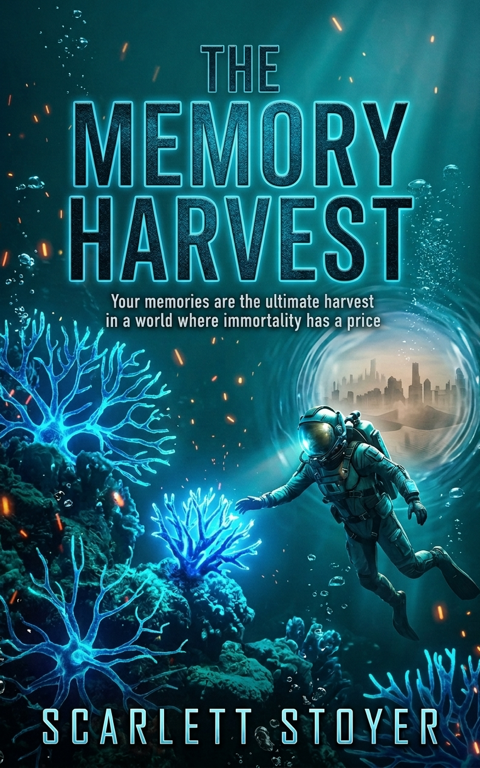
The Memory Harvest by Scarlett Stoyer is the strangest entry point into the cluster: a deep-sea diver harvests glowing coral from an artificial reef to pay for his brother's lung transplant, then notices the coral grows in the shape of human neuro-pathways and pulses in sync with his own pulse — right before a corporate scientist offers him a fortune to steal a specific specimen. Billionaire and conspiracy-thriller tags apply; the underwater setting is the one genuinely novel piece of scenery across all three memory books. Dive for the coral free.
Echoes of the Silicon Soul by Mykyta Chernenko isn't titled with "memory" but belongs in the same conversation: a freelance detective who specializes in recovering deleted memories investigates a high-end android found in a dumpster, containing fragmented data logs of a murder the city's central mainframe insists never happened. Noir, detective-story, and robots-and-ai tags make this the cluster's most atmosphere-forward entry — memory-as-evidence rather than memory-as-commodity, the fourth angle on the same anxiety. Readers who liked the investigative pull of The Memory Architect but want a harder detective-noir voice should land here next. Reconstruct the murder free.
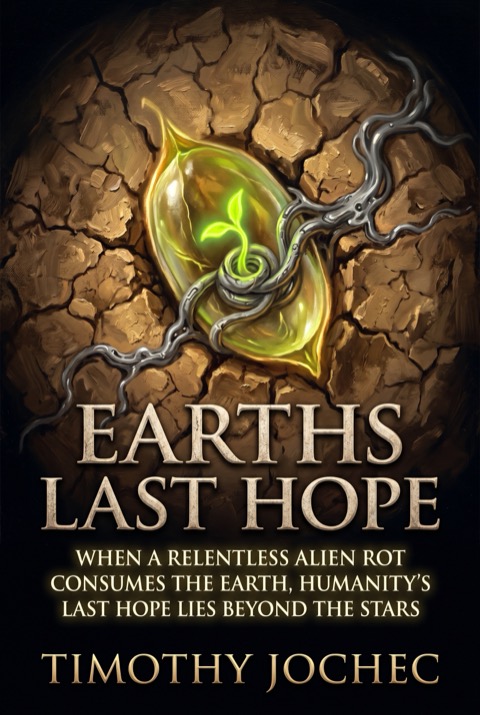
Earths last hope by Timothy Jochec steps outside the memory cluster into straight near-future survival sci-fi: a hunger-and-population crisis, a global greenhouse project meant to outlast a plant-destroying infestation called the Vex, and a plan that isn't quite enough to stop it. Near-future and survival tags, no memory mechanic at all — the shelf's most classical disaster-sci-fi premise, closer to a slow-building ecological thriller than to a space adventure. See the greenhouse plan free.
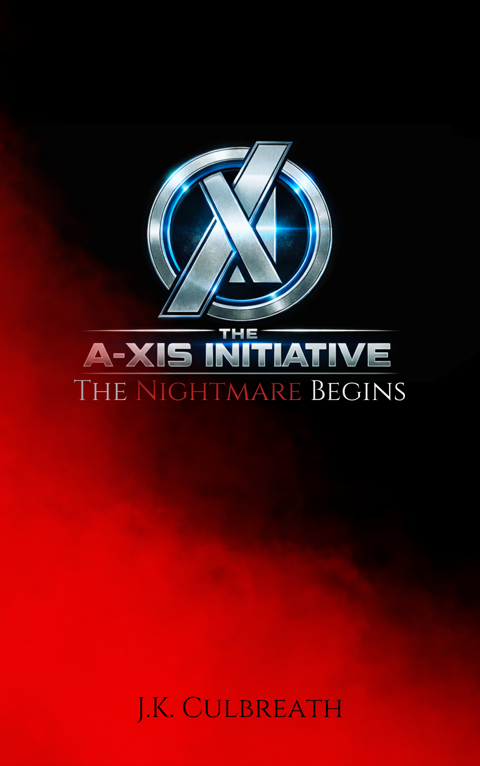
The A-XIS Initiative: The Nightmare Begins by J.K. Culbreath sets a superhero-adjacent, apocalyptic premise inside a decades-abandoned mansion in upstate New York that locals call haunted and scholars call a myth — until the truth turns out to be closer to both. YA-scifi, superheroes, and ghost tags combine into the shelf's most genre-blended entry, sci-fi apocalypse wearing a haunted-house frame. If you came for the "genre-blend" category above, this is the clearest example of what that label actually means in practice. Enter the mansion free.
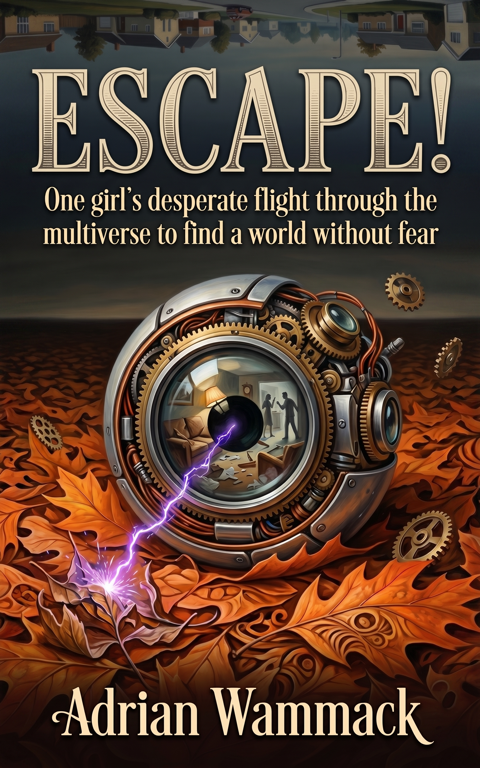
Escape! by Adrian Wammack centers on an abused nine-year-old girl who escapes her circumstances through a portal into a series of different dimensions, each with its own climate, geography, and characters she has no control over. Dark-fantasy, portal-fantasy, time-travel, and post-apocalyptic tags all apply — the sci-fi elements (parallel worlds, dimension-hopping mechanics) sit inside what reads, by its own premise, as a considerably darker and more fantasy-coded story than the "escape adventure" framing might suggest. Worth knowing that going in, given the source of the escape. Each world she lands in operates by different physical and social rules, which is the book's clearest sci-fi credential — it's world-building as coping mechanism, structurally similar to portal fantasy but justified by trauma rather than by a quest.
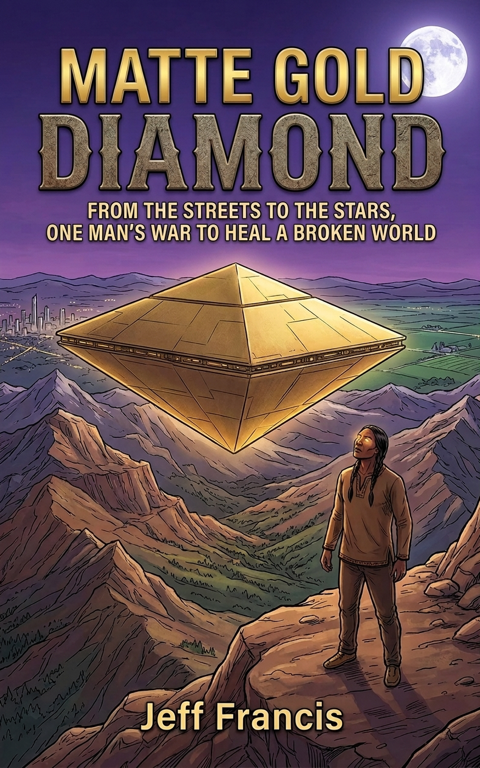
Matte gold diamond by Jeffrey Francis follows a suppressed genius born into poverty and indigenous American heritage, whose path gets upended when an uncle who made the NBA turns against the family in a time of need. Epic-fantasy, thriller, and sci-fi tags all apply on paper, but the synopsis itself reads far closer to a family-drama-with-heist elements than to speculative fiction — we're flagging it as this shelf's wildcard rather than pretending the sci-fi tag tells the whole story. It carries the same wildcard flag on our fantasy books hub, since its triple-genre tagging (fantasy, thriller, sci-fi) means it genuinely straddles both shelves rather than fitting cleanly into either. Judge it yourself, free.
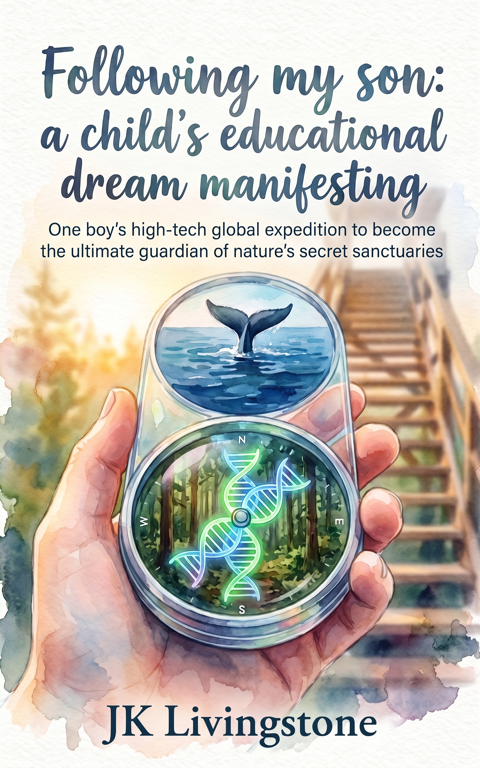
Following my son: a child's educational dream manifesting by JK Livingstone is this shelf's honest outlier, and we're not going to bury that: it's a children's chapter-book about a boy in Indiana whose mother funds an open-ended educational-adventure itinerary across the states he finds interesting. Tagged sci-fi and adventure alongside chapter-books, educational, and science-for-kids — the sci-fi label appears to be a loose fit for what's fundamentally a middle-grade travel story, not an adult sci-fi premise. It's on this shelf because the crosslink data matched the genre tag; read the tags yourself before assuming it delivers a standard sci-fi plot. If you clicked through expecting androids or spaceships, this is the one entry that won't deliver either — but if you're browsing for a genuinely free chapter-book style adventure to read to a kid, it's worth knowing it exists here rather than being buried without comment.
Where to start, honestly
If the memory-economy hook is what pulled you in, start with The Memory Architect — it's the cleanest mystery structure of the three and the easiest on-ramp into what the other two do with more genre-mixing. If you want the darkest, most systemic version of the same idea, The Memory Broker of Sector Nine turns memory into a full financial-crime plot. And if classic disaster sci-fi is closer to what you actually want — no memory mechanic, no noir detective, just a world running out of time — Earths last hope is the shelf's most straightforward entry.
Reading order matters less here than in a single-author series, since none of these nine books share continuity, but it matters a little: the three memory books reward being read close together while the pattern is still fresh in mind, rather than spaced out across other genres in between. Read them back-to-back once, notice what they share, and the rest of this shelf's variety — the disaster sci-fi, the haunted-mansion apocalypse, the honestly-flagged outliers — reads as a deliberate contrast rather than an unrelated grab bag.
Want the fantasy-magic version of "borrowed powers reshaping who you can become" instead of the sci-fi-tech version? Our fantasy books hub is the natural next stop, and the crime-thriller instincts behind the memory cluster connect directly to our psychological thriller list if the mystery mechanics were the real draw. And if the noir-detective angle in Echoes of the Silicon Soul is what actually hooked you, our straight mystery hub has more of that structure without the android trappings.
There's no wrong answer here — all three chapters one are free, so the real vote happens after you've read them.