Science fiction is called hard when the story treats known physics, chemistry and biology as a constraint rather than a mood. The author does the arithmetic: orbits take months, radiation kills, reaction mass runs out, signals crawl at light speed. Hard science fiction novels build plots out of those limits rather than around them. That is the definition, and it lasts about one paragraph before it falls apart.
Because every book here cheats. Somewhere in each one sits a device, an organism or a law of nature that does not exist. "Hard SF" is a ratio, not a purity test: how much is worked out honestly against the one thing you have to grant. The cheat is the part I care about.
🔩How the rigor dial works
Five rungs. Five means you could hand the book to a physicist as a homework set and it would mostly survive: no faster-than-light travel, no gravity without spin, no free energy. One means the science is scaffolding for something the author cares about more. Nothing here drops below two.
Then, under each rating, the cheat. Naming it up front is not a spoiler. It is what stops you bouncing at chapter nine, muttering that the drive makes no sense, when the drive was never the point. Tell a rigor-minded reader about the engine on page zero and they stay for four hundred.
Ratings are mine and arguable; I have read all nine.
🛰️Nine novels, hardest first
1. Dragon's Egg — Robert L. Forward
Forward was a gravitational physicist and wrote this like a proposal: pick a neutron star, work out the surface gravity, then ask what could live there. What lives there evolves a million times faster than we do, so a civilization rises and overtakes us in a few days of crew time. The people are cardboard; the last hundred pages still gave me real vertigo.
The cheatThe cheela themselves. Life running on nuclear reactions in degenerate matter is a physicist's daydream. Grant Forward the organism and the rest is arithmetic.
2. Permutation City — Greg Egan
Uploaded minds, what it costs to run a copy of yourself at a slower clock speed, what the copy owes the original. The opening, where a scanned man tries to kill himself and finds the environment will not let him, is the cleanest statement of that problem anyone has written. Egan's short fiction is the gentler way in, alongside picks on our list of the best sci-fi short stories.
The cheatThe dust theory: a computation scattered across time in any order still adds up to conscious experience. Metaphysics in a lab coat, and the back half depends on it.
3. Blindsight — Peter Watts
A first contact novel arguing that consciousness is a maladaptive accident and intelligence does not require it. Watts trained as a marine biologist and the book ships with a bibliography of real papers. The alien answers language without understanding it, the way an immune system answers a protein.
The cheatVampires. A resurrected human predator subspecies with a seizure triggered by right angles. Watts builds an elaborate justification and it is still a vampire.
4. The Martian — Andy Weir
One man, insufficient potatoes, a lot of duct tape. What keeps it readable when nothing happens except chemistry is that Weir writes every problem as a puzzle with a stated solution, narrated by the funniest voice in modern SF. Hab canvas, water reclaimer, rover battery budget: it checks out.
The cheatThe storm in chapter one. Mars's atmosphere is about one percent of Earth's, so that wind would barely tug a jacket. Weir knew and did it anyway to strand the man.
5. Red Mars — Kim Stanley Robinson
The first hundred colonists land, then spend eight hundred pages arguing over whether they have any right to change the planet. The areology reads like fieldwork and the split between terraformers and preservationists is the plot. Robinson is the only writer here who treats constitutional law as a science.
The cheatMaterials and clock. The orbital elevator needs a cable stronger than we can build, the longevity treatment is a biological wish, and the terraforming timeline is optimistic.
6. Revelation Space — Alastair Reynolds
Reynolds worked as an astronomer for the European Space Agency and holds one line absolutely: nobody goes faster than light. Ships crawl between stars just under c and a conversation across two systems takes a lifetime. Everyone you left behind is dead when you arrive, and that does the atmospheric work.
The cheatThe toolbox around the physics. He refuses FTL, then hands his factions nanotech, augmented minds and alien artefacts that behave however the plot needs.
7. Rendezvous with Rama — Arthur C. Clarke
A cylinder enters the solar system, a crew goes inside, and Clarke spends the book on what it is like to stand at the axis of a spinning world fifty kilometres long. The Coriolis effects are right, so is the weather that forms as the interior warms. Barely a character in it; I have reread it three times anyway.
The cheatRefusal. Rama's drive is never explained and its builders never appear. Structurally a cheat, and also why it still works fifty years on.
8. Ringworld — Larry Niven
A band of material circling a star, a million miles wide, with the living area of three million Earths. Niven works out the spin, the shadow squares that make night, the ecology of a surface too big to map. The characterisation of the women has aged into something you read past.
The cheatScrith, the unobtainium the ring is built from, at tensile strengths no real material approaches. Readers also showed the ring is unstable, and Niven wrote the fix into the sequel.
9. The Three-Body Problem — Cixin Liu
An orbital mechanics problem with no general solution becomes the reason a civilization keeps burning down, while physicists on our end start dying. Liu writes ideas at a scale nobody else attempts and characters at a scale nobody should. Careful astronomy, particle physics that is fantasy in a good disguise.
The cheatThe sophon: a proton unfolded into higher dimensions, etched with circuitry, refolded, and used to sabotage physics experiments light years away. The trilogy leans on it.
🧪Which cheat can you personally tolerate?
Tick what you can live with. Whichever line makes you wince is the book to leave for later.
- An impossible material. Scrith, a cable strong enough for a space elevator. Fine with it? Ringworld and Red Mars are open to you.
- An impossible organism. Nuclear life on a neutron star, vampires with a geometry allergy. Fine with it? Start at the top.
- Faster than light anything. If you cannot tolerate it, Reynolds is your author and most space opera is not.
- Physics as a magic wand, once. The sophon. Grant it and Liu opens up; refuse it and stop after book one.
- A convenient disaster. The Mars storm that could not knock anything over. Cheap plot fuel, or a fair price for the setup?
- A philosophical claim dressed as a result. The dust theory, or consciousness as a bug. If unfalsifiable premises annoy you more than bad engineering, take the middle of the list.
🚪Where to start if you have never read this stuff
The Martian, and it is not close. Funny, fast, science delivered as small wins rather than lectures, and the one big cheat lands in chapter one so you can shrug it off early. Want more voice afterwards? Project Hail Mary. Want more strangeness? Rama.
Two ways to go wrong: opening with Egan, who assumes you enjoy being lost for eighty pages, or mistaking Red Mars for a slow novel when it is a political one. For the neighbouring shelves, our 2026 sci-fi roundup covers new releases across the softness range, and dystopian science fiction gives you the collapse without the equations. Feed any of these nine titles into the books-like finder for read-alikes from our catalog.
📖The catalog's sci-fi shelf runs soft
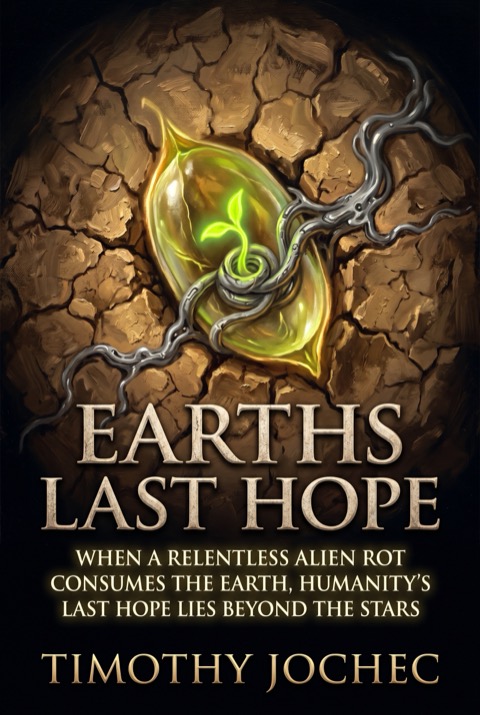
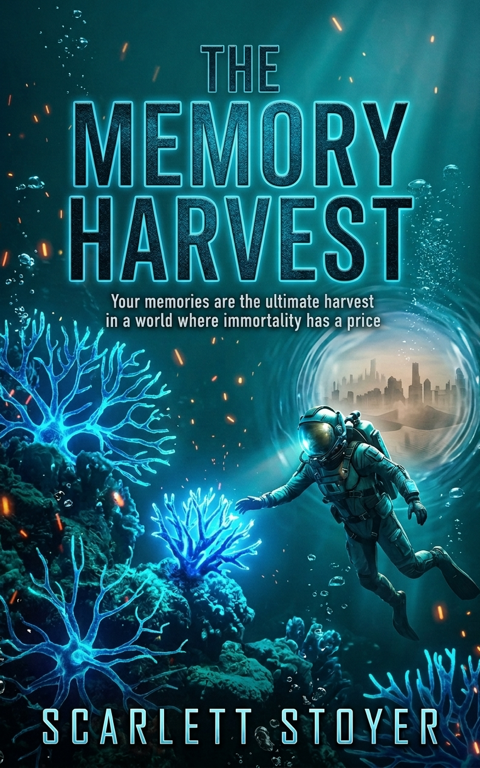
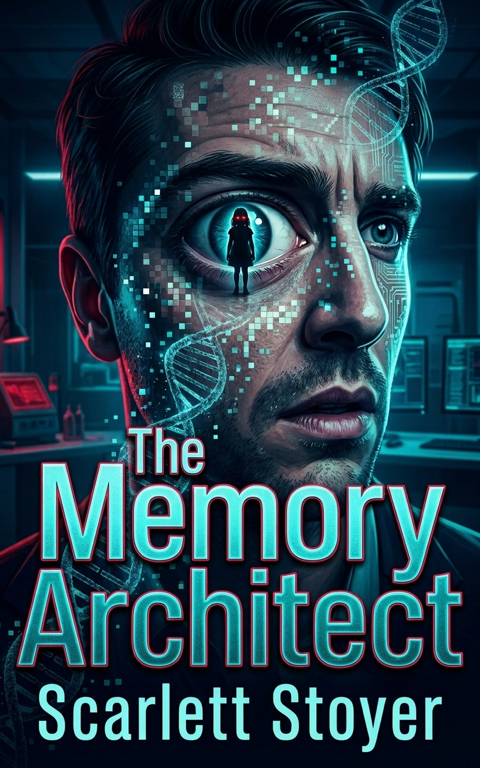
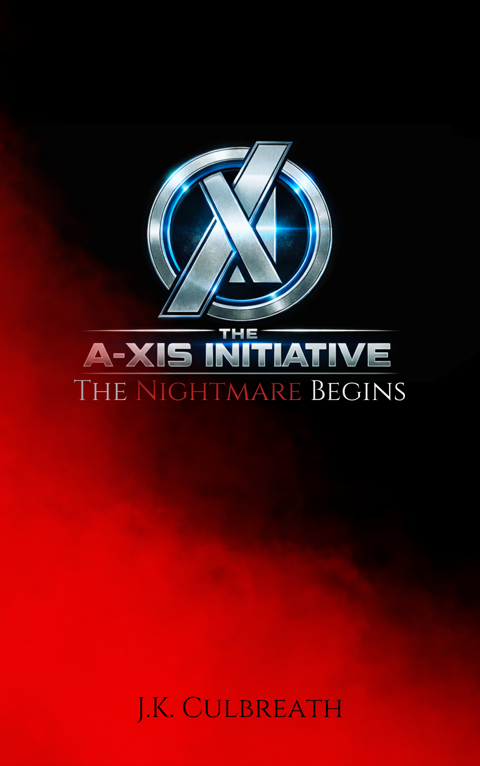
None of these five belong on the rigor dial above. NanoReads publishes serialized fiction by independent authors, and the sci-fi shelf here is near-future thriller and speculative adventure with sci-fi furniture rather than worked physics. Nobody is calculating delta-v. What it serves is a premise you can turn over on a commute. Chapter one of each is free.
💬Straight answers
Does a book stop being hard SF the moment it cheats? No, or the category would be empty. A single signposted impossibility inside four hundred pages of honest consequence still reads as hard. What kills the label is cheating repeatedly and quietly, so a reader can never tell which rules are load bearing.
Is it always dry? Often. Weir dodges it with jokes, Watts with dread, Clarke with awe at one object. If the top three read like assembly instructions to you, drop to positions four through seven.
Where does short fiction fit? Arguably it is the genre's natural length, since most hard SF exists to deliver one idea and a novel has to stretch it over a plot. Our novella definition covers the middle length, and the free novels online hub collects what you can read here without paying.
Do you need physics to enjoy these? No. Each book teaches what it needs you to know, usually through a character learning it.