Why does a book you can already see the end of still make your hands sweat? Because suspense is not about what you don't know. It's about what you do know and the character doesn't. Hitchcock's old example still explains the genre: two people chat at a table for five minutes and it's dull; show the audience the bomb under the table first and the same five minutes are unbearable. That gap between your knowledge and the character's is called dramatic irony, and it is the engine of every suspense thriller book worth losing a night to. A thriller proper runs on a clock the character is racing; a mystery runs on a question nobody at the table can answer yet. Plenty of books burn all three. The good suspense ones burn the first hottest.
So this list isn't ranked by quality or by how fast the pages turn. It's a ledger. Each book gets a line saying what you're holding that the character isn't, filed from the biggest gap to the smallest, which also runs from pure suspense down to the border where it turns into something else. If you'd rather pick by the puzzle-versus-chase mix, the mystery thriller dial does that job; this page only cares about who knows what.
🧾Suspense, thriller, mystery: who's holding the information
The three words get used as one word on the back of every paperback. They aren't. The row that matters most is first.
| Suspense | Thriller | Mystery | |
|---|---|---|---|
| What you know | More than the character. You've seen the bomb; they're still ordering coffee. | Roughly what the hero knows, learned at their speed, often a beat behind the villain. | Less than someone in the book. The answer exists; you're allowed to reconstruct it. |
| The clock | A fuse rather than a deadline. It burns whether or not anyone in the scene notices. | A real deadline, usually stated: the bomb goes off at noon, the assassin lands Friday. When the deadline is a trial date it becomes a legal thriller. | No clock in the strict sense. Time passes so clues can accumulate. |
| Typical POV | Split: predator and prey, or a narrator you can see around. | Close on the protagonist, with villain interludes to set the stakes. | The investigator, or someone standing next to one. |
| The question in your head | "When will she find out?" | "Will he make it?" | "Who did it, and how?" |
| Pick this if | Waiting for the door to open is worse for you than the door opening. | You want speed. The sleep-cost audit is your list. | You take notes. Start with murder mysteries or the mystery hub. |
📖The ledger, biggest gap first
Three tiers: you know everything, you're a chapter ahead, or you know only what the narrator knows and the book stays suspense anyway, which is the hardest trick on the page.
Tier one: you know it all
The Talented Mr. Ripley
Tom Ripley is sent to Italy to bring a rich man's son home and instead decides he'd rather be him. You are inside Tom's head for the killing of Dickie Greenleaf on the boat at San Remo and for every forged signature after, so nothing surprises you. It surprises Marge, and the Italian police, and Highsmith makes you watch each of them get close. She also makes you want Tom to get away with it. Being ahead of everyone is standard for this tier; being on the killer's side is the Highsmith extra.
Verdict: slow, elegant, nastier every reread. If Tom's the reason you're here, the books-like finder can chase down his descendants.
The Day of the Jackal
A hired assassin is contracted to kill Charles de Gaulle, and any reader in 1971 already knew de Gaulle had died in his armchair the year before. So the ending is public record before you open the book, and Forsyth doesn't care. He gives you the Jackal's every move, the passport built on a dead child's birth certificate, the custom rifle, while the French detective Lebel starts from nothing. You know what's coming and you cannot look away from the two men converging on it.
Verdict: proof that spoilers kill mystery, not suspense. The passport chapter has been copied by half the genre since.
The Silence of the Lambs
Trainee agent Clarice Starling is hunting a killer the press calls Buffalo Bill, and Harris cuts away from her to show you his basement, and the senator's daughter in the pit at the bottom of it, long before Clarice has a name. You know the victim is alive; Clarice knows a body count. Then the finale: the FBI raids one house in Illinois while Clarice, alone, knocks on a door in Ohio, and only you know which is which. Harris cross-cuts the two doorbells and it is the purest dramatic irony in the genre.
Verdict: the Lecter scenes are a sideshow; the suspense lives in the well. If the horror side was the draw, the horror shelf keeps the lights off.
Tier two: you're a chapter ahead
No Country for Old Men
Llewelyn Moss finds a drug deal gone wrong in the desert and walks off with a satchel of cash, and you learn about the tracking device hidden in it a beat before he does. That beat is the book. Anton Chigurh, the man following the signal, is shown to you in full while Moss keeps thinking he's ahead. McCarthy strips out the punctuation and the interiority and what's left is the feeling of hearing footsteps in a motel corridor you can't see.
Verdict: the least comforting book on the page, because it refuses the payoff a thriller would give you. If the crime side is what held you, keep going into the crime novels list.
Strangers on a Train
Two men meet in a dining car. Bruno proposes they swap murders, his father for Guy's wife, so neither has a motive. Guy treats it as drunk talk. You don't, because Highsmith gives you Bruno's chapters, and by the time Guy's wife is dead at the amusement park you've sat with a killer's certainty for a hundred pages while Guy was designing buildings. What Hitchcock's film softened, the novel keeps: Guy does not stay innocent.
Verdict: rougher than Ripley, but Bruno's letters are the template for every stalker plot since. Read it after Ripley, not before.
Before I Go to Sleep
Christine wakes every morning with no memory of her adult life and a man beside her who says he's her husband. A doctor she doesn't remember tells her to check a journal hidden in the wardrobe, and the first line in her own handwriting is a warning not to trust him. The structure is the trick: you remember yesterday's entries and Christine doesn't, so you are always exactly one day ahead of the narrator, watching her re-learn things you already flinched at.
Verdict: the closest modern book to the Hitchcock table. There is a reveal, but the daily forgetting is the point. Bottom of tier two because your lead resets every morning.
Tier three: you know only what they know
Misery
Novelist Paul Sheldon crashes in a Colorado blizzard and wakes in the spare bedroom of Annie Wilkes, his number one fan, who has read that he killed off her favourite character and will not let that stand. You learn Annie at exactly the rate Paul does, and it's still suspense rather than mystery because there's no question to solve, only a mood to survive. The typewriter she buys him is missing its letter n, and the way you start dreading each missing n is King's method in miniature.
Verdict: the confinement is the clock. If the two-people-one-house pressure is what you liked and you want it with the shirts off, the dark mafia romance hub is the honest next door.
Rebecca
A young, unnamed woman marries a widower and moves into Manderley, where the housekeeper, the dog and the monogrammed stationery all still belong to the first wife. The ledger flips here: the narrator knows nothing and neither do you, while a character in the house knows it all and enjoys watching you not. Same dread as everywhere else on this page, running in reverse. The fancy-dress ball, where the narrator wears the costume she's been steered into, is the cruellest scene in a very cruel book.
Verdict: the border post. Past this point, books hide the truth from the reader for a late detonation, and that's a different craft entirely, catalogued by twist type on the psychological thriller list.
🌙Which one tonight
Late and want to feel superior to everyone in the book: Ripley. Want to watch a machine run: Jackal. Want the doorbell moment and don't mind a basement: Lambs. Rebecca if you'd like to be the one in the dark for once. Still stuck? The what-should-I-read-next quiz asks about mood rather than genre, which for this shelf is the right question. And if the book you actually want is a teenager finding out no adult is coming, that is its own list: YA thrillers, sorted by who betrays you.
🔓On NanoReads: five serials, filed the same way
Twenty-nine of the 259 serials on NanoReads carry a thriller tag; eight are psychological, four are kidnapping plots. These five are the ones filed under this page, all by real authors, each written from what its listing says and nothing more, with a know-label worked out from its own blurb. Where a listing is thin, I say so.
-
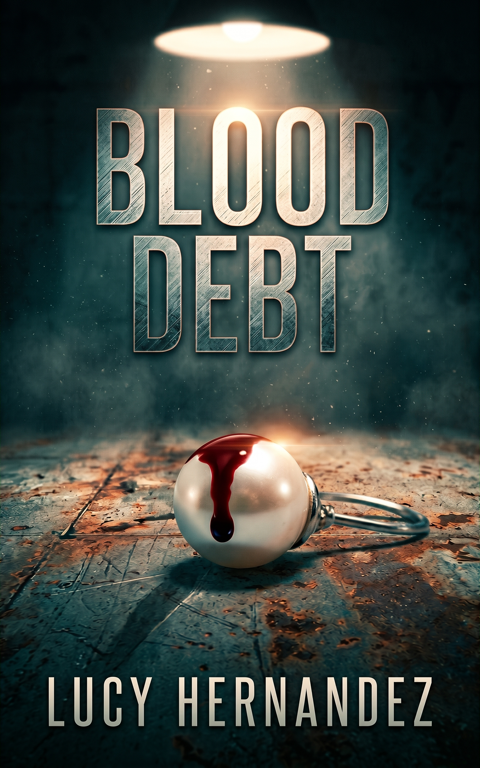 You know: she gets out
Blood Debt
Lucy Hernandez · thriller, crime · kidnapping, organised crimeThe listing is two sentences long and the second one is the ending: a woman is kidnapped by the mafia as leverage against her family, and she escapes at the end. That's a Day-of-the-Jackal contract with the reader, whether the author meant it or not: you're told the outcome, and the only question left is the route, which is where kidnapping plots live or die. Top of the shelf because the blurb hands you more than any other serial here.
Chapter one is free; see how she's taken → -
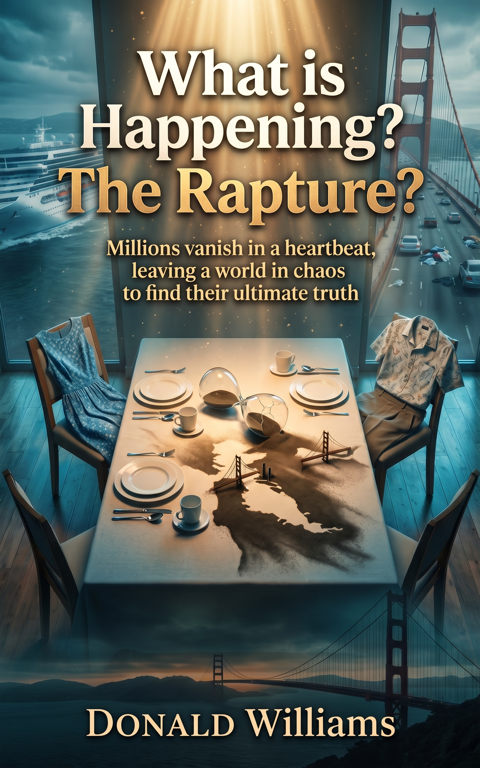 You know: what the title says
What is Happening? The Rapture?
DONALD Williams · thriller, Christian fiction · grief and loss, survival, parentingThree interwoven opening scenes. In the first, parents drag a sixteen-year-old boy and a fourteen-year-old girl to church instead of a friend's pool party, and the kids sit through a pastor going on about the rapture. The dramatic irony is baked into the cover: you've read the title and the family hasn't, so the pool party and the sermon are both ticking. Faith-forward by tag and by premise, so know that going in.
Read the first of the three scenes free → -
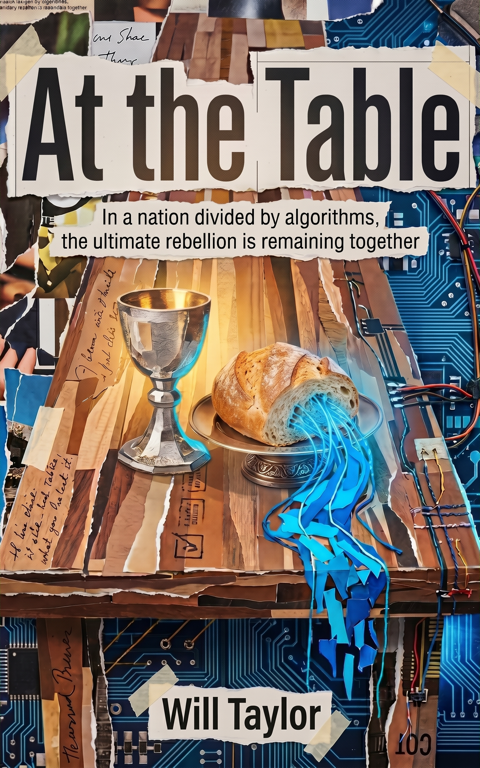 You know: the machine, before the priest does
Resurrection
Will Taylor · thriller, literary fiction · conspiracy, political, griefPolitical violence, fear-driven governance and a behavioural AI system are pushing America toward breaking apart, and a former special-operations soldier who became an Episcopal priest gets pulled into a national crisis centred on his church in Alexandria, Virginia. The listing names the AI system before it names the man, which is the conspiracy-thriller tell: you're shown the machinery, then watch a person walk into it. Whether the book holds that gap across its chapters I can't promise from a blurb. The set-up is tier two.
Open chapter one, no sign-up → -
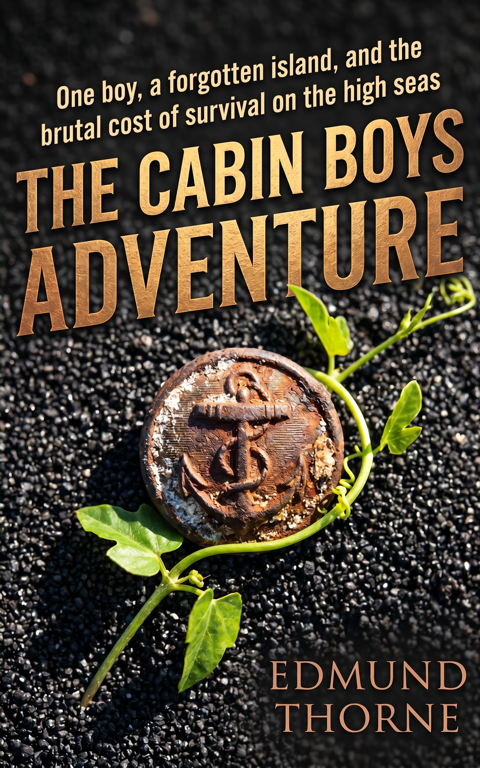 You know: the attack is coming
Shadows in the Mist
Edmund Thorne · adventure, thriller, historical · survival, sea, warA fourteen-year-old cabin boy on a British man-of-war, under a stern captain, is sent to the Spanish colonies on the king's orders to find out what Spain is up to. The blurb tells you the Spanish navy attacks before they get there. So you board knowing the ship won't arrive intact and the boy doesn't, which is a fair dramatic-irony setup, but the tags say sea adventure and survival, and this is more Hornblower than Highsmith. Adventure with a suspense opening.
Try the first chapter and judge the crossing → -
 You know: almost nothing
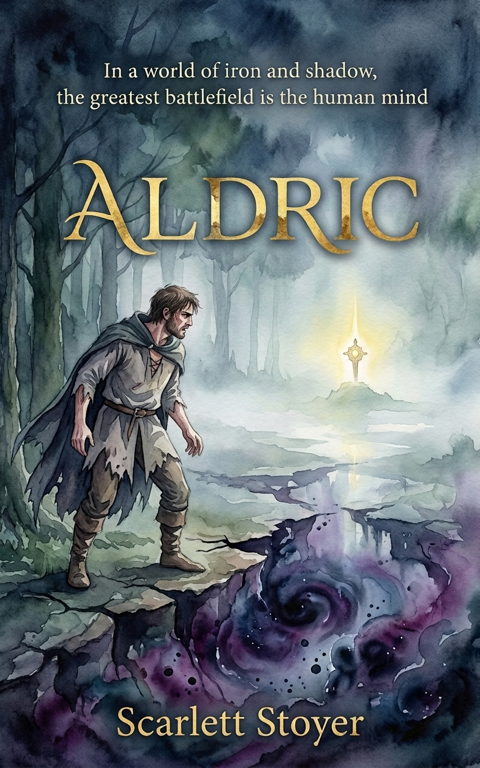
Aldric
Scarlett Stoyer · thriller, historical, paranormal · action, survival, psychological, medievalThe entire description is three words: "Christian Psychology Thriller." The tags do the rest of the talking: medieval setting, paranormal, survival, psychological. That puts it at the Rebecca end of the ledger, where you know nothing and have to trust the book to be holding something. I can't tell you whether it is, only that a medieval psychological thriller is a rare shelf and the first chapter costs nothing to check.
Chapter one is free; find out what the three words hide →