Why do some crime novels keep you up because you have no idea what happened, and others because you know exactly what happened and nobody on the page does? They are not running the same machine. Every crime story sets a gap between what you know and what the characters know, and its direction decides whether you get curiosity or dread.
So that is how this list is sorted. Nine books, three gaps, each pick labelled.
🔍The three gaps
The first gap is the classic one: you know less than the investigator. Clues arrive when the detective finds them and the pleasure is reconstruction. That is the whodunit.
The second runs the other way. You know more than the investigator and spend the book watching a net close on someone who cannot see it. Crime writers call it the inverted mystery; television knows it as Columbo. Curiosity gets replaced by something slower, because you can see the mistake coming eighty pages out.
The third gap collapses. You are inside the crime, and the question is whether they get away with it and how you feel about wanting them to. Criminal-POV fiction makes you an accomplice and charges nothing for it.
Good crime fiction cheats across at least two of these, and two books below switch gaps mid-way. The label is a starting position, not a cage.
🕯️You know less than the detective
Clues arrive on the investigator's schedule, and the reward is the click when it assembles.
1. In the Woods
A twelve-year-old is found dead at an archaeological dig outside Dublin, in the same wood where two children once walked in and never came out and a third was found clinging to a tree with blood in his shoes. That third child is now the detective on the case and has told nobody. French runs two mysteries and resolves one, which is either the bravest thing in modern crime fiction or a betrayal. I have watched that argument ruin a book club. Rob Ryan is also a liar, so the gap is partly between you and your narrator. It is slow and it is gorgeous and it will annoy you for weeks.
2. The Big Sleep
Marlowe is hired by a dying general to deal with a blackmailer and walks into gambling debts and a missing husband nobody wants found. The plot is famously incoherent; Chandler could not account for the chauffeur's death when the film crew asked. It does not matter. You are here for a man walking into rooms and describing them better than anyone since.
3. Bluebird, Bluebird
Two bodies turn up days apart in a small East Texas town on Highway 59: a Black lawyer from Chicago and a local white woman. Darren Mathews, a Black Texas Ranger already in trouble with his own service, works a case where every answer costs him something. Locke uses the whodunit frame to show how much an investigation depends on who is allowed to ask questions, and she does it without slowing the case down.
🪤You know more than the detective
The reveal is spent early on purpose, and what replaces it is dread. Dread has a longer shelf life than surprise.
4. Mystic River
Three boys in Boston, one car, one of them gets in. Twenty-five years later one is a detective, one is an ex-con whose daughter has just been murdered, and one is the boy who got in the car. You watch the wrong conclusions form holding everything you would need to stop them, while Lehane keeps giving Jimmy Marcus a head start on the police. The last forty pages are the most upsetting thing in mainstream crime fiction, and none of it rests on a twist.
5. The Force
Denny Malone runs an elite NYPD unit in Manhattan North and is, by any reading, dirty. The book does not build to that as a revelation; it establishes it early, then makes you like him anyway while the federal case assembles. The real engine is loyalty arithmetic: which of his own guys goes down so the others stay standing. Relentless and profane, on purpose.
6. The Yellow Dog
A Breton port town in winter, a stranger shot through a doorway, poisoned drinks, a stray dog nobody can account for, and local notables who know each other far too well. Simenon hides very little from the reader; Maigret just stays in town, drinks, watches people get frightened and waits for the arrangement to break. Under 200 pages, and the wet provincial atmosphere outworks the plot.
🔪You are inside the crime
No gap at all: you get the criminal's reasoning in real time. These are the books that make readers uneasy about themselves.
7. The Talented Mr. Ripley
Tom Ripley is sent to Italy by a rich man to bring his son Dickie home, and falls in love with the life Dickie has instead. Highsmith never asks you to condemn him. She stays in his head while he improvises badly, until you are anxious on a murderer's behalf about something as small as a misdated signature. Cold and funny, and proof that crime fiction does not need a detective at all.
8. Gone Girl
A wife vanishes on her fifth wedding anniversary in a hollowed-out Missouri river town, and her husband gives the worst press conference in fiction. It starts as a whodunit, then hands you the keys to the crime, which is why it sits here rather than up top. What aged best is the marriage writing: the accounting of small grievances is savage and exact. It reads faster and meaner the second time, once you can see the mechanism.
9. The Mermaids Singing
Men are being tortured to death in the fictional city of Bradfield and clinical psychologist Tony Hill is brought in to profile the killer. McDermid alternates the investigation with the killer's own first-person passages, so you get motive and method long before Tony does. Easily the most violent book here, and the torture is detailed rather than stylised, so check that suits you. If it is, the profiling material is the smartest in British crime fiction.
🧭Which gap are you in the mood for?
Want to be outsmarted? First group, the only one of the three where finishing feels like winning. Josephine Tey's The Daughter of Time is the extreme version, a detective solving a 15th-century case from a hospital bed; Richard Osman's Thursday Murder Club is the gentle end of the same instinct.
Want dread? Second group, at night. Watching a competent person make one small mistake is unbearable in a way a corpse never is.
Want to be implicated? Third group, knowing a criminal-POV book finished at 1am sits oddly the next morning. For the unreliable-narrator end, the best psychological thriller books list goes deeper than I can here; for the puzzle end, the murder mystery books roundup is the companion to this page, with more of both on the mystery books hub. Real cases live on the true crime shelf. Still undecided? The what should I read next quiz picks for you in a minute.
📖Five crime serials on NanoReads
Honesty first: the crime shelf here is thin and leans toward crime-adjacent thrillers with speculative bits bolted on. No Tana French in this catalog. What it does have is short chapters, a free first one, and a couple of premises you will not find elsewhere.
-
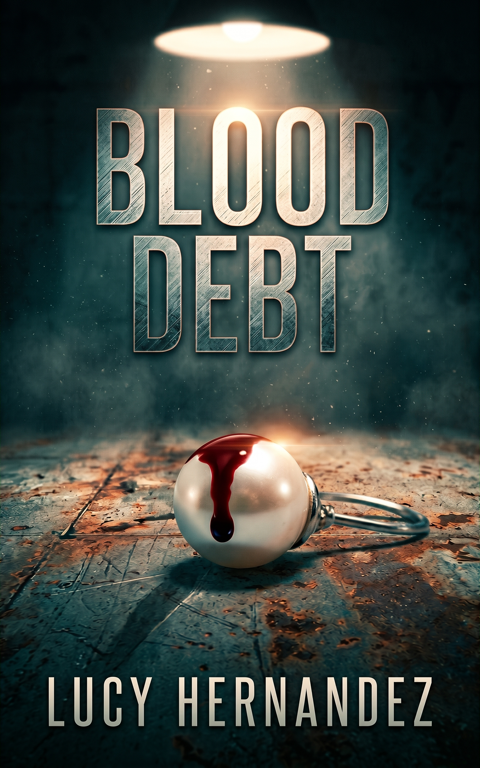
Blood Debt
Lucy Hernandez · organized crime, kidnappingA woman is taken by the mafia as leverage against her family, and she escapes at the end. I know that because the blurb says so, which makes it an accidental member of the second group: the outcome is spent before chapter one and what is left is pressure. Two lines is all the description gives, so treat it as premise, not promise.
Chapter one costs nothing → -
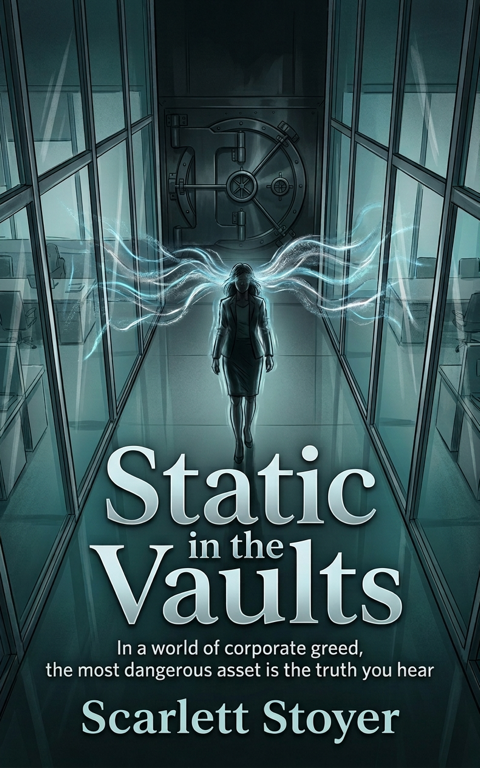
Static in the Vaults
Scarlett Stoyer · white-collar crime, heist, psychicA low-level accountant at a private equity firm can hear what her superiors think and uses it to manoeuvre into an elite investment circle, then finds the board is a front for a criminal organization that uses psychic children. The information advantage belongs to the criminal here, inverting everything above. The catalog description cuts off mid-sentence, so where it goes from there I cannot tell you.
Start the first chapter free → -
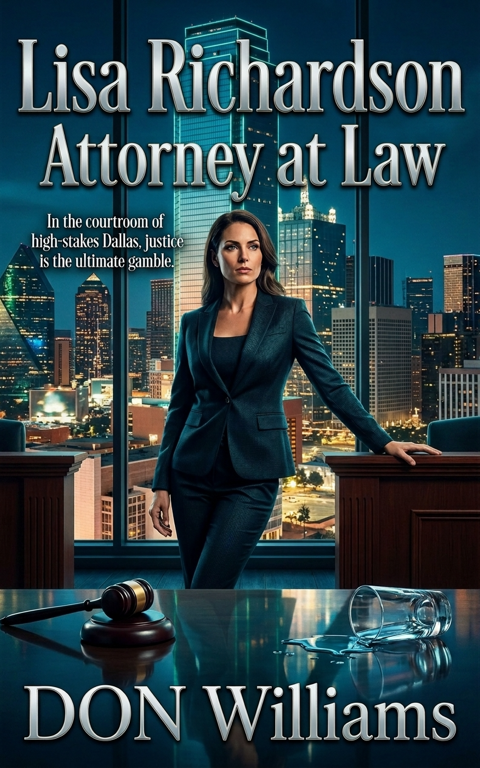
Lisa Richardson Attorney at Law
DON Williams · legal mystery, whodunitDallas defense attorney Lisa Richardson gets a call from an ex-boyfriend asking her to defend his son, found passed out in his girlfriend's apartment with her shot dead in the bed. She works it with a PI called Janet. The straightest whodunit here and the only legal mystery. The prose is rough, punctuation included, and I would rather flag that than oversell.
Read the opening chapter free → -
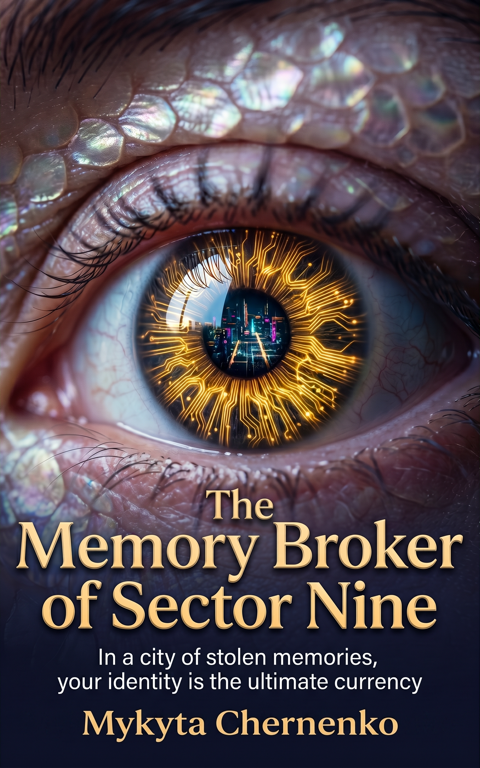
The Memory Broker of Sector Nine
Mykyta Chernenko · cyberpunk, financial crimeAn auditor finds phantom tax returns filed by an AI that was supposedly switched off a decade ago, then works out that someone is laundering digital currency through the neural capacity of a whole district's residents. Financial crime is underused as a genre engine and this runs on it properly: the detective is an accountant, the weapon a spreadsheet. Crime fiction in a science fiction coat.
Open chapter one, no account needed → -
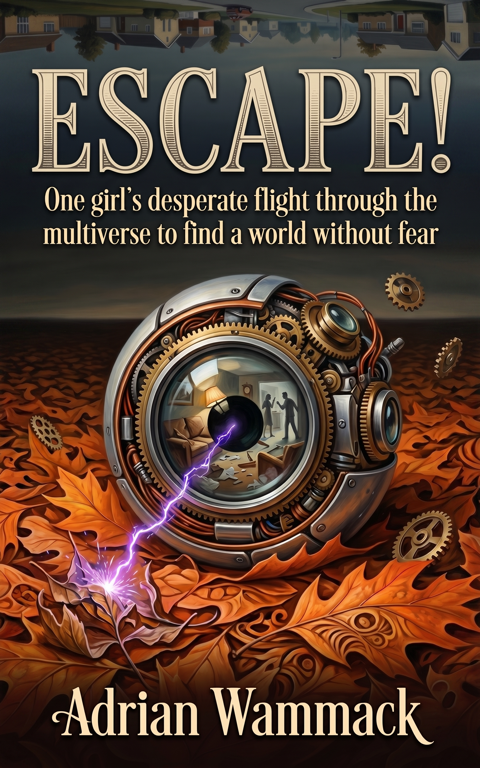
Escape!
Adrian Wammack · portal fantasyHere because of a tag, not because it is a crime novel. An abused nine-year-old girl escapes through a portal into a series of other worlds, with no control over where she lands. Portal fantasy with a child-abuse frame. If you came here for detectives, skip it; if the premise pulls you anyway, know what the opening is about.
See if the first chapter is for you →
Questions crime readers actually ask
What is the difference between a crime novel, a mystery and a thriller?
The useful split is about time. A mystery is about a crime that already happened and asks who did it. A thriller is about a crime that has not finished happening and asks whether it can be stopped. Crime fiction is the wider family both belong to, including heists and criminal-POV stories where nobody investigates anything.
Do I have to start a long crime series at book one?
Usually no, and with very long series it is often a bad idea: early instalments get written before the author found the character. Ian Rankin's Rebus books are the standard example: Black and Blue, the eighth, is where the series becomes what people rave about. Start where the writing is good and go back later.
Do police procedurals age badly?
The forensics do; the politics sometimes do worse. A 1990s procedural where the breakthrough arrives by fax still works, because waiting on a slow answer is dramatic in any decade. What dates harder is the attitude toward suspects, women in the squad room and anyone the book treats as scenery.
Is it worth reading a crime novel if the blurb already spoils it?
Often, yes. Whole subgenres are built on you knowing the answer in advance, including the inverted mystery and most criminal-POV fiction. You lose one surprise and keep the dread, which lasts longer. It only ruins a book that had nothing going for it except the reveal.
🔗Keep going
Waiting on a library hold? The Galatea comparison covers what serial apps charge once free chapters run out, and free novels online costs nothing in the meantime.