What's scarier: finding out we're alone in the universe, or finding out we aren't? Sci-fi horror books always pick the second answer, and then they ask a nastier question. Fine, something is out there. How does it get in?
That's how this list is sorted, because the answer decides what kind of fear you're signing up for. Through the hull, you get claustrophobia. Through the body, paranoia, since anyone in the room might already be carrying it. Through the signal, the slow, cold kind, where the alien never touches anyone and still takes everything apart. Nine books, three to a door, unranked, because a hull reader and a signal reader want different nights.
A few boundaries. Horror where the threat is your own mind lives on the psychological horror list, sorted by how far the narrator can be trusted. Frankenstein, I Am Legend and the Lovecraft era are in classic horror books. If you want the clock and the chase without the dread, Annihilation and The Andromeda Strain are on our sci-fi thriller list instead.
🚪Through the hull
A sealed box, and the void or the deep sea on the other side. Two of these three go down the same ocean trench, which says something about where horror writers think the last unexplored place on Earth is.
Dead Silence, S.A. Barnes
Claire Kovalik leads a small crew that repairs comm beacons at the edge of the solar system. On their last run they pick up a distress call and find the Aurora, a luxury liner that disappeared twenty years earlier. They board it for salvage money. It's a haunted house in space, and the cruise-ship glamour rotting around them is the best set dressing on this list.
Content notes: mass death, gore in places, hallucination.
The Deep, Nick Cutter
A plague called the 'Gets is making people forget, first small things, then how to breathe. A substance found at the bottom of the Mariana Trench might cure it, and a research station sits eight miles down to study it. When the station goes quiet, a veterinarian whose brother works there goes down to find out why. Grim, gross, and full of long scenes in dark corridors.
Content notes: graphic body horror, child death, animal harm.
Into the Drowning Deep, Mira Grant
Seven years ago a TV network sent a ship to the Mariana Trench to film a mermaid mockumentary, and everyone aboard vanished. The footage that came back looked real. Now it's sent a second, better-armed ship full of scientists. Grant takes the marine biology seriously, which makes the mermaids much worse when they show up.
Content notes: many gory deaths, predatory creatures.
🧬Through the body
The thing is already among you, and you can't tell who's carrying it. It's the genre's oldest trick and still its best.
Who Goes There?, John W. Campbell
An Antarctic research camp digs a creature out of the ice, and it thaws. It can imitate any living thing perfectly, which means any of the men around the stove might be it. The climax is a blood test performed one man at a time, with a hot wire and the whole camp watching. It's the source of John Carpenter's The Thing.
Content notes: animal deaths, violence. Period prose, very dated in places.
The Girl with All the Gifts, M.R. Carey
Melanie is ten. Every morning soldiers strap her into a wheelchair at gunpoint and wheel her to a classroom, where her favourite teacher, Miss Justineau, reads her Greek myths. Melanie doesn't know why the guards are afraid of her. You'll work it out a few chapters before she does, and that gap is what makes the opening so upsetting. Later it turns into a road novel across a fungus-choked England.
Content notes: violence, harm to children, some gore. Sadder than it is gory.
The Troop, Nick Cutter
A scoutmaster and five boys go camping on an island off Prince Edward Island. A starving stranger lands his boat on their beach, and inside him is a lab-made parasite that makes its host eat and eat and still waste away. Documents written after the fact, cut in between chapters, tell you early that this ends badly.
Content notes: extreme body horror, graphic animal cruelty, deaths of teenagers. Skip it if any of those is a hard no.
📡Through the signal
Nobody gets bitten. Something reaches you through contact or code, and the damage happens in your head. These have the least gore and keep you up the longest.
Solaris, Stanisław Lem
Kris Kelvin arrives at a research station above a planet covered by a single living ocean. The crew is shaken and won't say why. The next morning, his wife is in his room, and she died years ago. The ocean is doing it, and nobody can work out why. Lem's dry chapters on scientists failing to understand the planet are the point. Get the newer direct translation from the Polish if you can, not the older one that went through French.
Content notes: suicide, grief. Almost no violence.
Blindsight, Peter Watts
Sixty-odd thousand objects burn up in Earth's atmosphere at once, as if something photographed the planet. A ship goes out to meet whatever sent them, crewed by heavily modified humans and commanded by a resurrected vampire. The narrator had half his brain removed as a child. What they find past the Kuiper belt adds up to an argument that consciousness might be useless, and that idea stays with you.
Content notes: violence, body modification. Dense going.
I Have No Mouth, and I Must Scream, Harlan Ellison
A supercomputer called AM has wiped out humanity except for five people, and it has kept them alive for 109 years so it can torture them. One of them tells the story. You can read it in half an hour, and it's darker than any novel here. The ending is the most famous image in AI horror.
Content notes: torture, sexual content, extreme despair.
Short on time? Read the short ones
Two picks here are short horror stories in all but name. Ellison's takes half an hour. Campbell's Who Goes There? is a novella, an evening's read, and three films were built on it. The best sci-fi short stories list has more single-sitting reads.
Which door tonight? The hull if you like being scared with a crew around you, the body if you'd rather suspect everyone, the signal if you want to lie awake thinking. Can't decide? The read-next quiz picks for you in under a minute.
👾Sci-fi horror serials, free to start
 Free
Free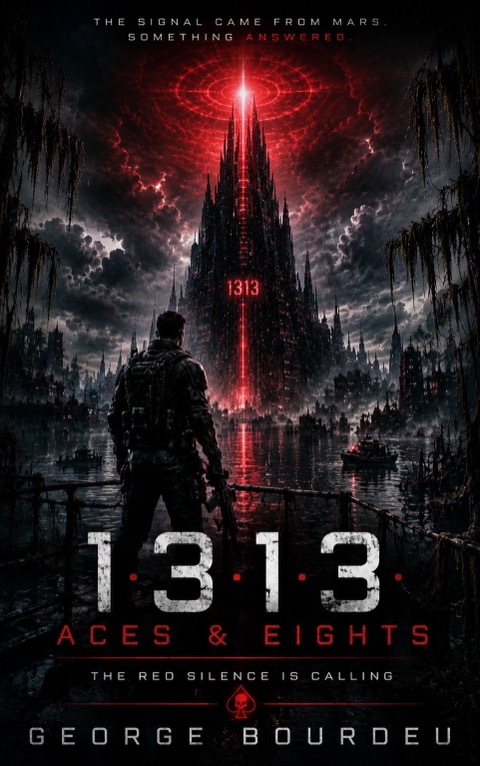 Free
Free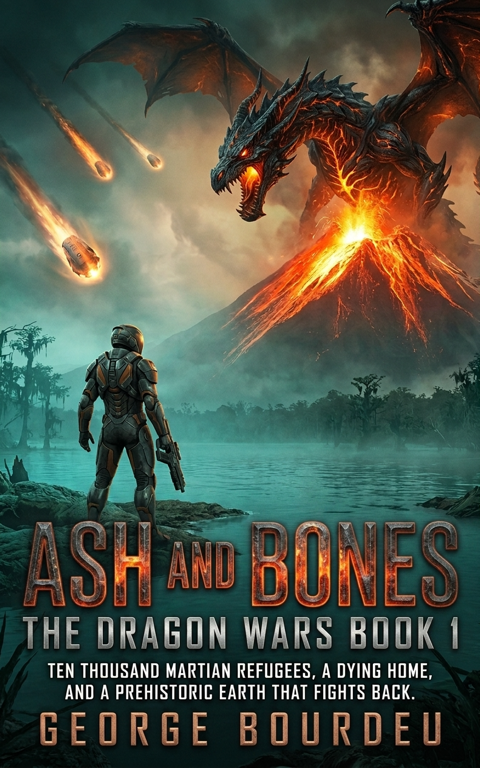 Free
Free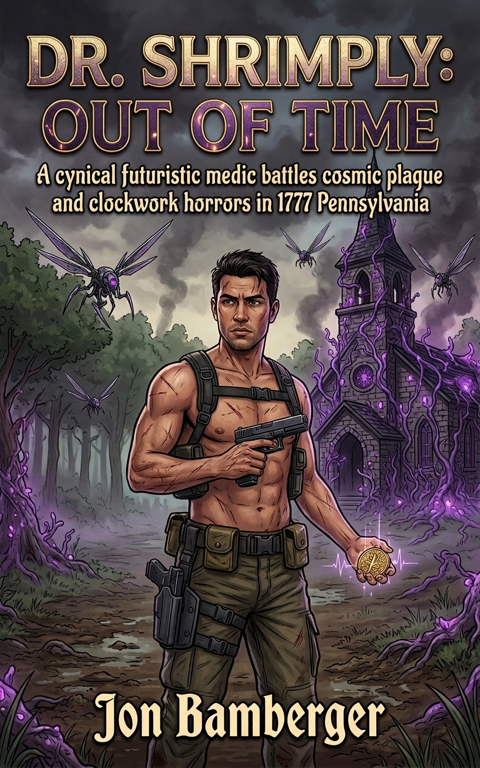 Free
Free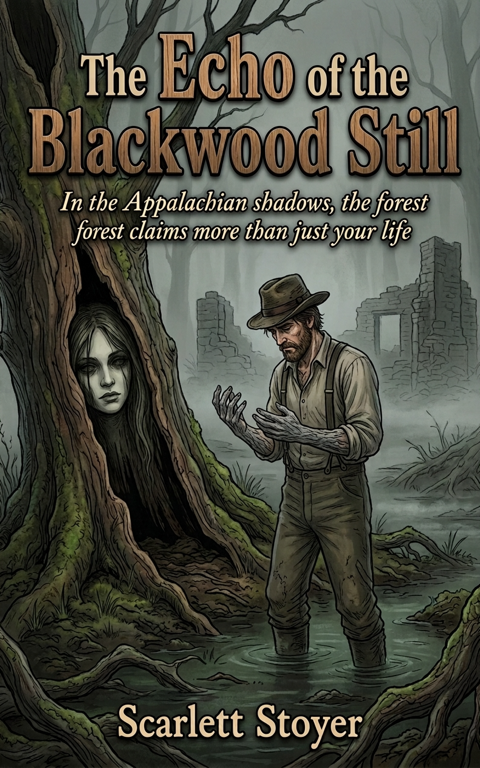 Free
Free Free
Free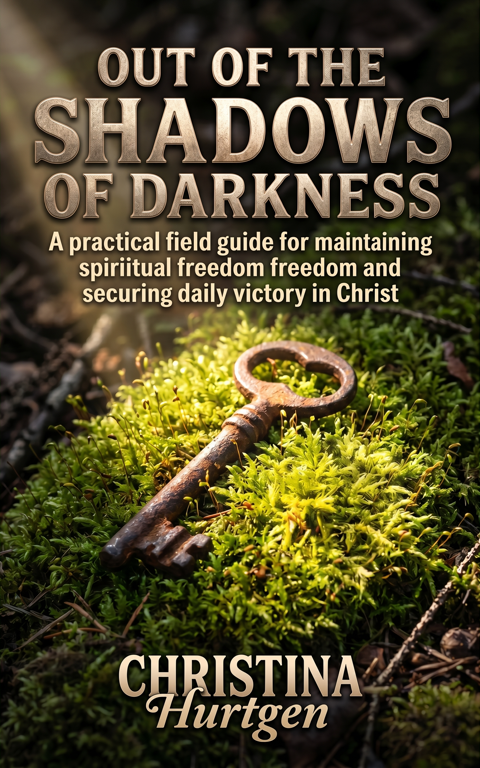 Free
FreeAn honest count first: in our catalog, only three books carry both a sci-fi and a horror tag, and they're the first three on the rail. The rest lean one way or the other, and the notes say which.
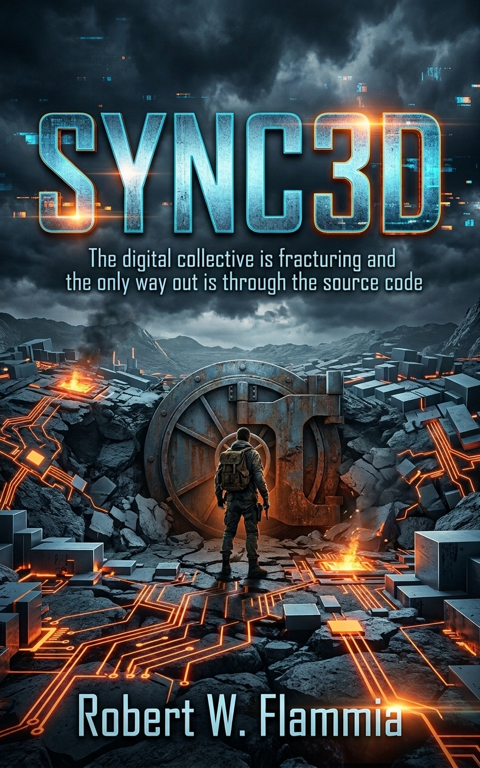
SYNC3D, Robert W. Flammia
A signal book. An integrated network spreads past the city limits and runs into colonies of people who are biologically immune to its digital signal, and they attack its infrastructure. Then the collective mind splits into rival sub-programs, and everyone heads for the original source code in a forgotten bunker. Chapter one of SYNC3D is free.
1313: Aces & Eights, Book 1, George Bourdeu
A hull book, with the hull floating. The 1313th Aces & Eights live in the Spire, a fortress tethered above a flooded Louisiana, and under them a Portal over the ruins of New Orleans keeps spitting out Martian Scavengers, half living creature and half rusted machine. Tagged YA sci-fi, so gentler than the novels above. Climb into the Spire, first chapter free.
Ash and Bones: The Dragon Wars, Book 1, George Bourdeu
Same author, different war: Mars, where the universe has gone silent. The listing reads like a series pitch, so beyond its tags (space opera, military sci-fi, ghosts) I can't tell you much. Read the opening chapter and decide for yourself.
DR. SHRIMPLY: OUT OF TIME, Jon Bamberger
Pulpy time-travel with a cosmic-horror tag. A combat medic from 3026 falls through a rift into an alternate 1777, carrying a 9mm, a strange medallion and his father's tactical gear, and has to stop a future plague before a cosmic predator erases humanity from the timeline. More fun than frightening. Start Dr. Shrimply free.
The Echo of the Blackwood Still, Scarlett Stoyer
Not sci-fi. It's 1892 folk horror, but it's body horror in spirit: a disgraced taxidermist digs up a preserved woman in an Appalachian tree trunk, she starts copying his heartbeat, and his skin starts turning to bark. The first chapter costs nothing.
Tasting Forever and Out of the Shadows of Darkness
Two honest outliers. Tasting Forever is a crime-horror thriller about a fugitive couple and a cannibalistic killer, with a pregnancy at its centre (content notes: cannibalism, murder). Out of the Shadows of Darkness isn't fiction at all. It's a Christian guidebook on spiritual defence after deliverance, filed under horror because of its subject. Both open with a free chapter.
Questions sci-fi horror readers ask
What's the difference between sci-fi horror and cosmic horror?
Cosmic horror says the universe is too big and too indifferent for a human mind to survive understanding it. Sci-fi horror usually gives you something you could, in principle, study: a parasite, an alien, a machine. The overlap is large. Solaris and Blindsight sit right on the border, because the alien can be studied and it doesn't help.
What's a good short sci-fi horror story to start with?
I Have No Mouth, and I Must Scream by Harlan Ellison is a single short story you can finish in one sitting, and it's one of the bleakest things in the genre. For something a little longer, Who Goes There? by John W. Campbell is a novella about an Antarctic camp and a shapeshifter, and it's the source of The Thing.
Which sci-fi horror book is the least gory?
Solaris. The fear in it is grief and the impossibility of understanding an alien mind, and there's almost no physical violence. Blindsight is also light on gore, though it's dense. At the other end, The Troop and The Deep by Nick Cutter are the most graphic books here.
Can I read any of these for free?
Peter Watts released Blindsight under a Creative Commons licence, and he has kept it free to read on his own website. The rest are in print and in most libraries. On NanoReads, the first chapter of every sci-fi and horror serial is free.
The horror books hub has every horror serial on NanoReads in one place, grouped by the kind of fear, and the sci-fi books hub does the same for space and machines. If what scares you is the regime rather than the monster, start on the dystopian books hub.