A pale, sickly emperor draws a black sword in battle, and the sword drinks the soul of every man it cuts. That strength flows into its owner, which is the only reason he can stand up. Then, in the worst moment, it takes someone he loves. That is Elric of Melniboné, Moorcock's answer to Conan, and it's a good one-paragraph picture of dark fantasy: the magic works, and you would rather it didn't.
Plenty of fantasy has dark chapters. The Lord of the Rings has Mordor and the Dead Marshes. What tips a book into dark fantasy is that the darkness is the climate, not a weather event. Hope is scarce, power corrupts on a schedule, and the reader should feel some unease from the first page.
🗝️The three-question test
Booksellers shelve by vibe, so the label gets stretched. If you're deciding whether a book counts, run it past these. Two out of three and it belongs here.
- Does magic cost something you can see? Blood, sanity, years of life, a body part, a person. Free magic with tidy rules is a different kind of book.
- Would the world hurt the hero if the plot stepped aside? Plagues, cruel gods, starving villages, a church that burns witches. The setting is a threat, not a backdrop.
- Is something meant to scare you? Not "epic battle" scary. Body-horror, a thing in the woods, a demon that makes a fair offer. This is where the overlap with horror lives.
🌘Where it sits on the darkness dial
The words cozy, high, dark and grimdark get used as if they were separate genres. It's more useful to think of one dial. Dark fantasy is rung three.
- 1
Cozy fantasy
Low stakes, found family, a tea shop. Legends & Lattes is the standard example. Nobody important dies.
- 2
Heroic / high fantasy
Real evil, real losses, but good is clearly good and wins at the end. Tolkien, The Wheel of Time.
- 3
Dark fantasy
Horror's mood inside a fantasy world. Heroes exist but they're damaged, and every win leaves a scar. The Witcher, Berserk, Elric.
- 4
Grimdark
Nobody is good, the world doesn't get better, and that's the point. Joe Abercrombie's The First Law, Mark Lawrence's Prince of Thorns.
- 5
Horror with a fantasy coat
The fear is the main course and the world-building is seasoning. Lovecraft's dreamland stories and a lot of folk horror live here.
Rungs three and four blur all the time. The cleanest split: dark fantasy still lets someone be decent, even if decency gets them hurt. Grimdark mostly doesn't. The word "grimdark" itself comes from the Warhammer 40,000 tagline about "the grim darkness of the far future," which tells you how much hope to expect.
How dark fantasy differs from its neighbors
| Label | What it promises | Where it differs from dark fantasy |
|---|---|---|
| Horror | Fear first | Usually set in our world. Dark fantasy builds its own world, then puts the fear inside it. |
| Gothic | Decay, secrets, a house with a past | Gothic is about atmosphere and buried family sins. It can be dark fantasy, but it can also be a ghost-free mystery. |
| Grimdark | Moral rot, no heroes | One rung darker. Dark fantasy allows hope; grimdark treats it as naive. |
| Dark romance | A morally gray love story with taboo content | A romance subgenre defined by the relationship. Dark fantasy needs no love story at all. |
That last row causes the most confusion on BookTok. When people say "dark fantasy" in a romantasy video they often mean dark fantasy romance: the cursed king, the bargain, the possessive fae, with the love story at the center. That's a real and very popular hybrid, but "dark" in the genre name refers to the world, not to how explicit the book is. A dark fantasy novel can be completely closed-door. If heat is what you're checking for, look it up book by book with the spice level checker rather than trusting the label.
Where the name came from
The ingredients are older than the label. In the 1920s and '30s the pulp magazine Weird Tales ran Robert E. Howard's Conan, Clark Ashton Smith's decadent dying-earth stories and H.P. Lovecraft side by side, and readers didn't much care where fantasy ended and horror began. Fritz Leiber's sword-and-sorcery and Moorcock's Elric, starting in 1961, kept that blend going.
The term "dark fantasy" is usually credited to the writer and editor Karl Edward Wagner, who used it in the 1970s for fiction like his own Kane stories, about an immortal swordsman who is the villain more often than not. Publishers picked it up through the horror boom of the '80s, partly as a softer shelf name for books that were too strange for horror and too bloody for the Tolkien crowd.
Famous dark fantasy, then and now
- Elric saga, Michael Moorcock (from 1961). The soul-drinking sword Stormbringer is the genre's founding image of magic as addiction.
- The Black Company, Glen Cook (1984). Mercenaries working for an evil sorceress, told by their tired company doctor. The ancestor of a lot of modern grimdark.
- Berserk, Kentaro Miura (manga, from 1989). If you only know one, know this one. Brutal, sometimes sexually violent, and full of demons who grant wishes for a terrible fee. Heavy content warnings.
- The Witcher, Andrzej Sapkowski (from 1986). A monster hunter who keeps finding that the people paying him are worse than the monsters.
- The Poppy War, R.F. Kuang (2018). Starts like a magic-school story and ends somewhere much grimmer, modeled on real twentieth-century atrocities. A good example of how far the dial can turn inside one book.
For a longer reading list sorted by what kind of darkness you want, the dark fantasy books list goes much deeper than this definition page can.
🕯️See it in action on NanoReads
Three indie books from our catalog, picked because each one shows a different edge of the genre. All three open with a free chapter.
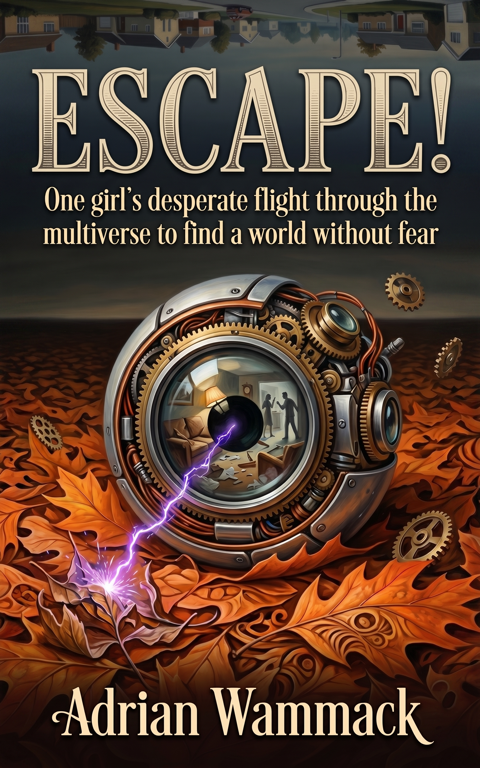
Escape!
An abused nine-year-old girl flees her life through a portal into other dimensions, each with its own climate, landscape and cast. The darkness is in the premise itself: the fantasy is a refuge from something worse. Expect child-abuse themes.
Read chapter 1 free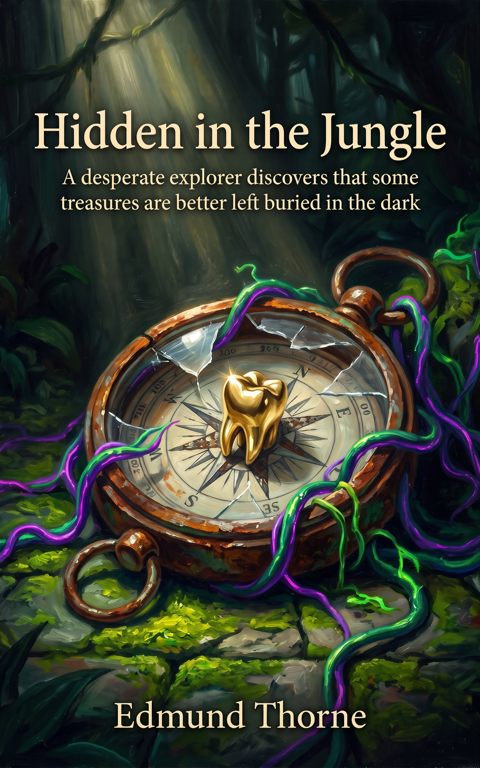
Hidden in the Jungle
A Danish fortune hunter in newly discovered South America is warned by every tribe away from a cursed temple full of gold, and goes anyway. It's tagged adventure, but greed walking toward a curse is the oldest dark-fantasy bargain there is.
Start the expedition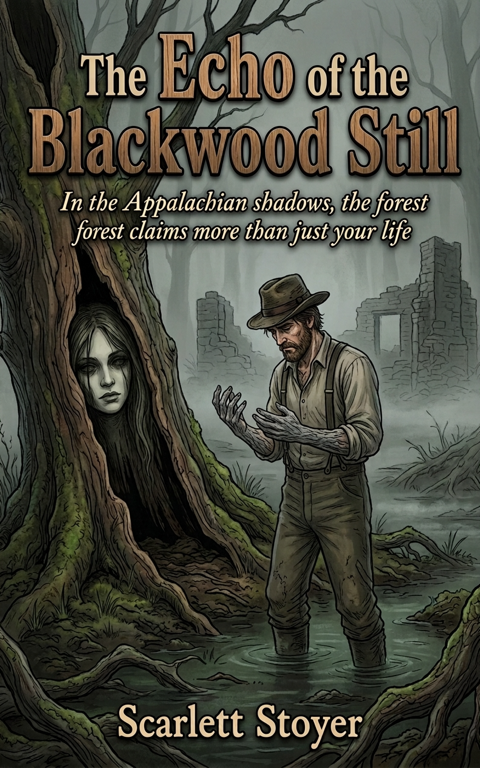
The Echo of the Blackwood Still
An 1892 Appalachian valley, a disgraced taxidermist, and a preserved woman dug out of a hollow tree who starts copying his heartbeat and his voice. This is the folk-horror end of the dial, where the fantasy turns into fear.
First chapter's on usRelated terms and shelves
If the genre clicks, our fantasy books hub collects everything from cozy to bleak.