Romantasy: what the word actually means in books
Romantasy — a portmanteau of romance and fantasy — describes books where a romantic relationship and a fully built fantasy world carry equal narrative weight. Neither is a backdrop for the other: the magic system, the politics, and the invented geography matter as much as who ends up together. Take either half away and the book collapses, which is the test that separates it from its neighbors.
That collapse test is the fastest way to sort a book into or out of the category. Strip the romance from a romantasy novel and the plot has a hole where its emotional engine used to be — the political alliance, the bond magic, the rescue, all of it was in service of the relationship. Strip the world-building instead and there's no story left to tell it in: no academy, no court, no war between kingdoms for the couple to navigate. A book only earns the label when pulling either thread unravels the whole sweater.
🔍Romantasy's two closest neighbors, and why it isn't either
The confusion around this word almost always comes from two adjacent, older categories that romantasy resembles at a glance but isn't.
| Term | World-building | Romance weight | Typical setting |
|---|---|---|---|
| Paranormal romance | One fantastical element added to our world | Primary, always | Contemporary city, one vampire/witch/shifter |
| Epic fantasy | Full invented world, politics, history | Often minor or absent | Secondary world, war or quest plot |
| Romantasy | Full invented world, equal to the plot | Equal to the world-building | Secondary world built around the couple's arc |
A paranormal romance like a vampire-detective story keeps its feet in a version of the real world — Seattle rain, a badge, a murder case — with exactly one supernatural rule bent to make room for the romance. An epic fantasy can run five hundred pages without its two leads so much as holding hands, because the throne and the war are the point. Romantasy sits at the exact intersection: readers want the dragon-riding academy and the slow-burn bond between rivals, in the same proportion, on every page.
📜Where the word came from
"Romantasy" isn't new coinage — readers and booksellers were using informal blends like it for years — but it went from niche shorthand to shelf label largely through BookTok's need for a fast search tag. Once a handful of breakout series proved a mass audience existed for romance-forward fantasy specifically, retailers started using "romantasy" as an actual category name instead of filing those books under general fantasy or general romance. The word did real work: it let readers who wanted both halves in equal measure stop sifting through shelves built for one half only.
🐉Three catalog examples
Chapter one is free on all three. None is a perfect textbook case — that's worth saying plainly rather than pretending otherwise — but each demonstrates a different way the romance/world-building balance can tip toward true romantasy.
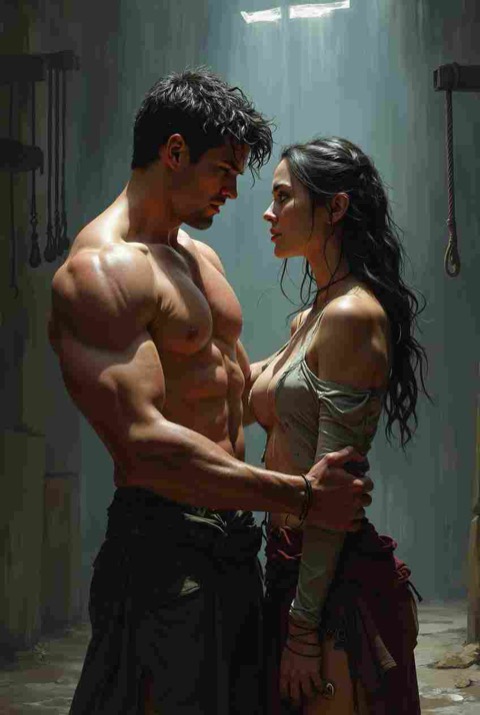

Dragon Bond Academy comes closest to the textbook shape: a conscripted heroine at a deadly dragon-riding fortress, an elite cadet whose scorn cuts deeper than a blade, and a survival plot where the academy's own rules generate the romantic tension. Pull the bond magic out and the central relationship has no reason to exist.
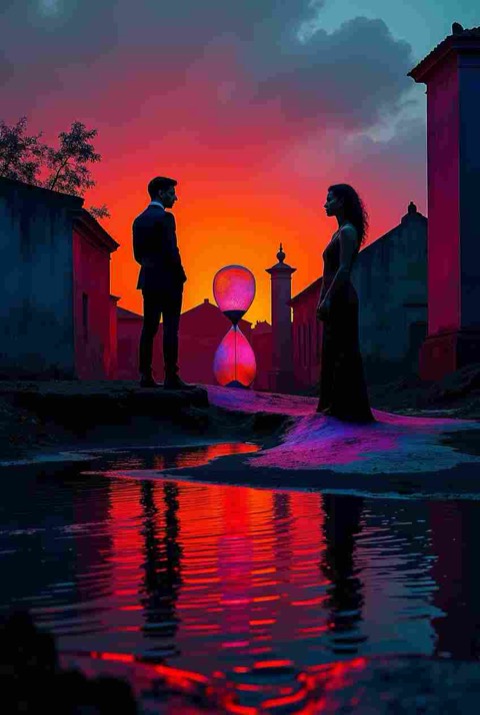
Seattle Storm Witch leans further toward paranormal romance than pure romantasy — its rain-drenched Seattle setting is closer to "our world plus magic" than a fully invented one — but a storm witch PI investigating a vampire murder with Fae magic still asks its central couple to navigate an actual constructed power system together, which is the romantasy instinct even in a lighter dose.
Dark Magic Desire is the adjacent pick, cataloged as billionaire romance first: a cursed town, whispering shadows, and sparks that fly "literally" between its leads. It earns a spot here because its central hook — a mysterious, powers-touched heroine reshaping a skeptical hero's whole worldview — is a romantasy beat wearing a billionaire-romance coat, useful to know if you're hunting the feeling more than the label.
"Violet Wynter's life is a mess — eviction looms, and she's broke. Then a brutal conscription drags her to Drakoria Academy, a deadly dragon-riding fortress where the weak don't survive."— from the blurb of Dragon Bond Academy
❓Quick answers
Is romantasy the same as paranormal romance?
No. Paranormal romance keeps the romance primary and adds one fantastical element — a vampire, a witch, a shifter — to an otherwise contemporary-feeling setting. Romantasy builds a full secondary world with its own politics, magic systems, and history, and gives that world equal weight to the love story.
Is romantasy just a marketing term for fantasy with kissing?
It started that way online, half-joke, half-genuinely useful shorthand. It stuck because readers needed a word for books too romance-forward for the epic fantasy shelf and too world-built for the paranormal romance shelf — a real gap, not just a rebrand.
Do all romantasy books have explicit content?
No. Heat level varies as widely in romantasy as in any romance category, from fade-to-black to fully explicit. The label describes the balance of romance and world-building, not how graphic the romantic scenes are.
🔗Related
Want the full shelf instead of the dictionary entry? The romantasy hub has the wider catalog, sorted by world type.