A twelve-year-old boy lies on a bed while an old man puts his hands on his back, and suddenly he's on a sled going down a hill, cold air on his face, in snow he has never seen and has no word for. That's the first memory Jonas receives in The Giver. It's the most frightening scene in the book, because it shows you what his world already took without asking. The YA dystopian books worth reading all have a version of that moment: the regime has taken something, and the story starts the day a teenager notices it's gone.
So this list is organised by what gets taken. Food and safety first, then memory, then your face and body, then who you love, then who you're allowed to be. The groups run from the most physical loss to the most abstract, and there's no ranking inside them. If you've read The Hunger Games twice, skip down to a loss you haven't tried yet.
⚡If you only have tonight
The regimes that keep you hungry
The oldest version, and the bluntest. A government doesn't need your thoughts if it controls dinner.
The Hunger Games
Katniss hunts illegally outside District 12's fence because the ration won't feed her family, and the whole book grows out of that hunger. Even the reaping is rigged by it: poor kids trade extra entries in the bowl for grain. The romance is a triangle, closed door, and half of it is a show Katniss puts on to stay alive, which is a smarter use of the trope than most of the imitators managed.
Verdict: first-person present tense, short chapters, a hook at the end of nearly every one. Everything else here gets measured against it.
Ship Breaker
Nailer crawls through the ducts of wrecked oil tankers on a drowned Gulf Coast, stripping copper wire, and he's getting too big for the ducts, which means he's about to lose the job that feeds him. Then a storm leaves a rich girl's clipper wrecked on the beach. It won the Printz Award, and I hand it to readers who think The Hunger Games is too tidy.
Verdict: grimy, physical, almost no romance. The best sentences on this list.
The regimes that erase what came before
One step further. You can't miss what you don't remember, so these worlds wipe the record.
The Giver
Jonas's community runs on Sameness: no colour, no weather, no pain, assigned spouses, assigned children. At the Ceremony of Twelve he's chosen as the Receiver of Memory and starts learning what everyone gave up. Lowry takes her time explaining what "release" means here, and when she finally shows you, it's quiet and horrible and a younger reader won't forget it. Under 200 pages, and no romance beyond a crush he's given pills to suppress.
Verdict: spare and patient. The grandparent of the genre, and the ending still starts arguments.
The Maze Runner
Thomas wakes in a lift remembering nothing but his name and comes up into the Glade, a patch of grass inside a huge maze whose walls move at night, full of boys who remember nothing either. The dystopia stays mostly offstage in book one, so it reads like a survival puzzle, and the question of who built the maze does the pulling.
Verdict: all momentum. Good for a reluctant reader who'd rather be watching the film.
The regimes that decide what you look like, or what you're worth in parts
Uglies
At sixteen everyone gets the operation that makes them Pretty, and Tally can't wait. Then her friend Shay runs off rather than have it, and Tally is sent to bring her back. The book was doing beauty filters years before phones had them, and the operation turns out to change more than faces.
Verdict: an easy read with a better idea than it gets credit for. Hand it to a thirteen-year-old.
Unwind
After a war over abortion, the settlement lets parents have a child between thirteen and eighteen "unwound": every part of the body transplanted into someone else, so on paper nobody dies. One chapter narrates an unwinding from the inside, and readers still bring it up years later. It isn't gory, and it's the most disturbing thing on this list. Content note: medical horror, bodily autonomy.
Verdict: the one that costs you sleep. Scythe is the Shusterman people know now; this is the braver book.
The regimes that assign your heart
Here YA dystopia turns into romance with a surveillance problem. If you want that with adult heat, the dystopian romance hub and our adult dystopian romance picks are built for it. These two are YA: kissing, not sex.
Delirium
In Lena's Portland, love is a disease, amor deliria nervosa, and everyone gets the cure at eighteen. She has ninety-five days left and is counting them down happily, until she meets Alex. The romance is the plot, closed door.
Verdict: lyrical and slow, then the last forty pages are not slow at all. The ending is famous for a reason.
Matched
The Society picks your spouse, your job and the day you die. Cassia is matched with her best friend Xander, and then for a second the wrong face flashes on her data card: a boy named Ky. That glitch is the book. It's quieter than the others here, more about the Society trimming poetry down to a hundred approved poems than about violence, and it leans on the love triangle harder than anything else on the list.
Verdict: slow and pretty, and heavy on the triangle. Read it after Delirium if you want more of the same ache.
The regimes that sort you at sixteen
Divergent
Chicago is split into five factions, each built on one virtue. At sixteen you take an aptitude test, then choose a faction for life. Beatrice's test comes back inconclusive, which is dangerous, so she hides it and jumps (off moving trains, literally) into Dauntless. The initiation half is the best part: rankings, cuts, a training room full of rivals. The romance with Four is slow and mostly careful about consent.
Verdict: a boarding-school story with a body count. Read book one and make up your own mind about the rest.
Legend
Every child in the Republic takes the Trial at ten. June scored perfectly and is the military's prodigy. Day officially failed, and he's now the country's most wanted criminal. When June's brother is killed, Day is the suspect and she's sent to hunt him. Chapters alternate between the two of them, and the cat-and-mouse setup makes it the fastest read here.
Verdict: a thriller in dystopian clothes. Pick it if you liked Katniss for her competence more than her grief.
🧭Which one first
New to the genre? The Hunger Games. It's the template, and the rest make more sense once you know it. Want the opposite of an arena? The Giver, which you'll finish in an evening and think about for a week.
Want a thriller? Legend. Here for the romance: Delirium before Matched. Here to be upset: Unwind, maybe with the lights on. For readers around eleven to thirteen, Uglies and The Giver work well; save Unwind for fifteen and up.
Still stuck? The read-next quiz asks about mood rather than genre, and the books-like finder works from a title you already love. If you liked the tech more than the regime, the YA science fiction list is sorted by how big the idea is.
📱Dystopian-adjacent, free on NanoReads
All sci-fi →Straight answer first: only two serials in our catalog are tagged dystopian, and neither is YA. What we do have are young adult serials from independent authors with ruined worlds, sealed-off towns and systems gone wrong. Each note sticks to what the blurb actually says. Chapter one of every one is free.
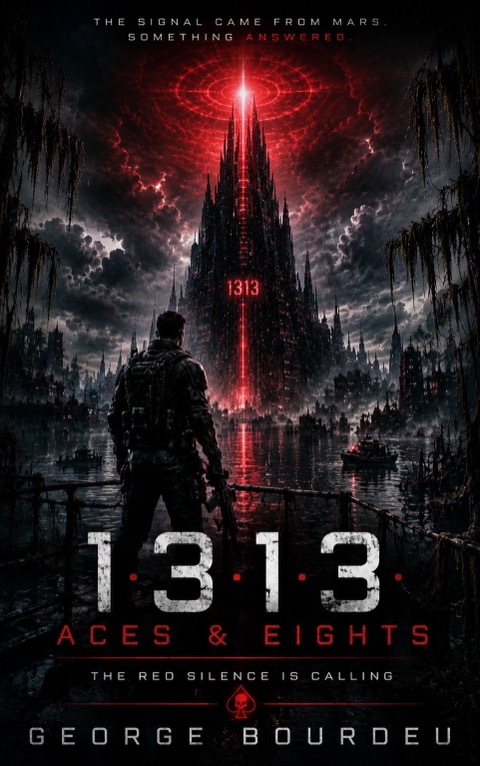
1313: Aces & Eights: The Red Silence Is Calling
George Bourdeu. The 1313th Aces & Eights live in the Spire, a floating fortress tethered above a flooded Louisiana, while a Portal over drowned New Orleans lets Martian Scavengers through. Post-apocalyptic more than dystopian, but it has a closed, ranked society perched above a ruined world, which is Ship Breaker's map flipped upside down.
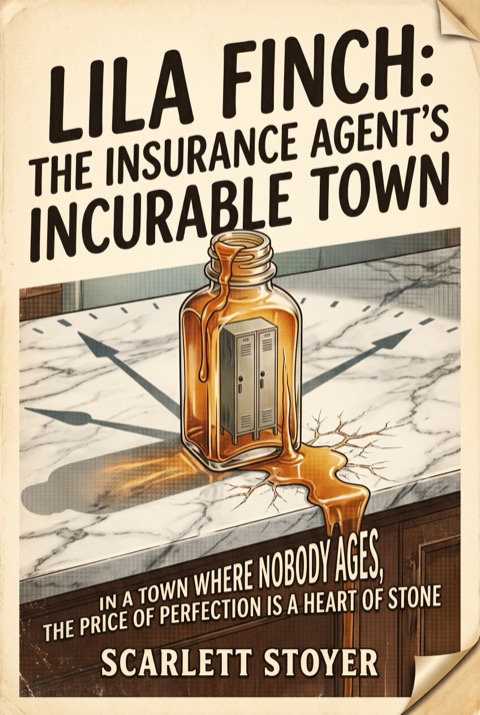
Go up to the Spire, first chapter free →Lila Finch: The Insurance Agent's Incurable Town
Scarlett Stoyer. Nobody in a secluded valley town has aged or fallen ill in forty years, and the insurance agent auditing the high school's records finds the same teenagers enrolled in tenth grade since the 1980s. It's a cozy mystery. Still, a town that has quietly frozen its kids made the same kind of bargain as The Giver's community.
Start the audit free →The A-XIS Initiative: The Nightmare Begins
J.K. Culbreath. A mansion in upstate New York that should have collapsed decades ago, sitting on what's left of a catastrophe the world never learned to fear. The blurb reads like a cover-up waiting to be opened, so come at it the way you'd come at The Maze Runner: who built this, and why.
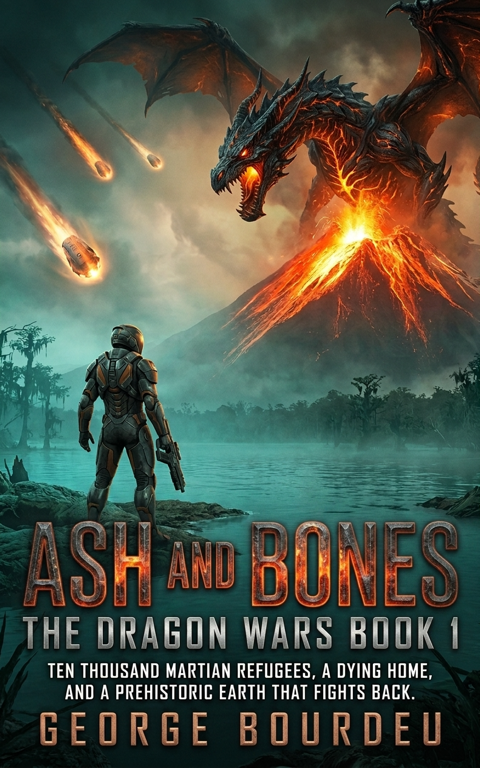
Open the mansion door, chapter one free →Ash and Bones: The Dragon Wars, Book 1
George Bourdeu. Mars, a dying world, and a universe that has been silent too long, per the blurb. Worth a chapter if the military side of Divergent was your favourite part.
Try the first chapter on us →The Gravity of Shattered Crowns
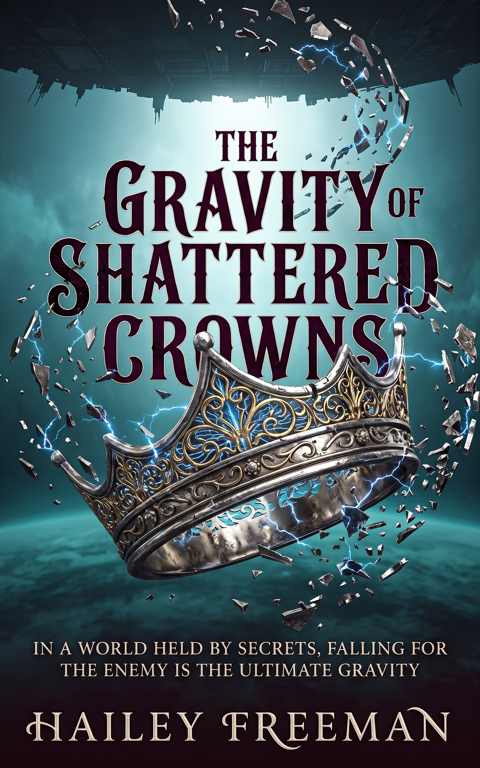
Hailey Freeman. A low-ranking engineer on a decaying space station finds she can control the gravity of the ancient artifacts that keep a floating kingdom in the air. She's captured and forced into an elite military academy for noble pilots. Enemies to lovers, forbidden magic, and a dystopian tag. It's shelved as romance, not YA, and the blurb doesn't say how explicit it gets, so check chapter one before passing it to a younger reader.
Read the academy's first chapter free →SYNC3D
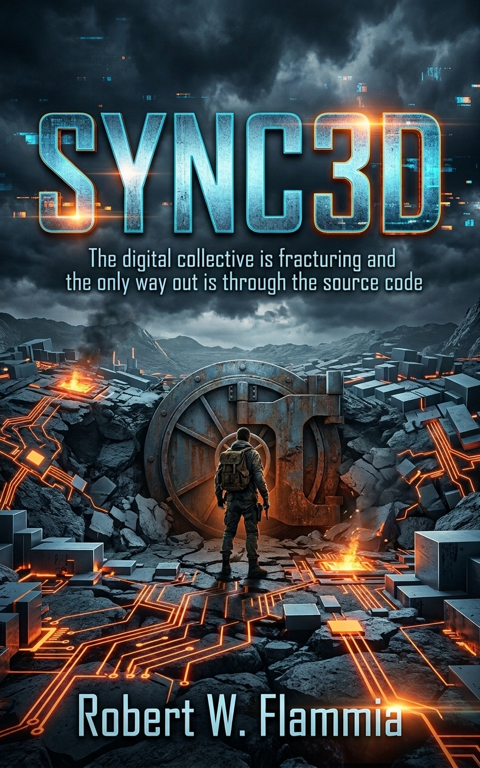
Robert W. Flammia. A network spreading out from a city absorbs people through a signal, and pockets of humans who are biologically immune start attacking its infrastructure. Written for adults and tagged cyberpunk; it's here for the older reader who finished Unwind and wants the grown-up version of that fear.
Chapter one is free, if you're old enough for it →One more serial is mapped to this page, JK Livingstone's American Patriotism, and I've left it off: it's YA contemporary with no dystopian element. Serial chapters are short, closer to novella pacing than a paperback's. If you'd rather have a whodunit than a regime, try the YA mystery list.
❓Questions readers ask
What age are YA dystopian books for?
Most sit around 12 and up. The Giver reads younger and is often taught at 11 or 12. Unwind reads older because of one long, disturbing procedure scene. The Hunger Games has plenty of violence against children on the page but almost no romantic heat.
Are there YA dystopian books without a love triangle?
Yes. The Giver, The Maze Runner, Ship Breaker and Unwind keep romance small or leave it out. Matched and The Hunger Games lean hardest on a triangle. Delirium and Divergent build the plot around one love story instead.
Why did YA dystopian books get so popular around 2010?
The Hunger Games (2008) proved the shape: a teenage lead, a sorting ceremony, a system that decides your life at sixteen. Publishers bought what fit, and most of this list, Matched through Legend, came out between 2010 and 2012. The shape lasted because it matches being a teenager. The adults have built a system and are about to put you in it.
What is the difference between YA dystopian and YA sci-fi?
In a dystopia the society is the antagonist, and any technology is there to enforce it. In YA science fiction the idea or the technology is the story. The Hunger Games is dystopian. Ender's Game is science fiction, even though both train children for violence.