What this class is actually about
A long table under green-shaded lamps. Snow going blue against the windows. Someone has chalked a line of Latin on the board and nobody asks for the translation, because asking would mean admitting you don't already know it. Down the corridor, a door that was locked yesterday stands open. If that scene does something to your pulse, you already understand the assignment: this is a syllabus of dark academia fantasy novels, arranged the way the course catalog of your dreams would arrange it.
Strip away the turtlenecks and the annotated margins and the aesthetic runs on three gears: a closed institution that decides who belongs, knowledge that costs something real to acquire, and a small cohort whose intimacy curdles, almost always, into betrayal. Plenty of dark fantasy novels are grim without being academic; what makes this shelf its own thing is that the darkness is institutional. The school is never just a backdrop. The school is the villain, or the drug, or both.
One honest note on how the course works: the two prerequisite texts contain no magic at all, and I'm not going to pretend otherwise. They're here because every fantasy book below them is quietly arguing with them.
The source code (not fantasy, and that's the point)
The Secret HistoryDonna Tartt · 1992
No magic, not a drop. Six classics students at a small Vermont college, a professor who handpicks his Greek seminar like a cult leader recruits, and a murder confessed in the prologue so the whole novel can be about why instead of who. Being chosen, Tartt keeps insisting, is not the same as being safe. Every campus below inherits that lesson.
If We Were VillainsM.L. Rio · 2017
The other half of the aesthetic's DNA, also magic-free. Seven acting students at a Shakespeare conservatory get cast in the same type roles year after year, until the casting starts to feel like fate. Oliver walks out of prison in the opening pages, ten years served, finally ready to say what happened. The students quote Shakespeare at each other mid-argument and it somehow reads as intimacy rather than pretension, which is harder to pull off than any spell.
Where the magic finally shows up
Ninth HouseLeigh Bardugo · 2019
Yale's real secret societies, except the tombs work: rituals that move markets, fix verdicts, launder reputations. Lethe, the ninth house, exists to keep the mess off the front page. Alex Stern gets recruited from a hospital bed because she can see ghosts without the drug everyone else needs. It's the angriest book on this syllabus, magic as insider trading, and the grimmest. Check the content warnings before you enroll; the assault and overdose in Alex's past are on the page, not implied.
BabelR.F. Kuang · 2022
Oxford in the 1830s, where magic is a silver bar engraved with a translation pair and powered by whatever meaning gets lost between the two words. The Royal Institute of Translation quietly runs the empire on it. Robin Swift is taken from Canton as a boy and raised to serve the tower that feeds on his birthplace. The full subtitle is Or the Necessity of Violence, which tells you exactly where this is headed. The footnotes are half the pleasure and all of the thesis.
A Deadly EducationNaomi Novik · 2020
The Scholomance has no teachers. Coursework appears, monsters crawl out of the vents into your dorm room, and graduation means walking a hall full of everything that has spent four years waiting to eat you. El, the narrator, is prophesied to level cities and is mostly irritated about it. This is the fastest, funniest read in the unit, and its real subject, who gets protected and who gets used as monster bait, is more serious than the jokes let on.
The Atlas SixOlivie Blake · 2020
Full disclosure: this is the divisive one. Six magicians are invited into the Alexandrian Society, keeper of the library everyone believed burned, and only five will be initiated. If you come for plot, you may stall around the midpoint. If you come to watch six brilliant, mostly terrible people psychoanalyze and seduce one another in a house full of forbidden books, you'll be fed. Its road from self-published TikTok phenomenon to a Tor deal is part of the legend, and the vibes-first construction is a choice, not an accident. If the seduction half is what you actually want more of, the romantasy crossover shelf handles that.
Vita NostraMarina & Sergey Dyachenko · 2018 in English
The scariest school ever put on paper. A stranger in dark glasses makes Sasha swim in a freezing sea at dawn, then makes her enroll at the Institute of Special Technologies in a town no map admits to, because refusing would cost her mother. The coursework is incomprehensible until, horribly, it isn't, and doing it changes what Sasha is made of. Translated from Russian by Julia Meitov Hersey. Save it for when the cheerful ones start feeling too safe.
For students who finished the core reading early
PiranesiSusanna Clarke · 2020
Advanced because there is no school at all, only the discipline. A man lives alone in a House of endless statue-lined halls with an ocean in its lower levels, and he studies it with perfect scholarly method: journals, indexes, tide tables. The mystery is why he is so calm, and why journals in his own handwriting describe a world he can't remember. It holds a spot on our best fantasy books ranking too, and earns it. Dark academia distilled to one scholar and his subject.
The Will of the ManyJames Islington · 2023
A Roman-flavored republic where the many cede their Will to the few above them, and one boy who refuses. Vis, orphaned heir of a conquered kingdom, is planted inside the elite Academy as a spy and has to climb its ruthless class rankings without anyone discovering what he's hiding. Six hundred pages that read like three hundred, ending on a genuine cliffhanger, so know going in that the sequel exists. If this unit turns out to be your speed, the natural next enrollment is our fantasy books for adults list.
Which campus tonight?
No reading response due. Pick the mood, jump to the book.
Undecided after four chips? The what-should-I-read-next quiz will sort you faster than any hat.
The free shelf: same engine, no campus
Registrar's note, and an honest one: nobody has written NanoReads a literal magic-boarding-school serial yet. What the catalog does have is the machinery underneath the aesthetic — archives that keep secrets, occult disciplines with initiation costs, institutions that lie about their own past. Chapter one of each is free, so treat these as auditing a class before you commit.
-
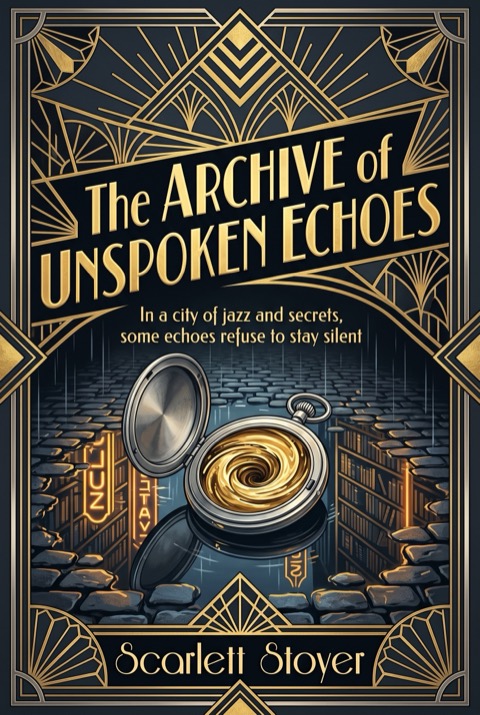
The Archive of Unspoken Echoes
A librarian in 1920s Chicago tends a secret collection of objects that hold the last words of the dead. Then she catalogs a silver locket that plays a confession from a man who is still alive and walking the city. Restricted stacks, knowledge someone decided the public couldn't have: of the three, this is the closest thing to dark academia on the shelf.
Read chapter 1 free → -
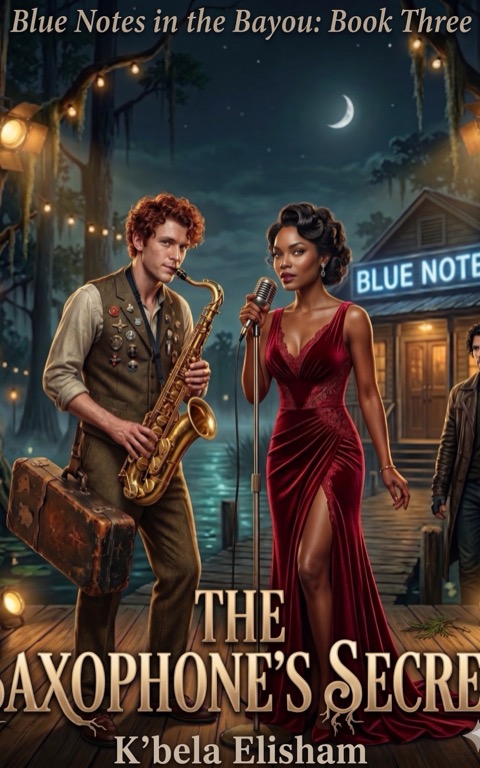
The Saxophones Secret
Rootwork in this French Quarter is a discipline: lineages, apprenticeships, prices paid in full. When the most powerful practitioners start disappearing, the survivors must open teachings that were never meant to leave their houses and share them with old rivals. A curriculum nobody wanted to teach, taught anyway.
Open the first chapter — it costs nothing → -
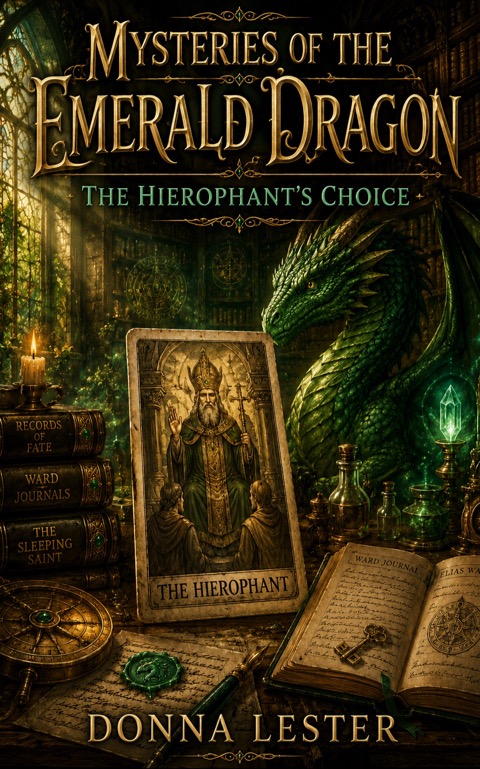
Mysteries of the Emerald Dragon
Gentler in tone than anything above it, cozy-fantasy tag and all, but running on the same engine: an Archive that has been lying about its own history for centuries starts confessing. Hidden rooms reappear; deliberately buried records surface. It continues an earlier book, so you're stepping into a story already in motion.
Audit chapter 1 free →