The graduation guide · July 2026

Fantasy Books for Adults: A Graduation Guide

Adult fantasy is not YA with sex scenes bolted on. The fantasy books for adults on this list keep the exact story shapes you loved at fifteen and ask what each one actually costs.

Same itch. Heavier consequences.

What "adult" means here (and what it doesn't)

Publishers shelve a book as adult when the protagonist is grown, but the label readers care about is different: thematic weight, prose density, and consequences that don't reset by the next chapter. Explicitness has nothing to do with it. Two of the eight books below have no on-page sex at all, and they are among the heaviest things here.

So this isn't a ranking. We already keep an all-time canon list of the best fantasy books if that's the shopping trip you're on, and the wider shelf lives in our fantasy books hub. This page does one job: it names the YA pattern you loved, then hands you the adult book that takes the same itch seriously. Most picks are high fantasy books or close cousins, all traditionally published, numbered straight through so the bridge table at the end makes sense.

One warning before you start. Adult doesn't mean joyless. It means the joy is earned.

The chosen one, with the bill attached

YA's favorite promise: you are secret, special, and about to be collected by people who understand you. Adult fantasy keeps the specialness and asks who profits from it.

1.The Fifth Season — N.K. Jemisin

The YA version of this premise is a girl discovering her powers and being whisked off to train them. Jemisin opens with a mother standing over the body of her young son, killed by his own father for inheriting her power. The Fulcrum, this world's training order, is a leash dressed up as a career, and the second-person chapters addressed to "you" pull a structural trick I refuse to spoil.

Pacing and voice: slow-burning fury. Three braided timelines that click together so hard the trilogy won the Hugo three years running.
2.She Who Became the Sun — Shelley Parker-Chan

A fortune-teller promises greatness to a boy named Zhu Chongba and nothing at all to his sister. Then the boy dies in the famine of 1345, and the sister takes his name into a monastery and decides to steal his fate outright. YA treats destiny as an inheritance; Parker-Chan treats it as a theft you have to keep committing, page after page, in Mongol-ruled China.

Pacing and voice: patient for the first hundred pages, then propulsive. Ouyang, the eunuch general who mirrors Zhu from the enemy side, walks off with half the book.

The academy plot, when the school wants something back

You know the furniture: rival houses, a wise teacher with a secret. Adult fantasy asks the question YA politely skips: who is paying for this school, and what do they expect for their money?

3.The Poppy War — R.F. Kuang

Rin, a war orphan, aces the empire's brutal entrance exam and lands at Sinegard, its elite military academy. For a third of the book you get the beloved shape: hostile rich classmates, a cryptic master, a forbidden discipline. Then the Federation invades, and Sinegard turns out to be exactly what a military academy is, a pipeline into a war. The Golyn Niis chapter, drawn from the Nanjing Massacre, is one of the hardest passages in modern fantasy; the content notes (genocide, self-harm, opium addiction) are earned, not decorative.

Pacing and voice: deliberately whiplashed. The book breaks its own school story on purpose, and you feel the snap.

If it's specifically the campus mood you want more of, the libraries and the forbidden scholarship rather than the war, our dark academia fantasy list stays on campus the whole time.

The love triangle, replaced by vows that already happened

The triangle works because it makes love the plot. Adult fantasy rarely drops the romance; it moves the stakes past the choosing. Marriages, debts, gods. (If you want romance to stay the engine at full throttle, that shelf exists too, and it's called romantasy.)

4.Jonathan Strange & Mr Norrell — Susanna Clarke

Nobody here is choosing between suitors. Arabella Strange is already married, and the plot is her husband trying to get her back from the gentleman with the thistle-down hair, a fairy who has quietly stolen half her life. Clarke writes Regency comedy of manners with footnotes that run for pages and are frequently better than other people's novels.

Pacing and voice: enormous and unhurried. If you need momentum every chapter, come back later; if you can live inside prose, there is nothing else like it.

5.The Curse of Chalion — Lois McMaster Bujold

The hero is a broken thirty-five-year-old ex-galley slave who wants a quiet tutoring job and instead gets a god working through him, which in this theology is closer to an affliction than an honor. There is a romance, and it matters, but it stays quiet and grown-up while the real engine runs: a curse on the royal house, and the question of what Cazaril will carry in his own body to lift it.

Pacing and voice: warm narration over hard theology, mid-paced and character-first. The ending lands like absolution.

The found family the author is willing to hurt

The quippy crew is YA's most exportable invention. The adult version keeps the banter and removes the plot armor.

6.The Lies of Locke Lamora — Scott Lynch

The Gentleman Bastards of Camorr have the exact banter every YA heist crew has been imitating for two decades, and Lynch braids the present-day con against Don Salvara with flashbacks to Father Chains raising the boys into thieves. The difference: Lynch kills people inside the crew, mid-book, and the grief doesn't resolve into a group hug. It curdles into revenge.

Pacing and voice: structurally showy, cons inside cons, profane and genuinely funny right up until it isn't.

The villain you can't point at

Black cloak, dark tower, clean ending. Adult fantasy's quiet radicalism is refusing you that comfort, and these two refuse it from opposite directions.

7.The Blade Itself — Joe Abercrombie

Your point-of-view characters include Inquisitor Glokta, a torturer who was the Union's fencing champion before two years in enemy dungeons took his teeth and ruined his leg, and he is somehow the most likable person on the page. Meanwhile the Gandalf figure, Bayaz, First of the Magi, is slowly revealed to be the single scariest thing in the book.

Pacing and voice: dialogue-driven and fast for a series-opening setup volume. Nobody writes contempt as entertainingly as Abercrombie.

8.Black Sun — Rebecca Roanhorse

The "dark lord" is Serapio, a blind young man whose own mother scarred and shaped him into the vessel of an aggrieved crow god, and he is the gentlest presence in the book. Set in a city inspired by the pre-Columbian Americas, the story counts down to a solstice eclipse across four viewpoints, including Xiala, a Teek sea captain whose Song can calm a crew or the sea itself.

Pacing and voice: countdown structure, moves fast. You finish unsure who you were supposed to root against, which is the point.

🌉The YA-to-adult bridge table

If you lovedStart withBecause
The chosen-one prophecy The Fifth Season The "gift" turns out to be the thing the world enslaves you for.
The magic academy The Poppy War The school is a war pipeline, and the war actually arrives.
The love triangle Jonathan Strange & Mr Norrell The stakes are a marriage half-stolen by a fairy, not a choice between boys.
The quippy heist family The Lies of Locke Lamora Same banter, but the author will bury crew members and mean it.
Knowing who the villain is Black Sun The dark god's vessel is the kindest person on the page.

Which one tonight?

Honest triage. Exhausted and tender: The Curse of Chalion, the kindest book here. Angry and want company in it: The Fifth Season. Want to laugh, then get punched: Locke Lamora or The Blade Itself. Want to disappear into prose for a month: Jonathan Strange. Do not start The Poppy War on an empty tank; it will take whatever you have left.

Still stuck between two? Our what-should-I-read-next quiz takes about a minute and is weirdly good at breaking ties.

📖Same weight, serialized: from the NanoReads shelf

These four fantasy novel books run in ten-minute chapters on NanoReads, and each carries some of the adult freight above: real darkness, alliances you shouldn't trust. Chapter one is free on all of them.

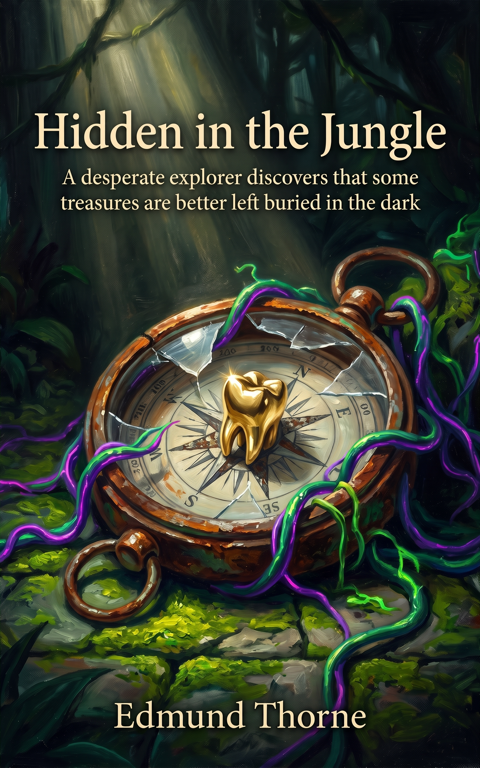
Hidden in the Jungle cover
Hidden in the Jungle
Edmund Thorne

A Danish explorer hunts a fortune through newly mapped South America, dealing with some tribes and fighting others, until every trail bends toward an abandoned temple all of them fear. Adventure fantasy with a pulp heart.

Read chapter 1 free →
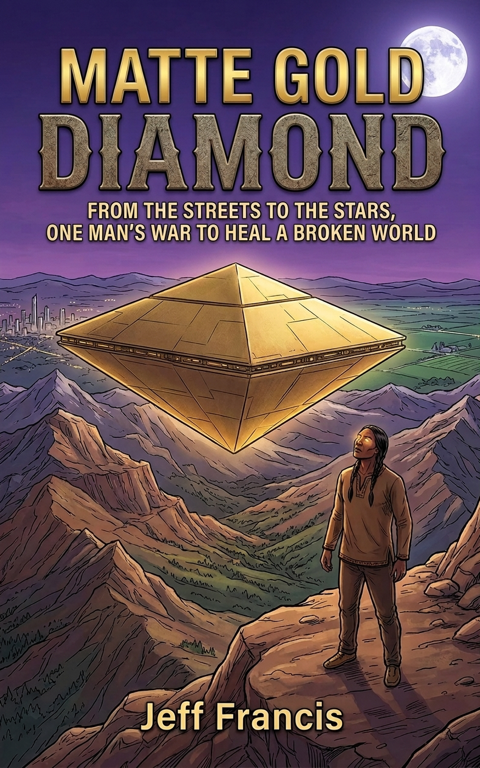
Matte gold diamond cover
Matte gold diamond
Jeffrey Francis

A suppressed genius, poor-born and of indigenous American descent, claws through heists, war, and plain survival in an epic that treats talent as a target painted on your back. Gritty stakes throughout.

Start the first chapter →
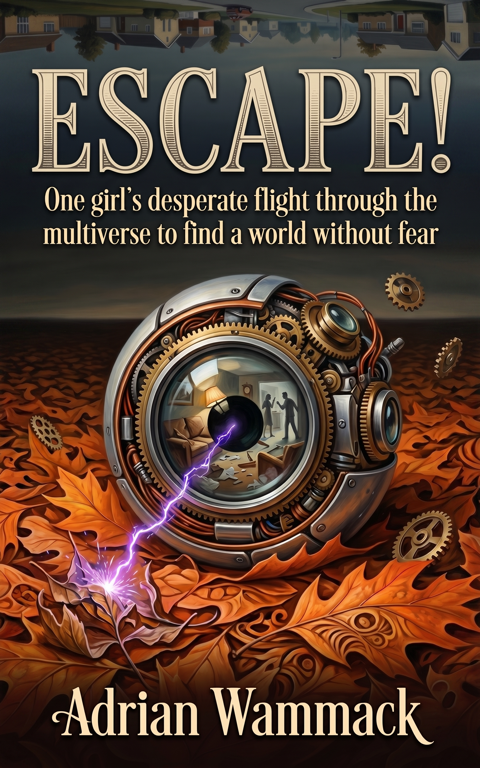
Escape! cover
Escape!
Adrian Wammack

A nine-year-old girl flees an abusive home through a portal, and the dimensions on the other side are not softer than the one she left. Portal fantasy with genuine darkness and scope; the child-abuse premise is on the page, so know your own limits going in.

Open chapter one →
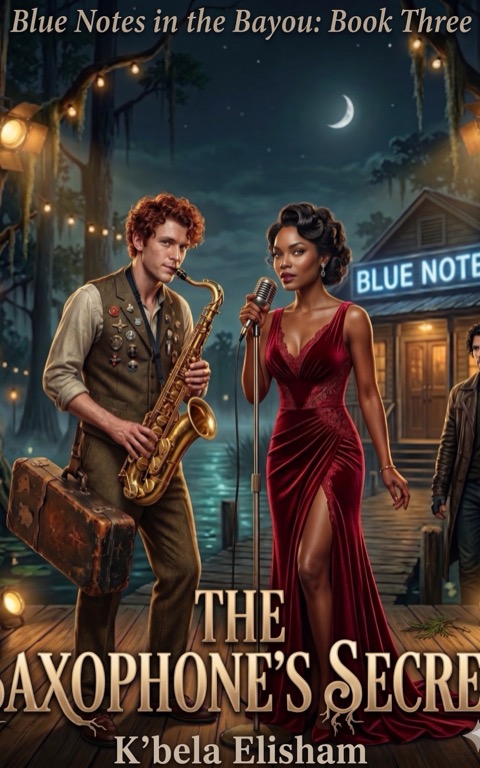
The Saxophones Secret cover
The Saxophones Secret
Kabela Elisham

Someone is disappearing the French Quarter's most powerful rootworkers, and the survivors trust each other about as far as a hex can fly. Urban-fantasy thriller pacing, alliance politics with teeth.

Begin it free →

🧭Keep going