Fishermen pull a man out of the Mediterranean with bullet wounds and no memory. A doctor finds a strip of microfilm surgically buried in his hip, and on it is the number of a Zurich bank account. That's page one of The Bourne Identity, and it explains the whole genre: someone is in danger, nobody knows enough, and the book makes you pay for every answer with another chapter. The best thriller books do that one thing better than everything else on the shelf. The ten below are the ones we'd hand to anybody, ranked.
A note on scope, because this site has neighbors. If you want a detective working a case, our crime thrillers sorted by which side of the law you're on is the better list. If you want an unreliable narrator and a marriage going bad, go to the psychological thriller picks. This page is the general one: the books people mean when they say "a real page-turner."
⚙️What's driving each book
Every thriller runs on one main engine. Knowing which one you like matters more than genre labels, because a spy novel and a dinosaur novel can run on exactly the same thing.
🔪The ten, ranked
-
I Am Pilgrim, Terry Hayes (2013)
It opens in a cheap New York hotel with a woman's body dissolved in an acid bath and every trace of the killer scrubbed, and that crime scene is a side road. The main road is a lone extremist known as the Saracen building a weapon from smallpox, and a retired intelligence agent with no real name trying to find one man on the whole planet before he's ready. Hayes was a screenwriter and it shows: the two storylines move toward each other the way trains do in movies. It's the best modern thriller we know, and it's also long.
Skip it if a 700-page commitment sounds like homework. Start at #10 instead.
-
The Bourne Identity, Robert Ludlum (1980)
The film kept the amnesia and threw out most of the plot. The book is stranger and colder: Jason Bourne slowly comes to suspect that he's Carlos the Jackal's rival, a professional killer, and he can't rule it out because his hands keep knowing things his head doesn't. Ludlum's prose runs hot and breathless, but the question of who Bourne really is holds the whole thing up.
Skip it if exclamation-heavy 1980s prose makes you wince.
-
Red Dragon, Thomas Harris (1981)
A killer the press calls the Tooth Fairy murders whole families on full-moon nights, so investigator Will Graham knows exactly how many days he has until the next one. To get there he has to visit the man who nearly gutted him, Dr. Lecter, who's on maybe twenty pages and steals all of them. The part people forget is how much time Harris spends inside the killer, Francis Dolarhyde, and how much of it is sad. Better than The Silence of the Lambs, and we'll argue about it.
Skip it if you can't take violence against families and children, even off-page.
-
The Spy Who Came in from the Cold, John le Carré (1963)
Alec Leamas, a burned-out British agent in Berlin, agrees to fake his own disgrace so East German intelligence will recruit him. It's a thriller with almost no action, and the tension all comes from who's lying to whom, including the people on Leamas's own side. The final scene at the Berlin Wall is one of the most brutal endings in the genre. You find out you were the mark too.
Skip it if you want gunfights. There's barely one.
-
Jurassic Park, Michael Crichton (1990)
The movie made it about wonder. The book is about failure, and about the mathematician Ian Malcolm explaining, between bouts of morphine, why a park this complicated was always going to break. Crichton puts actual computer printouts on the page and somehow they're tense. The kids, Tim and Lex, get a raft-and-river sequence the film cut that's worth the price alone.
Skip it if you mind characters stopping mid-crisis to lecture about chaos theory. They do.
-
The Hunt for Red October, Tom Clancy (1984)
A Soviet submarine captain, Marko Ramius, is trying to defect with his new silent-drive sub, and the problem is that no one can know: not his crew, not Moscow, not the US Navy hunting him at first. Jack Ryan, a CIA analyst, is the one man who guesses. A lot of the book is sonar operators listening to water, and it shouldn't be gripping.
Skip it if hardware specs bore you. There are pages of them.
-
Killing Floor, Lee Child (1997)
Jack Reacher walks into Margrave, Georgia, gets arrested for a murder within the first page or so, and then learns the dead man is his brother. After that he isn't running from anyone. He's working through the town one person at a time. Child writes in short, flat, first-person sentences that read like someone tapping the table, and it's the most bingeable book here. There are dozens of sequels for a reason.
Skip it if a hero who never loses a fight takes the fun out of it for you.
-
Marathon Man, William Goldman (1974)
Babe Levy is a history grad student who runs to cope. His brother is a spy, which Babe doesn't know, and a Nazi war criminal named Szell has come to New York to collect a fortune in diamonds. It's the book with the dentist chair and the question "Is it safe?" Goldman (who also wrote The Princess Bride) splits the book into two plots that look unrelated until they crash into each other.
Skip it if dental torture is a hard no. The scene is exactly what you fear.
-
The Da Vinci Code, Dan Brown (2003)
Yes, the prose. Critics hated it and it sold tens of millions anyway, because Brown understood something about structure: a chapter averages a few pages and nearly every one ends on a door half-open. A murdered Louvre curator leaves a code in his own blood, and Robert Langdon spends one night across Paris and London decoding it. If you've ever read "just one more" chapter at 1am, this is the purest version of that feeling.
Skip it if clunky sentences ruin a book for you, whatever the pacing.
-
The Thirty-Nine Steps, John Buchan (1915)
A neighbor turns up at Richard Hannay's London flat babbling about an assassination plot, then turns up dead on the floor, and Hannay, framed, takes a train to the Scottish moors with police and spies both behind him. It's short enough for one evening, and nearly every "innocent man on the run" story since (most of Hitchcock included) borrows from it. If you've never read a thriller and want to see if the genre is for you, start here.
Skip it if 1915 attitudes about almost everything will grate.
Not sure which engine fits your mood tonight? The what-to-read-next quiz asks about the feeling you want, not the genre. And if one of these ten already hooked you, the books-like finder will pull read-alikes.
📰Why the cliffhanger came first
The cliffhanger chapter isn't a Dan Brown trick. The Thirty-Nine Steps first ran in installments in Blackwood's Magazine in 1915, and Buchan wrote it to make readers come back for the next issue. The thriller grew up in that format: a portion, a hook, a wait. Brown's three-page chapters and Child's paragraph-long scenes are the same idea in a single book.
That's also why thrillers work better in short chapters than almost any other genre, and it's what NanoReads is built around. Each book is published in roughly ten-minute chapters, and the first one is free. So for the thriller shelf the question is a simple one: does chapter one leave you needing chapter two? (The whole thriller hub, sorted by who's hunting the hero, is the place to browse.)
📖Read thrillers free on NanoReads
These are serials by independent authors, not bestsellers. We're saying that up front because they don't play like the ten above. What they have is a premise you won't find on any airport shelf. Descriptions come from the authors' own pages.
 Ch. 1 free
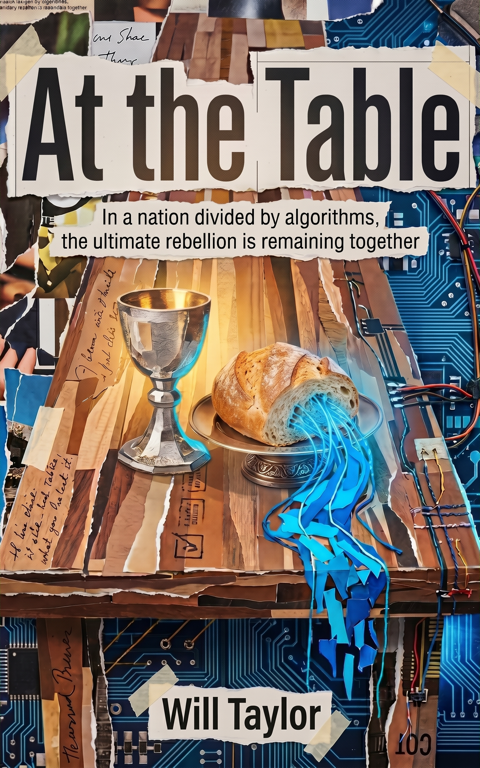
Will Taylor's political thriller: a former Special Operations soldier, now an Episcopal priest in Alexandria, Virginia, caught in a national crisis as a behavioral AI system helps push America apart. Closest in spirit to I Am Pilgrim's big-canvas dread.
Start Lars Hansen's story →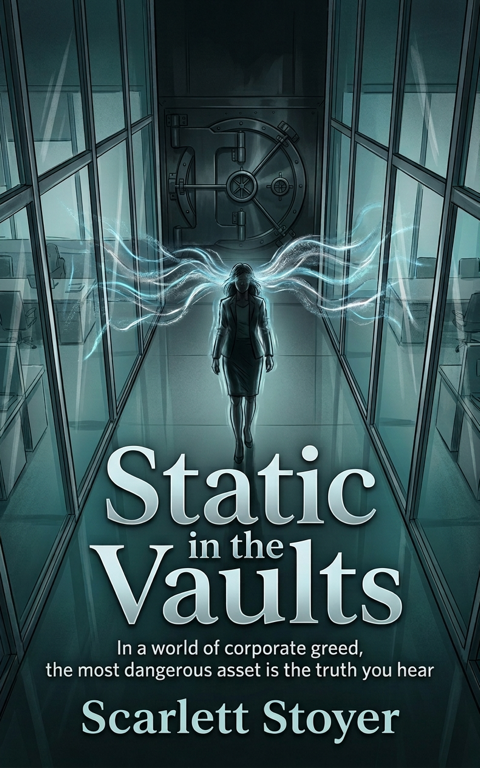 Ch. 1 free
A junior accountant at a private equity firm can hear her bosses' thoughts and uses it to climb, until she finds out the board fronts a global criminal organization. A mask engine with a paranormal twist, by Scarlett Stoyer.
Read the first chapter free →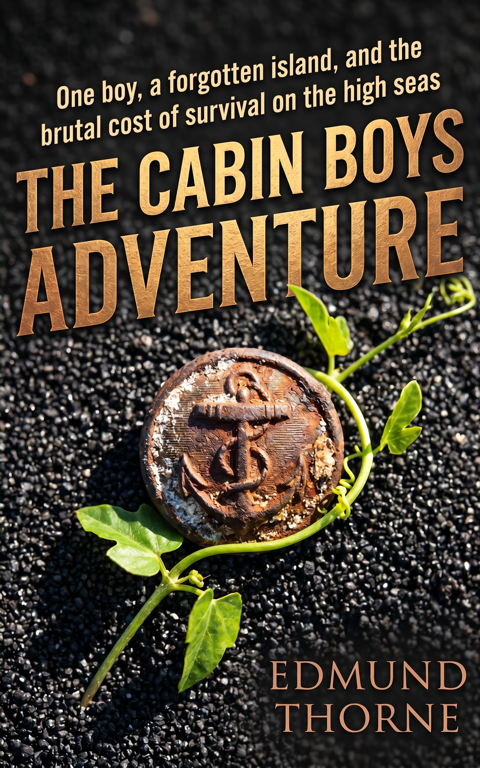 Ch. 1 free
Edmund Thorne sends a fourteen-year-old cabin boy aboard a British man-of-war, under orders from the king to scout the Spanish colonies, and the Spanish navy attacks before they arrive. A historical sea chase for anyone who liked Buchan's age of adventure.
Board the ship, chapter 1 →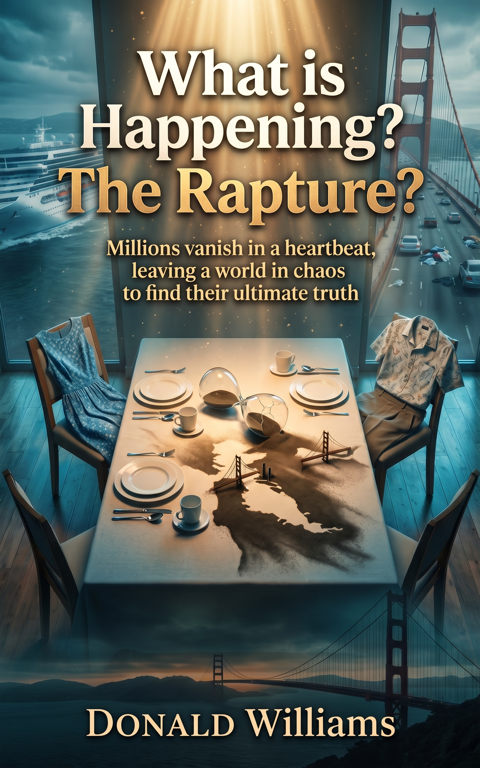 Ch. 1 free
Donald Williams opens with three interlocking scenes, starting with a family dragging two teenagers to church instead of a pool party. It's faith-based apocalyptic fiction about grief and survival (more on the genre in our Christian fiction explainer).
See how it begins →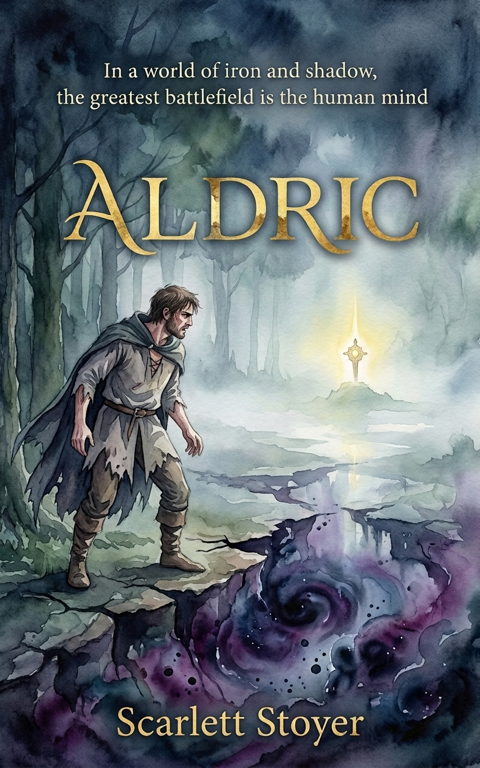 Ch. 1 free
Scarlett Stoyer bills this one as a Christian psychological thriller with a medieval, paranormal setting. The author's page says little more, so chapter one is your best guide.
Try the opening chapter →If the line between thriller and serious novel interests you, Resurrection and Shadows in the Mist both sit close to it; our literary fiction and historical fiction pages explain where that line usually falls.