Three slogans, nine words, and you already understand the state that wrote them. That is the trick the best dystopian books pull off, and the reason they outlive their decades. A good one teaches you the rules of a society you would never want to live in, and then makes you notice which of those rules you already follow. The ten below are the ones that do it best. I ranked them on that alone: how clearly the book shows you how the system works, who it serves, and what it costs the one person we follow.
This page is the broad canon, mostly adult literary fiction. If you came for Panem and the arena, the YA dystopian list built around The Hunger Games is where you want to be. If you prefer your bad futures with more hardware, our dystopian science fiction picks lean into the tech. And for an oppressive regime with a love story at the centre, there is a separate dystopian romance reading list.
The ranking
-
1
Nineteen Eighty-Four
George Orwell · 1949Still the one everything else gets measured against, and the reason is Winston's job. He works at the Ministry of Truth rewriting old newspapers so the past agrees with the present, which means the regime does not just control what people do, it controls what is true. Newspeak, the doublethink chapters, the book-within-the-book: none of it is decoration. The last third in the Ministry of Love is hard going and it is meant to be.
Start here if you have never read a dystopia -
2
The Handmaid's Tale
Margaret Atwood · 1985Atwood said she put nothing in Gilead that people had not already done somewhere, and you can feel it. Offred's voice is flat and careful, the voice of someone who knows she is being listened to, and the flashbacks to her ordinary life before are what make the book frightening. Read through to the Historical Notes at the end, a symposium set in 2195; plenty of readers skip it and miss the final twist of the knife.
Content note: ritualised sexual violence throughout -
3
Brave New World
Aldous Huxley · 1932The opposite answer to Orwell, and arguably the more likely one. Nobody in the World State is starved or beaten. They are grown in bottles, conditioned in their sleep, and handed soma whenever a feeling gets inconvenient. The opening tour of the Hatchery is cold and funny. The book sags when John the Savage arrives and starts lecturing, but the first half is the sharpest satire on this list.
Read second, after Orwell -
4
Parable of the Sower
Octavia E. Butler · 1993Written in the early nineties and set in 2024, which makes the opening chapters an odd thing to read now: walled neighbourhoods, a California where water costs more than the jobs pay, a company town selling safety in exchange for freedom. Lauren Olamina narrates in journal entries and has hyperempathy, so she physically feels other people's pain, which is a brutal disadvantage in a collapsing world. The walk north is the best long march in the genre.
For readers who want hope that has to be earned -
5
Never Let Me Go
Kazuo Ishiguro · 2005The quietest book here and the one that stays longest. Kathy H. remembers her school days at Hailsham, the art classes, the guardians, the friendships, and only slowly does the reader assemble what the students are being raised for. Nobody rebels. That is the horror. Ishiguro writes it like a memoir, and the calm is what makes the ending land so hard.
Best if you read it knowing as little as possible -
6
Fahrenheit 451
Ray Bradbury · 1953Short, hot, and far more about television than most people remember. Guy Montag burns books for a living, but the scene that sticks is his wife Mildred, who swallows a bottle of sleeping pills, gets her stomach pumped by two bored technicians, and wakes up remembering nothing, eager to get back to the "family" on her wall-sized screens. Captain Beatty's speech explaining that the public gave up books before the state banned them is the point of the novel. Under two hundred pages, so it is the easiest way into the genre.
One evening's read -
7
We
Yevgeny Zamyatin · written 1920–21The grandparent. D-503 is a mathematician in the One State, where citizens are numbers, apartments have glass walls, and sex is scheduled by pink ticket. Then a woman called I-330 gives him an irrational thought and his tidy diary begins to crack. You will spot pieces of Orwell and Huxley everywhere. Pick a recent translation; the style is jagged and experimental and older versions make it harder than it needs to be.
For readers who like seeing where a genre began -
8
A Clockwork Orange
Anthony Burgess · 1962Alex narrates in Nadsat, a slang Burgess built partly out of Russian, and you are fluent by page thirty without noticing. The state's answer to his violence is the Ludovico technique, which conditions him into being sick at the thought of it, and the book asks whether a man forced to be good is any better than one choosing to be bad. Get an edition with the final chapter, which the original American edition cut and which changes what the book means.
Content note: graphic violence and sexual assault early on -
9
Oryx and Crake
Margaret Atwood · 2003Atwood's second spot, and a very different book. Snowman lives alone in a ruined world looking after a gentle engineered species called the Crakers, and the flashbacks to the corporate compounds and the pleebland slums outside them show how it got that way. It is funny in a dark way the Gilead books are not, full of brand names and theme-park science. First of the MaddAddam trilogy, though it stands on its own.
For readers who want biotech instead of secret police -
10
The Road
Cormac McCarthy · 2006Strictly post-apocalyptic rather than dystopian, since there is no state left, only a father and son pushing a shopping cart south through ash. It is here because almost everyone who asks for dystopian books wants it, and because it is the strongest answer to "what is left when the system is gone." No quotation marks, barely a named character, almost no hope, and the most tender book on this list anyway. It won the Pulitzer in 2007.
Not for a bad week
If you only have time for three
Read Nineteen Eighty-Four, then Brave New World, then Parable of the Sower. Orwell gives you rule by fear, Huxley rule by pleasure, and Butler what it looks like when nobody is really ruling at all and the system just stops working for most people. Between the three you have the whole argument the genre has been having for a hundred years, and every later dystopia you pick up will read as an answer to one of them.
Already read the big three? Put a favourite into the books-like finder and it will suggest titles with the same feel, or browse the dystopian books hub, where we file free serials by how their characters try to get out.
Dystopian serials you can read free tonight
NanoReads publishes serial fiction, mostly from independent authors, and the first chapter of every book is free. None of these four are in the same league as the classics yet, and that is not the point of them. They are new, they come in short chapters, and they work for a commute.
-
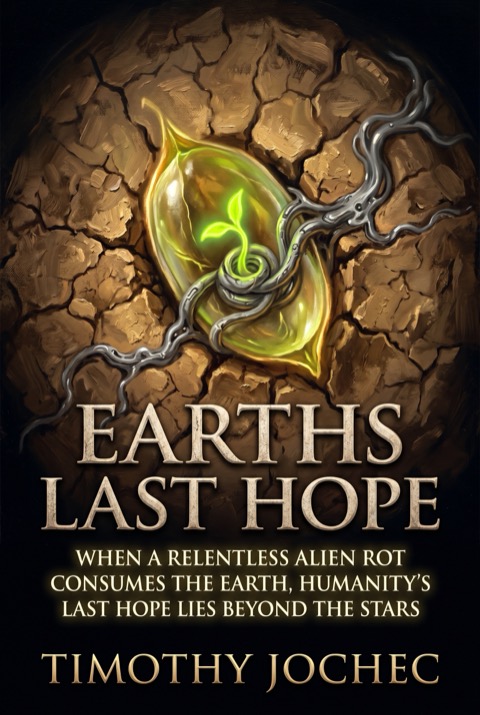
Earths last hope
Timothy Jochec · sci-fi, survivalA world where the population is falling from hunger, because a species called the Vex destroys plant life faster than giant cooperative greenhouses can grow it. That is the Parable of the Sower kind of dystopia, where the system fails rather than tightens. Chapter one of Earths last hope is free to read.
-
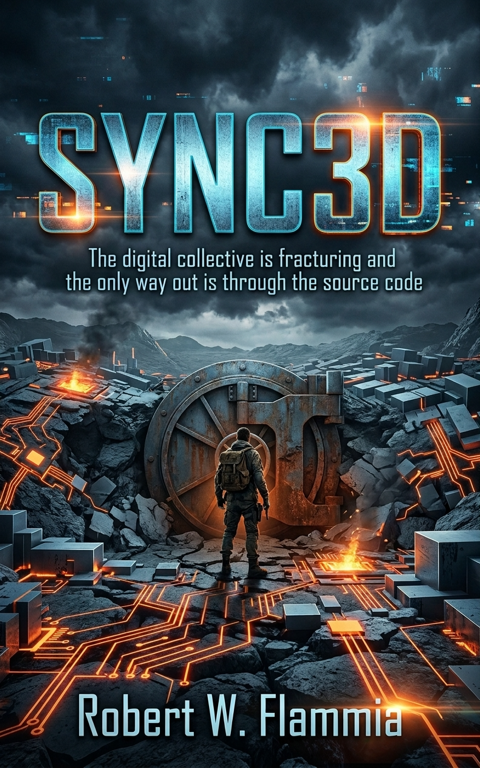
SYNC3D
Robert W. Flammia · sci-fi, thriller, horrorAn integrated network spreads past the city limits and runs into pockets of people who are biologically immune to its signal, and those immune colonies go to war with the infrastructure. Cyberpunk with a psychological-horror streak. Try the first chapter of SYNC3D if the Crakers were your favourite part of Atwood.
-
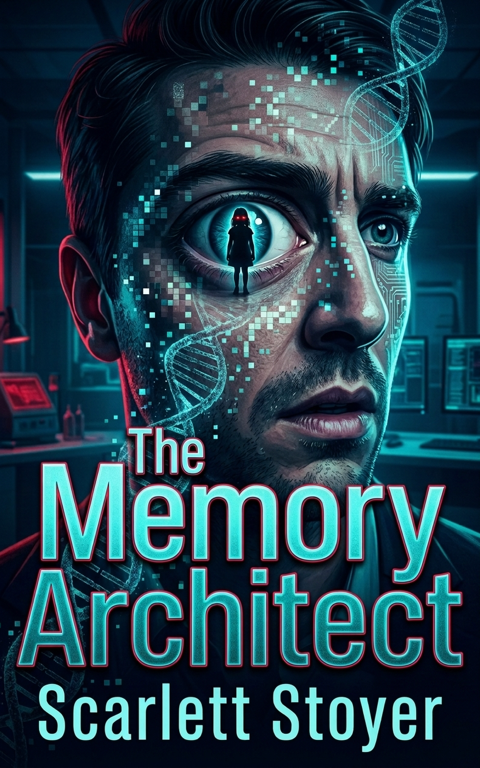
The Memory Architect
Scarlett Stoyer · thriller, sci-fiNear-future, corporate, small scale: a forensic architect builds digital memory simulations so rich clients can relive their childhoods, then finds a coding error putting the same red-eyed girl into three strangers' memories. More conspiracy thriller than full dystopia, with the same rewritten-past nerve as Winston's job. Open chapter one free.
-
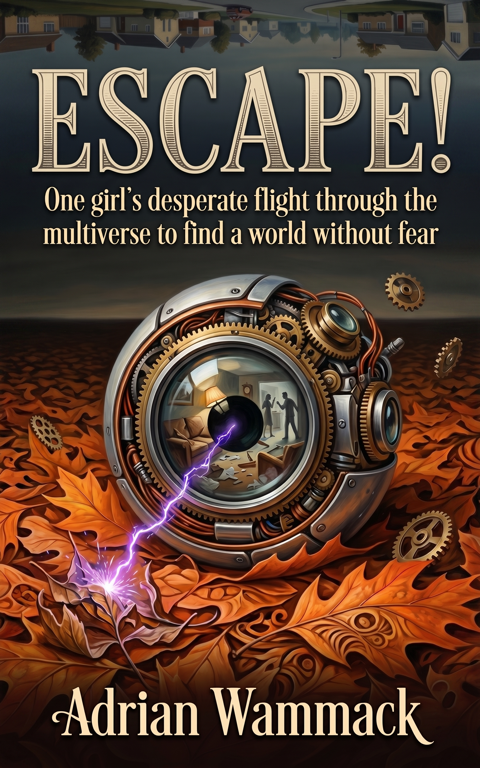
Escape!
Adrian Wammack · fantasy, sci-fi, post-apocalypticA nine-year-old girl escapes an abusive home through a portal, into a run of worlds she cannot steer, each with its own climate and people. It leans toward portal fantasy, with post-apocalyptic settings among the worlds. Content note: child abuse is the premise. The first chapter is free.
Want something else entirely? The what-should-I-read-next quiz takes about a minute, and the sci-fi books hub has the wider shelf.
Questions readers ask
What was the first dystopian novel?
There are earlier candidates, but Yevgeny Zamyatin's We, written in 1920 and 1921 and first published in English in 1924, is the book usually credited with setting the template: a single state, numbered citizens, a leader called the Benefactor, and a man who starts to have private feelings. Orwell reviewed it in 1946, a few years before Nineteen Eighty-Four came out.
Should I read 1984 or Brave New World first?
Read Nineteen Eighty-Four first. It is the easier book to get into because it stays with one frightened man from the first page, and Brave New World reads better once you know the fear-based model Huxley is arguing against. Huxley's version is controlled by pleasure, Orwell's by pain, and the contrast is half the fun.
What is the difference between dystopian and post-apocalyptic books?
A dystopia is a society that works, just horribly: there are rules, rulers and a system. Post-apocalyptic fiction is about what is left after the system has collapsed. The Handmaid's Tale is dystopian; The Road is post-apocalyptic. Plenty of books sit on the line, Parable of the Sower among them.
Is The Hunger Games a dystopian book?
Yes. Panem, with its Capitol, districts and televised Games, is a classic dystopian state, and the trilogy is what made young adult dystopia a genre of its own. It is not on this list only because we gave YA dystopia its own page.
Are dystopian books appropriate for teenagers?
Many are taught in schools, Fahrenheit 451 and Nineteen Eighty-Four most often. Others on this list carry heavy material: The Handmaid's Tale centres on ritualised rape, A Clockwork Orange opens with graphic violence including sexual assault, and The Road is relentlessly bleak. Check the book against the reader rather than the genre label.