Dark romance is a romance subgenre where the central love story moves through territory most romance refuses to touch: captivity, obsession, coercion, revenge, morally black heroes who never fully reform. The genre still demands an earned happy ending. What makes it work is a deal, stated up front in content warnings, between a book and a reader who chose it.
That deal is the part most explainers skip, so it's the spine of this one. If you understand the contract, everything else about the genre stops looking like chaos and starts looking like rules.
🤝The reader contract
The cleanest way I know to explain dark romance to someone who has never touched it: it's a haunted house. You bought the ticket. The fear inside is real, your pulse genuinely spikes, and none of it can hurt you, because you chose the door and you know where the exit is. Consent in dark romance doesn't live between the characters, at least not at first. It lives between the book and you.
That's the whole trick, and it's why the genre's critics and its readers keep talking past each other. Inside the story, a heroine gets taken, cornered, blackmailed. Outside the story, a reader who checked the warnings, read the author's note, and picked this exact book on purpose gets to feel dread with the lights on. The character can't consent yet. The reader already did.
So here is what a dark romance is allowed to do to you: frighten you, make you root for someone you'd testify against, make a scene hot and alarming in the same breath. And here is what it never gets to do: ambush you. The content warnings are the terms of the deal. A book that hides them, or markets dubcon as "spicy enemies to lovers," hasn't written a dark romance. It has broken the contract.
🚫What dark romance is not
The standing accusation is that these books romanticize abuse, and it deserves a straight answer instead of an eye-roll. Sometimes it lands. A book that springs an assault scene on readers who were promised banter has hurt a real person, and no amount of "it's just fiction" fixes that. The genre's worst marketing is indefensible, full stop.
But depicting is not endorsing, and readers know the difference better than anyone. Nobody finishes a captor romance and updates their dating standards to "kidnapper." What the genre actually sells is fear in a container: the full intensity of the worst-case scenario with a guaranteed floor underneath, because the other rule of dark romance, the one it inherits from romance proper, is that the ending pays off. HEA, or at minimum a hard-won happy-for-now. However bad the middle gets, the book has already promised you the landing.
The wildest thing about dark romance readers, once you meet them, is how much homework they do before opening a book. They trade spoiler-tagged warning lists and read author's notes the way lawyers read fine print. This is the least casual readership in fiction.
🗺️Where the borders run
"What counts as dark romance" is mostly a question about neighbors, because the shelf sits between three genres it trades with constantly.
Mafia romance is the big one, and here's the part newcomers miss: a mafia romance can be practically cozy. Arranged marriage, loyalty, family dinners, a husband who would burn the city down for her but never once frightens her. The setting is criminal; the love story is safe. The moment the threat moves inside the relationship, when the man she's falling for is also the man she should be running from, you've crossed into dark mafia romance, which is exactly what the name promises: the mafia setting running on the dark contract.
Gothic romance runs on dread too, but the dread comes from the house. The locked wing, the first wife, the portrait that watches. A gothic can stay entirely closed-door and still have you sleeping with the lamp on. Dark romance takes the danger out of the architecture and puts it in the love interest's hands.
Bully romance is the campus-sized cousin: cruelty first, groveling later, and the arc usually bends toward apology and redemption. Dark romance often skips the apology. A true morally black hero ends the book still capable of everything he did in chapter one. He's just aimed at the world on her behalf now.
🧰The trope toolkit
Four tropes do most of the genre's heavy lifting. Learn these and you can read any blurb on the dark romance hub fluently.
Captor and captive
The load-bearing trope. One character controls the other's freedom, and the book's whole job is to flip that power balance so gradually that you can defend every single step, right up until you realize you're rooting for the kidnapper and can't name the chapter where it happened. Done badly it's just imprisonment with kissing. Done well it's the most precise study of power the romance genre has.
Obsession
The love interest's attention arrives long before consent does. Surveillance, orchestrated coincidences, a man who knows her coffee order and her lease terms. The reader's thrill is watching devotion and threat wear the same face. On our own shelf, the boardroom version of this is:
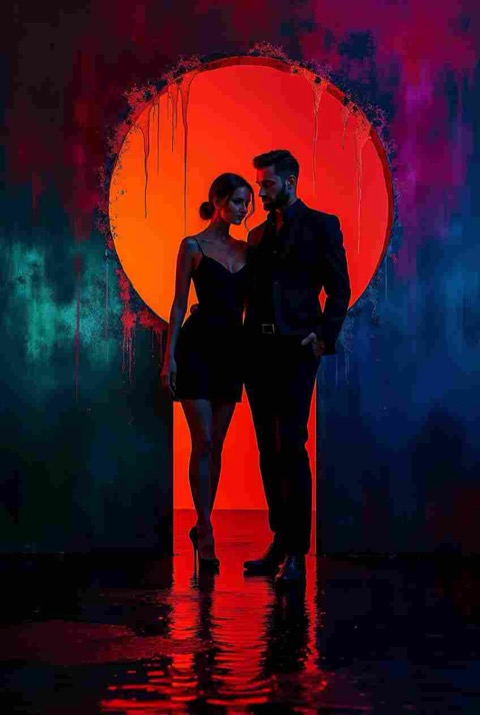
Crimson Obsession
Vivian Hart works the Monarch Lounge, a club for the city's elite where power and control are the currency, until Alexander Blackwood, a man who commands the room with a glance, fixes that attention on her.
Watch the obsession start, chapter 1 free →The morally black hero
Not gray. Gray is for other shelves. The dark romance male lead does terrible things with a clear head and does not spend the third act apologizing for them; the concession he makes to love is choosing one person to be safe with him. Whether that archetype reads as catnip or as a dealbreaker to you is useful self-knowledge, and the book boyfriend quiz will diagnose it in about two minutes.
Forced proximity, weaponized
Every romance likes trapping two people together. Dark romance prefers rooms you can't leave: a contract, an island, a war, a debt. The pressure is survival, not awkwardness. For the gateway version of this, with dragons standing in for the mob:
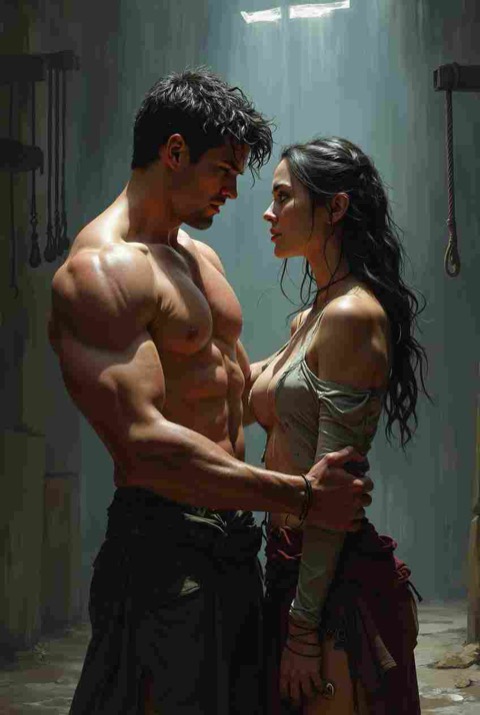
Dragon Bond Academy
Violet Wynter is broke and facing eviction when a brutal conscription drags her to Drakoria Academy, a dragon-riding fortress where the weak don't survive, and straight into Kade Stormborn, an elite cadet whose icy scorn cuts deeper than any blade.
Step into Drakoria free →🏷️Content-warning literacy
Reading a warning list fluently is the genre's real entry requirement, and nobody teaches it. Four questions to put to any CW list before you put your evening in a book's hands:
- On the page or in the backstory? "Past abuse, referenced" and "abuse, on page" are different books wearing the same tag.
- Who does the harm? Harm from a villain and harm from the love interest ask completely different things of you as a reader.
- Dubcon or noncon? Authors who use those words precisely are authors you can trust with your limits. Vague heat language on a dark book is a red flag in itself.
- Is the ending guaranteed? "HEA" at the bottom of a scary list is the floor the whole contract stands on.
One more rule, about you rather than the book: a hard-limit list is not a difficulty setting. There is no achievement for reading past your own no.
Two books in our catalog show why the fine print matters, because both carry the catalog's abusive tag and they are not the same book.

His Biggest Mistake
Elara Vance poured ten years of her genius into her husband's empire and designed his crowning achievement, the Skyline Tower. At its grand opening, on their anniversary, he credits her work to his young protégée. Elara walks out.
Scout chapter 1 free →
Whispers in the Rain
Lila flees Colin, the abusive billionaire boyfriend who made her art both her salvation and her prison, and lands in the storm-beaten town of Port Haven to finally paint for herself.
Start Lila's escape free →🌶️Darkness is not a heat level
Worth its own section, because half the confusion around the genre starts here. A dark romance can be brutal and nearly fade-to-black; a sunny rom-com can out-spice most of the dark shelf. Threat and heat are separate dials. If heat is what you're actually shopping for, the spicy romance hub and our honest ranking of the best smut books will get you there faster, and if the vocabulary itself is fuzzy, the smut glossary entry settles what the word does and doesn't mean. Before committing a whole evening to any title, running it through the spice level checker tells you which dial you're actually turning.
✅Is dark romance for you? A six-line self-check
Be honest. Nobody's grading this.
- You can root for a character you would testify against in real life.
- A content-warning list reads to you like a menu, not a dare.
- You can find a scene hot and alarming at the same time without needing the book to pick one.
- You don't need the hero forgiven by the end. You just need the ending to land happy.
- You have a hard-limit list, and skipping a book that crosses it costs you nothing.
- Dread, for you, is a feeling you can close the book on.
Five or six yeses: the deep end is yours. Three or four: start at the gateway below. Fewer than that, and the gothic shelf will scare you more kindly.
📚Famous examples, gateway to deep end
The gateway: Corrupt by Penelope Douglas, where four men fresh out of prison come back for the girl they blame, sits right on the bully border, and it will tell you quickly whether rooting for the wrong person is your thing. Captive Prince by C.S. Pacat comes at the genre from fantasy: a betrayed prince handed to his enemy as a slave, brutal early, and a trust arc so slow it takes three books to close.
The middle: Den of Vipers by K.A. Knight, the captor romance BookTok turned into a household name. Roxy, her father's debt, four Viper brothers, and the trope toolkit above deployed with zero shame.
The deep end: Credence by Penelope Douglas, snowed into a remote mountain house with a taboo arrangement that split BookTok clean in half, and the discourse was earned. Then Haunting Adeline by H.D. Carlton, the stalker romance whose trigger list is famous in its own right. Carlton's author's note tells you to believe the warnings. Believe them.
On NanoReads, chapter one of every serial is free, so testing any of the four books above against your own limits costs you an evening's first ten minutes and nothing else.
Quick answers
Is dark romance the same as smut?
No. Smut describes heat, meaning how explicit the sex is. Dark describes threat, meaning how much harm sits inside the love story. The two dials move independently: a dark romance can be nearly fade-to-black, and a very smutty book can be entirely safe. Confusing them is how readers get ambushed in both directions.
What counts as dark romance, and what is just a mean hero?
The test is whether the harm is structural. A grumpy or arrogant hero makes the heroine's life annoying; a dark romance hero makes it dangerous, through captivity, coercion, obsession, or violence, and the book treats that danger as the engine of the plot rather than a rough edge. If you could remove the harm and the story would still stand, it was never a dark romance.
Does dark romance always end happily?
By convention, yes. Dark romance is still romance, so it inherits the genre's promise of a happy ending, or at least a hopeful one. Books that end in tragedy get shelved as dark fiction, not dark romance. The darkness is the road the couple travels, not where the book leaves them.