Sorted by time-to-finish · Updated August 2026

Best Short Stories: Complete Reads Under an Hour

Twelve stories, grouped by how long they actually take — and where you can legally read each one right now, most of them free.

Here Today, Gone Today cover The Weight of Watered Silk cover The POW Witness cover Resurrection A Novel cover The Prodigal Son cover

Shirley Jackson starts "The Lottery" on a clear, warm summer morning, with flowers out and the grass green, and the children of the village gathering stones into their pockets while the adults stand around talking about tractors and taxes. Nothing in that opening tells you what the stones are for. Twenty minutes later you know, and the sunshine is the worst part.

That is the whole argument for short stories. A novel earns your dread over four hundred pages; a story has to do it before your coffee goes cold. So this list is organised by the question that decides whether you read one tonight: how long does it take to finish? Three tiers, at about ten minutes, about twenty-five, and a proper hour. Every time below is an estimate, figured at roughly 250 words a minute with no re-reading, and rounded up.

⏱️About ten minutes

Lunch break, train platform, the gap before a meeting. Four of these five are old enough to be public domain in the US, so a free and legitimate full text is thirty seconds away on a volunteer archive like Project Gutenberg or Standard Ebooks.

The Lottery ≈10 min

Shirley Jackson · 1948 · in print; find it in her collections

The detail that does the damage is the black box: splintered, faded, shabby from decades of use, and nobody will replace it because replacing it would mean admitting there is a choice. Jackson spends her first half building a village fête and the second half taking it apart, and the final page rearranges everything you read before it. Still in copyright, so a library collection or a licensed ebook rather than a free archive.

The Story of an Hour ≈8 min

Kate Chopin · 1894 · public domain in the US

Louise Mallard is told her husband has died in a rail accident, goes upstairs alone, and sits at an open window watching the tops of trees while she works out — slowly, and against her own will — that what she feels is not grief. She repeats one word to herself under her breath, and Chopin lets the room fill with it. The closing sentence is one of the most efficient acts of cruelty in American fiction. Shortest thing on this page, and the best place to start if you have not finished a book in a year.

The Cask of Amontillado ≈12 min

Edgar Allan Poe · 1846 · public domain in the US

Montresor walks a drunk rival down into the family catacombs during carnival, on the promise of a rare sherry. What makes it work is the trowel he produces from under his cloak, a joke Fortunato does not get and the reader already does, plus the bells on the fool's cap still faintly jingling in the dark long after everything else has stopped. Poe never tells you what the insult was, and readers have argued about it ever since.

Hills Like White Elephants ≈10 min

Ernest Hemingway · 1927 · public domain in the US (pre-1929 publication)

A couple wait for a train at a Spanish station and talk around a decision. The word "operation" is said once. Nothing else in the story is named directly, and yet the argument is fully legible: Hemingway hands you two people's dialogue, the luggage with labels from every hotel they have slept in, and the hills across the valley the woman keeps looking at, and lets you assemble the rest. If you want to see what "iceberg theory" actually means in practice rather than in a lecture, it is ten minutes.

The Library of Babel ≈15 min

Jorge Luis Borges · 1941 · in print in translated collections

The universe is a library of identical hexagonal galleries holding every possible book: every arrangement of letters, so every true book, every false one, and oceans of gibberish between them. Borges then works through what living there does to people, including the sects, the purges, and the suicides down the ventilation shafts. It is closer to a proof than a story, and it sits in your head for weeks.
About twenty-five minutes

The commute tier. Long enough for a real turn in the middle, short enough that you will not be tempted to bookmark and abandon.

The Yellow Wallpaper ≈25 min

Charlotte Perkins Gilman · 1892 · public domain in the US

A woman is confined to an upstairs nursery for a rest cure and forbidden to write, so she writes anyway, in secret, about the wallpaper. Gilman's move is to make the descriptions of the pattern get more precise as the narrator's grip gets worse: first she hates the colour, then she spots a sub-pattern behind it, then the sub-pattern moves. By the last page the sentences have shortened and the point of view has quietly changed hands.

The Ones Who Walk Away from Omelas ≈20 min

Ursula K. Le Guin · 1973 · in print in her collections

Le Guin describes a city of impossible happiness, stops mid-description to admit you do not believe her, and invites you to add whatever your own idea of joy requires. Having made you complicit in building the place, she shows you the child in the basement, and the terms. Closer to a thought experiment than a plot, and answered by more other writers than almost any story of the last fifty years.

A Good Man Is Hard to Find ≈30 min

Flannery O'Connor · 1953 · in print in her collections

A family road trip in Georgia goes wrong because the grandmother has smuggled her cat into the car in a basket, and the cat panics at the wrong moment. That comic domestic detail is the hinge that swings the story into an encounter with an escaped killer called the Misfit. O'Connor plays the first two-thirds as broad family farce, right down to the children whining about the scenery, which is exactly why the last third is unbearable.

The Lady with the Dog ≈30 min

Anton Chekhov · 1899 · public domain in the US in the older translations

A serial philanderer in Yalta starts an affair he expects to forget by autumn, and does not forget it. The scene everyone remembers: Anna weeping on the hotel bed about what she has become, while Gurov, bored, cuts himself a slice of watermelon and eats it. Chekhov refuses to punish either of them or to let them off, and the story ends with the hardest part still ahead. Translations vary a lot here; the older ones are free, the newer ones read better.

Cathedral ≈25 min

Raymond Carver · 1981 · in print in his collections

A sour, jealous narrator has to host his wife's old friend, a blind man, for a night. Most of the story is people eating and drinking too much while the narrator sulks. Then a documentary about cathedrals comes on television, the blind man asks him to describe one, he cannot, and they end up drawing it together with the blind man's hand riding on his. The narrator closes his eyes and keeps drawing. Carver never explains what happens to him.

🕯️A proper hour

Novella-adjacent length without being a novella — these are still single stories with a single arc, they just take the long way. Save them for an evening.

The Dead ≈60 min

James Joyce · 1914, in Dubliners · public domain in the US

Three-quarters of it is a Dublin Christmas party: the carving of the goose, an argument about opera singers, a speech Gabriel Conroy has been rehearsing in his head all night. It reads like a very good, very ordinary evening. Then his wife hears a song on the stairs, and in a hotel room afterwards she tells him about a boy who died at seventeen, and Gabriel understands he has never once been the thing in her life that song was about. The closing paragraph on the snow earns its reputation. Free and public domain.

The Bear Came Over the Mountain ≈55 min

Alice Munro · in print in her collections

Grant puts his wife Fiona into a care home as her memory fails, is barred from visiting for the first month, and returns to find she has attached herself to another resident and treats Grant as a pleasant stranger. What Munro does with the rest is the reason she is on this list: she keeps flicking back to Grant's own decades of infidelity, so his misery is never clean, and the ending asks him to do something generous for reasons that are not remotely generous. It contains an entire marriage. It takes an hour.

Where to actually get them

The pre-1929 titles above (Poe, Chopin, Gilman, Chekhov in the older translations, Joyce, and the 1927 Hemingway) are public domain in the United States, and Project Gutenberg and Standard Ebooks host clean, properly typeset free texts of them. Terms differ by country, so check your own if you are outside the US. Everything else here is still in copyright and belongs to a library collection, a bookshop, or a licensed ebook.

If the tiers did not settle it, the read-next quiz takes ninety seconds and asks what mood you are in rather than what genre you claim to like. If it turns out you specifically want speculative short fiction, the best sci-fi short stories list is a separate shelf.

📖Read free on NanoReads

An honest note before the shelf: a ten-minute NanoReads chapter is not a short story. A short story is finished, and closing it feels like closing something. A serial chapter is one movement of a longer book, built to leave you leaning forward. What they share is the slot they fit into, a piece of reading you can hold in one sitting on a phone without a bookmark.

If what you liked about this page was "a real piece of writing, finished before my coffee is cold," these are the closest things in the catalog: literary and emotional fiction from real authors, chapter one free, more on free novels online. The fit is decent, not perfect. These are books, told ten minutes at a time.

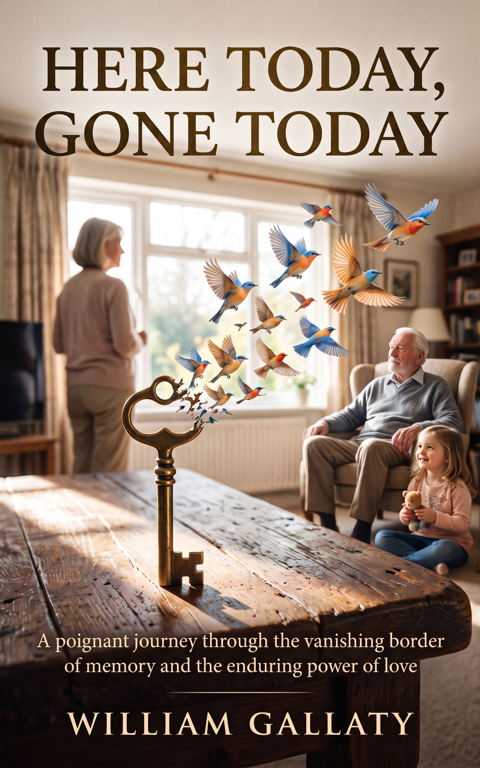
Here Today, Gone Today cover
Here Today, Gone Today
An 85-year-old man with dementia drifts in and out of reality while his wife of 65 years locks the doors and fields the relatives who want him institutionalised. The closest thing here to the Munro.
Read chapter 1 free →
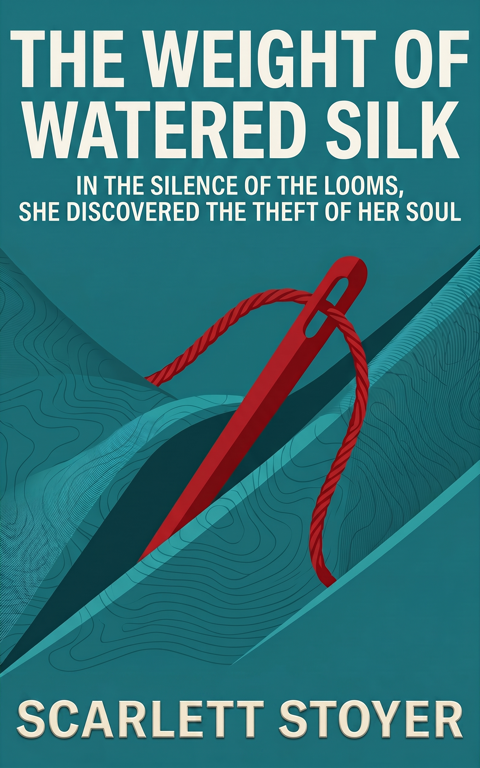
The Weight of Watered Silk cover
The Weight of Watered Silk
A mute worker in a 1920s silk mill finds a ledger sewn into a dress lining proving the owner forges immigrant workers' identities to take their inheritances — hers included.
Read chapter 1 free →
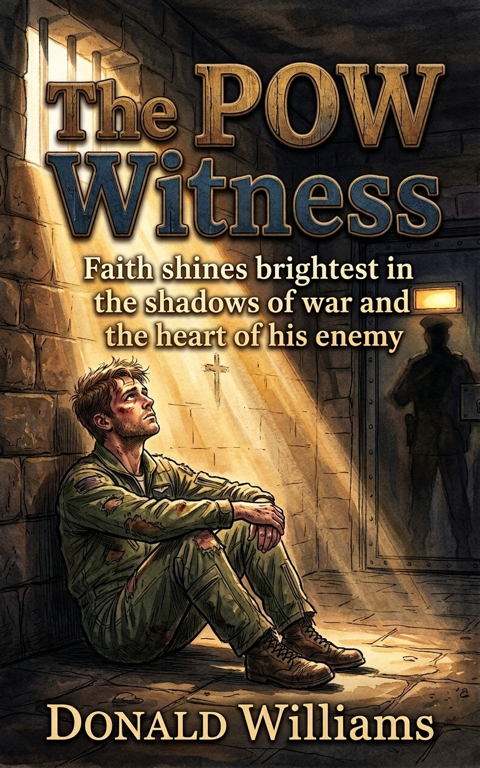
The POW Witness cover
The POW Witness
A shot-down air force pilot holds onto his faith through captivity and torture until his guards start wondering what he has. Explicitly Christian in frame — worth knowing going in.
Read chapter 1 free →
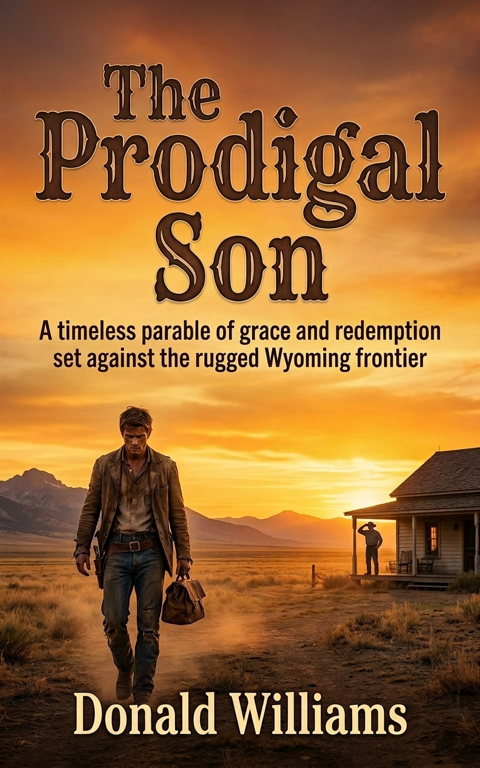
The Prodigal Son cover
The Prodigal Son
The parable relocated to the old west. A retelling by design, so the ending is not the surprise — the journey to it is.
Read chapter 1 free →
Resurrection A Novel cover
Resurrection A Novel
A former special operations soldier turned Episcopal priest is pulled into a national crisis built around a behavioural AI system. Thriller machinery with literary intentions. The weakest match here if it was Chekhov you came for.
Read chapter 1 free →

Questions readers actually ask

How accurate are the reading times on this page?

They are estimates, not measurements. They assume roughly 250 words a minute and no re-reading, and they are rounded generously. Dense translated prose and stories you stop to think about will run longer, sometimes by half again.

Which of these short stories can I legally read for free?

The older ones. Work first published in the United States before 1929 is in the public domain there, which covers Poe, Chopin, Gilman, Chekhov in older translations, Joyce and the 1927 Hemingway. Free, legitimate full texts of those live on volunteer archives such as Project Gutenberg and Standard Ebooks. The mid-century and modern stories are still in copyright, so read those in a collection from a library, bookshop or licensed ebook.

What is a good first short story if I never finish books?

"The Story of an Hour" by Kate Chopin. It is a handful of pages, the whole thing turns on a single piece of news, and it is free and public domain. If it lands, move to "The Lottery" next.

Is a ten-minute serial chapter the same thing as a short story?

No. A short story is a complete work with its own ending; a serial chapter is one movement of a longer book and is designed to leave you mid-tension. They fill a similar slot in a day, but only one of them gives you a finished thing to close.

Waiting on a library hold for one of the collections above? The Galatea comparison covers where short-form reading is worth paying for, and chapter one on NanoReads costs nothing while you wait.