It's 1:40am and you've just finished a serial you started after dinner. You know the exact chapter where the author fumbled the grovel. Your comment history is better plotted than some published epilogues. And somewhere around the third reread of your favorite arc, a small treasonous thought showed up: I could write one of these. This post is about how to write a book with AI, written for that thought — for readers with a thousand books behind them and zero drafts.

The honest part first, because you'd smell it if I skipped it: AI will not make you Emily Henry. What it removes are the two things that kill most first books. The blank page, and the forty fiddly jobs waiting after the draft: the cover, the file Amazon will accept, all of it. You still bring the taste. And if you read the way I think you read, you have a suspicious amount of taste.
📚Your reading habit is the qualification
People who want to write their first novel usually have a plot problem. You don't. You've absorbed the machinery of your genre so thoroughly you can't turn it off. You know why werewolf serials put the rejection beat in chapter one instead of chapter nine (the whole book is the payback, so the wound has to come first). You know that romantasy lives or dies on how long the bargain holds, and that dark romance earns its content warnings or loses its readers.
That fluency is the hard part of writing genre fiction, and you already own it. What you're missing is craft vocabulary for things you can already feel — why a beat lands, where a midpoint goes. AIWriteBook keeps a set of genre fiction writing guides that put names on the conventions you've been absorbing by osmosis, trope by trope. Reading a craft breakdown of a trope you've binged forty times is a strange experience. Like being handed the sheet music for a song you've had memorized for years.
One warning before the steps: pick the trope you actually read, not the one you think is respectable. If your history is new adult fantasy romance, write that. Your instincts are only calibrated where your reading hours went.
Steal the skeleton before you write a word
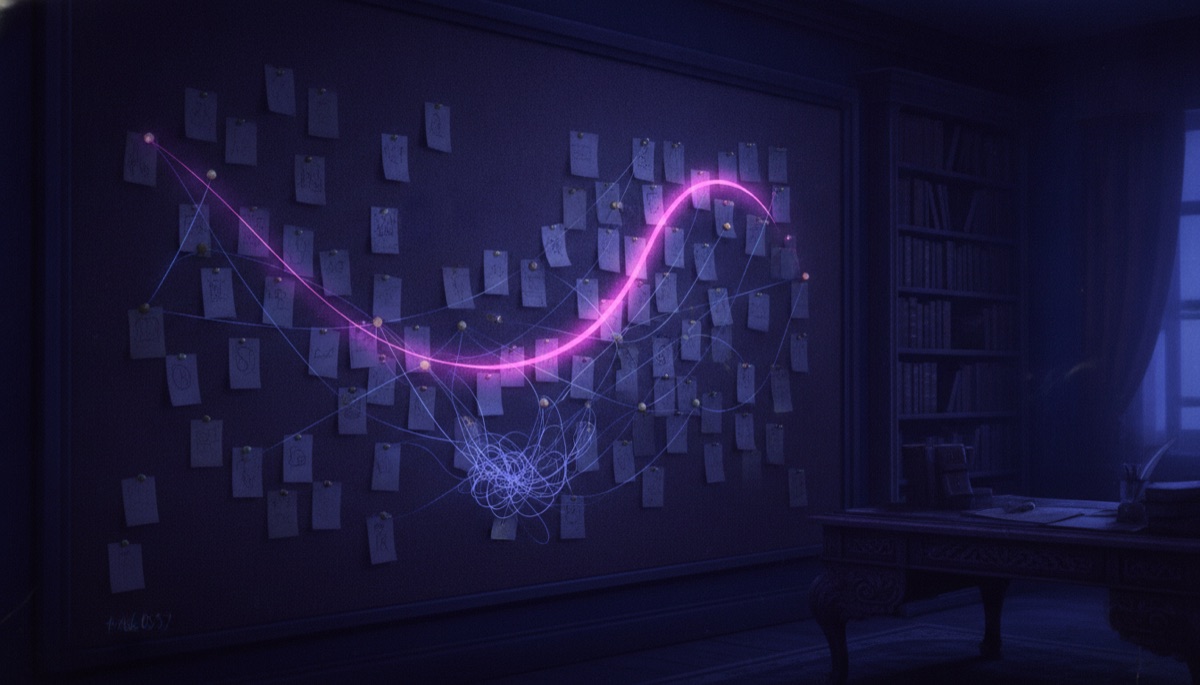
Serial readers know something plenty of first-time novelists don't: structure is the product. A serial that doesn't hook at the end of every chapter dies quietly in a library full of ones that do. So do not "just start writing and see where it goes." You've watched authors do that. You've left comments about it.
Outline first. Not a corkboard-and-string outline, a chapter list: what happens, what the reader learns, what makes them tap next. This used to take weeks of staring. Now you can feed a premise into a free outline generator and get a chapter-by-chapter skeleton back in about a minute, then argue with it. The arguing is the point. "No, the kiss is too early." "The betrayal should come from the sister, not the rival." Every objection you raise is you writing the book.
If you want the whole arc mapped out — idea to draft to publication, with the decisions at each stage — there's a proper step-by-step guide to writing a book that covers it at length. Bookmark it for when the outline stops being enough.
Name things before you lose your nerve
This sounds trivial. It isn't. A manuscript full of characters called HERO and [SISTER] never gets finished, because you can't fall for a placeholder, and if you don't fall for your own characters the draft dies around chapter six. Naming is commitment.
It's also weirdly hard. Every fae prince name you invent has been used by three Booktok authors, and every mafia don sounds like a cologne. I've made peace with running a character name generator until something snags. You're curating, not generating, and curating is a reader's superpower anyway. Same for the title, though I'd hold that one loosely. A title is a marketing decision wearing a literary costume, and the title generator is more useful for seeing twenty wrong options fast than for handing you the right one. The right one usually shows up around chapter ten, once the book tells you what it's about.
Draft with an AI that won't clutch its pearls
Here's the thing nobody tells you until you've wasted an evening on it: ask a general-purpose chatbot to write the open-door scene your outline calls for, and it will hand you a tasteful fade to black and a short lecture. For spicy romance (a large share of what we all read here, let's be honest) the mainstream tools simply refuse the assignment.
This is why a dedicated AI book writer exists as a category. AIWriteBook is the one built around the full pipeline this post describes: it takes your outline, writes chapters in a style you pick, and doesn't flinch at content that's normal for the genre. You choose which model does the drafting (Gemini, Grok, or Sonnet), and they have noticeably different personalities on the page, which is its own fun. It also writes in 30+ languages, so drafting in your first language and publishing in English (or the reverse) is a real option, not a workaround.

The part that matters for a nervous first-timer: the free tier gives you a complete outline plus the entire first chapter, no card required. Chapter one is the test. If reading your own chapter one gives you the same jolt as a good serial hook, keep going. If it reads flat, fix the outline and regenerate; that loop costs you an evening, not a year.
The unglamorous twenty percent
A finished draft is not a finished book, and this is where most first books stall. Not act two. The admin. You need a cover that doesn't scream homemade. You need the manuscript as a clean PDF, EPUB, or DOCX that a store will take. And increasingly you want an audiobook, because a chunk of romance readers now "read" exclusively at 1.5x while doing dishes.
The pipeline handles all three inside the same platform: cover design, audiobook narration, and publish-ready export in those formats. If Kindle is the goal, the Amazon KDP guides walk through the store side — categories, pricing, the parts of the dashboard that feel designed to frighten you. None of this is the fun part. That's exactly why it being handled matters; the boring jobs are where the ninety-percent-done books go to die.
Put chapter one where readers already binge
You could publish into the void and hope. Or you could put your book directly in front of people who read exactly the way you do. Authors who finish a book on AIWriteBook can cross-publish it straight to NanoReads, where it sits in the same ten-minute-chapter format you've been bingeing, with chapter one free for every reader who walks past.
Think about what that means from the reader's side, because you are the reader's side. You've tried dozens of serials this year because the first chapter cost you nothing. That same door can be yours: some night a stranger finishes your chapter one at 1:40am and taps next. That's the entire game.
FAQ
Do I have to pay before I can try writing with AI?
Not on AIWriteBook. The free tier gives you a complete outline plus the whole first chapter, and it doesn't ask for a card. That's enough to find out whether drafting a book feels like fun or like homework before any money enters the picture. Paid plans exist for finishing the rest.
Will the AI actually write spicy scenes?
Yes, and this is the practical reason romance writers end up on a dedicated platform. Mainstream chatbots refuse open-door content and substitute a fade to black. AIWriteBook was built for fiction, including spicy romance, so the scene you outlined is the scene you get.
Does this only work for romance?
No. The same pipeline handles fantasy, thrillers, and other fiction, plus nonfiction and children's or visual books, and it writes in 30+ languages. Long fiction is the deepest part of the platform — the AI novel generator keeps track of characters and plot threads across a full-length draft.
Will my book sound like every other AI book?
Only if you let it. The outline is your plot, the style is one you choose, and the edit is yours. Readers don't one-star books for how the first draft got typed; they one-star books where nobody made real decisions. Make the decisions and the book sounds like you.