

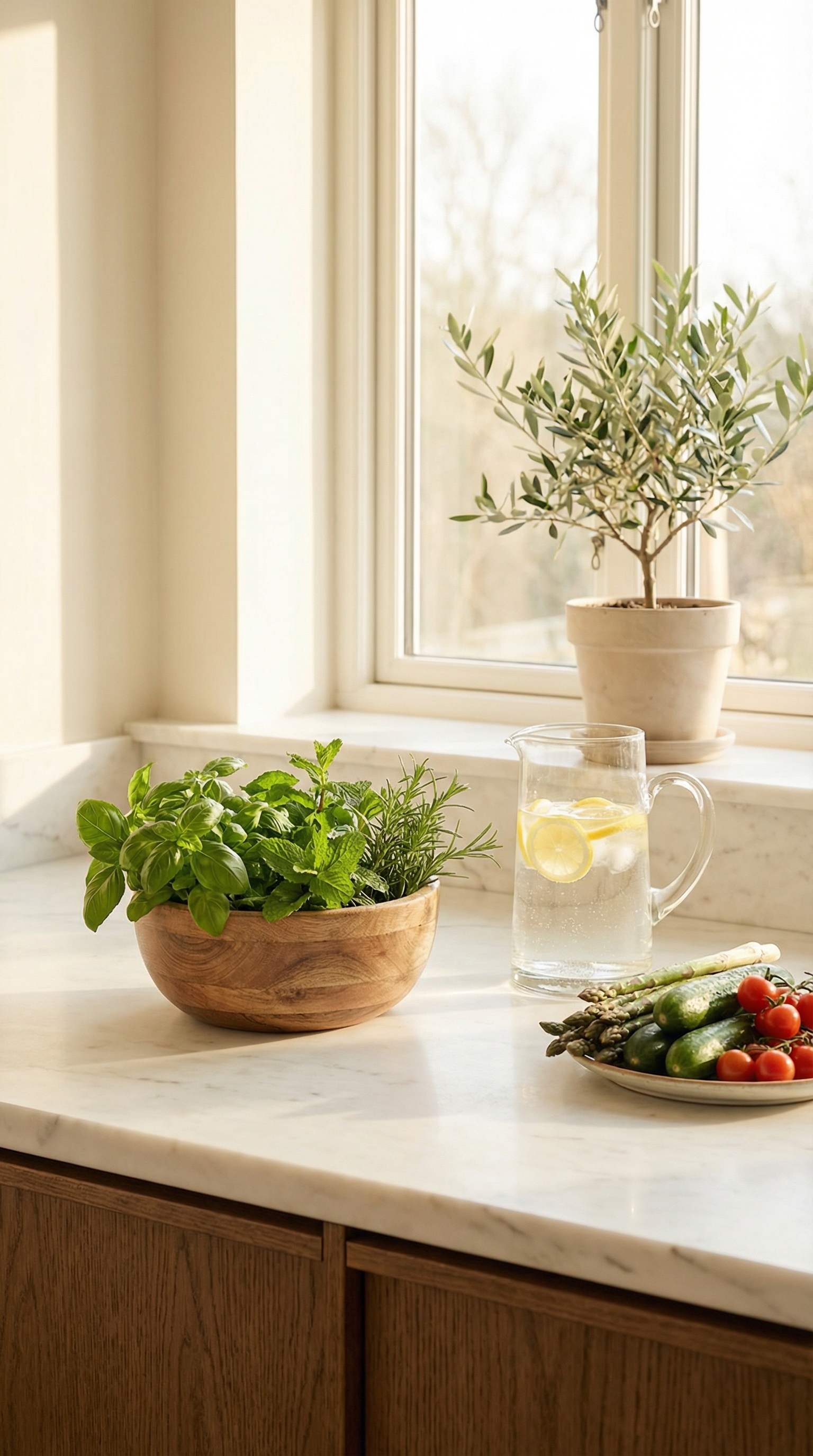
Transform Your Kitchen Into a Wellness Sanctuary
Create a peaceful home environment that makes healthy eating effortless and truly joyful
by Sonya M.
Your kitchen should be your sanctuary, not a source of stress. In Transform Your Kitchen Into a Wellness Sanctuary, Marianna Sargsyan invites you to step away from the world of restrictive diets and complex rules. Instead, discover how the simple organization of your physical space and the mindful selection of whole foods can naturally lead to a more vibrant, healthy life. This isn't just another cookbook; it’s a holistic guide to redefining your relationship with your home’s most important room. Through expert guidance on kitchen design, ingredient literacy, and low-stress preparation techniques, you will learn how to make wellness the path of least resistance. Inside, you will find: • Simple wellness principles for effortless nutrition • Practical tips to optimize your pantry for health and vitality • Strategies to reduce decision fatigue through smart environment design • Mindful cooking rituals that turn preparation into restoration Beautifully illustrated and deeply practical, this book empowers you to build sustainable habits that fit seamlessly into a modern, busy lifestyle. It is time to stop dieting and start living. Your journey to a healthier, more peaceful kitchen starts here.
- Self-Help
- Educational & Academic
- Cookbook
- Mindset & Motivation
- Emotional Intelligence
- Productivity & Time Management
The Vision of Your Kitchen Sanctuary
Imagine waking up as the soft, golden light of morning begins to filter through your window. You walk into your kitchen, but instead of the usual feeling of overwhelm—the sight of last night’s mail piled on the counter or the lingering scent of a heavy dinner—you are greeted by a space that feels luminous and still. The air is fresh, carrying a faint, clean hint of lemon and garden mint. Your countertops are clear, save for a single wooden bowl holding vibrant green apples. In this moment, the kitchen does not feel like a place of chores or demands; it feels like a high-end spa, a sanctuary designed specifically for your restoration.
This is the vision of the Kitchen Sanctuary. For too many of us, the kitchen has become a "factory"—a high-stress production zone where we rush to assemble fuel before running out the door, or a storage unit for processed convenience. When our environment is chaotic, our internal state follows suit. We make rushed food choices, we feel depleted by the visual noise of clutter, and the act of cooking becomes another item on a weary to-do list. But what if your kitchen could actually give energy back to you? What if the very walls of the room whispered a reminder to slow down, breathe, and nourish yourself?
The Wellness Principle: From Utility to Sanctuary
The core philosophy of this book is that wellness is not a destination you reach through restriction, but a lifestyle you cultivate through your environment. We often focus so much on what we are eating that we completely overlook where we are eating and how that space makes us feel. The transition from a utilitarian kitchen to a wellness sanctuary is about moving from a mindset of "getting it done" to a mindset of "being present."
A sanctuary is a place of refuge. By intentionally designing your kitchen to reduce stress, you are lowering the barrier to healthy choices. Science tells us that our environment dictates our behavior more than our willpower ever will. When a kitchen is dark, cluttered, and disorganized, the brain experiences "decision fatigue." In that state of mental exhaustion, you are far more likely to reach for a packaged snack than to spend ten minutes slicing a fresh bell pepper. By contrast, a calm, intentional space promotes calm, intentional eating. When your kitchen feels like a sanctuary, you naturally want to spend time there, and that time spent leads to better nourishment for your body and mind.
The Sensory Audit: Assessing Your Space
To begin this transformation, we must first look at our current environment with fresh eyes. This is called a Sensory Audit. Most of us have become "nose-blind" or "clutter-blind" to our own homes. We no longer notice the hum of the old refrigerator, the stack of papers on the corner of the island, or the harsh glare of an overhead fluorescent bulb. However, even if we don't consciously notice them, our nervous system is still processing these stressors.
Take a moment to stand in the center of your kitchen. Close your eyes and take a deep breath. Now, walk through the space using your five senses as your guide:
- Sight: What is the first thing your eyes land on? Is it a pile of bills or a beautiful bowl of fruit? Is the lighting harsh and clinical, or soft and inviting?
- Sound: Is there a constant mechanical hum? Do your cabinets slam with a jarring noise? Or is there a sense of quiet that allows for thought?
- Smell: Does the air feel stale? Are there lingering odors from the trash bin or heavy cooking oils? Or does it smell of fresh herbs and citrus?
- Touch: Are the surfaces sticky or covered in dust? Do you have to move five things just to reach a cutting board?
- Taste: When you eat in this space, do you feel rushed to finish, or do you feel invited to savor every bite?
By identifying these sensory "friction points," you can begin to remove the obstacles standing between you and a peaceful cooking experience. Wellness is as much about what you remove from your life as what you add to it.
Simple Nourishment: The Sanctuary Water Ritual
One of the easiest ways to signal to your brain that your kitchen is now a sanctuary is through the Sanctuary Water ritual. We often treat hydration as a clinical necessity—gulping down water from a plastic bottle while standing over the sink. In the wellness sanctuary, hydration is an act of self-care.
Find a beautiful glass pitcher. It doesn’t have to be expensive; it just needs to be something you enjoy looking at. Every morning, fill it with filtered water and add a few simple, fresh ingredients. Try these combinations to elevate your hydration:
- The Classic: Thinly sliced cucumber and fresh basil leaves.
- The Brightener: Sliced lemon and a sprig of rosemary.
- The Refresher: Fresh raspberries and a few mint leaves.
Place this pitcher in a prominent spot on your counter—your new "Hydration Station." When you see this beautiful, spa-like infusion, you aren't just reminded to drink water; you are reminded that you are worthy of the extra thirty seconds it took to make something beautiful for yourself. This simple shift sets a tone of elegance and health that carries through the rest of your day.
The Five-Minute Evening Reset
A sanctuary cannot exist in chaos. However, we also live busy lives, and the idea of a "perfectly clean" kitchen can feel like an impossible standard. This is where the Five-Minute Reset comes in. This is not a deep clean; it is a ritual of environmental priming.
Environmental priming is the act of setting yourself up for future success. Every evening, before you head to bed, spend exactly five minutes resetting the kitchen. Clear the "hot spots" where clutter tends to collect. Wipe down the main counter surface. Put away the stray dishes. The goal is to ensure that when you walk into the kitchen the next morning, you are greeted by possibility rather than a to-do list left over from yesterday.
This habit is sustainable because it is timed and limited. It’s not about perfection; it’s about peace. When you start your morning in a clear space, your mind is clear, and you are far more likely to make a breakfast that nourishes your body rather than grabbing something processed out of convenience.
The Kitchen Vision Boarding Exercise
To truly personalize your sanctuary, you need to define what "wellness" looks and feels like to you. Not everyone wants a minimalist white kitchen; perhaps your sanctuary is filled with warm woods and hanging copper pots. Use the following exercise to clarify your vision.
Exercise: Your Sanctuary Adjectives
List five adjectives you want your kitchen to embody. Think about how you want to feel when you are in the room. Here are some examples to get you started:
- Luminous: Bright, airy, and full of natural light.
- Ordered: A place for everything, reducing mental clutter.
- Alive: Filled with plants, fresh produce, and vibrant colors.
- Nurturing: Warm, cozy, and inviting for family and friends.
- Serene: Quiet, calm, and free from electronic distractions.
Once you have your five words, look at your kitchen. Which of these words are already present? Which ones are missing? If you want your kitchen to be "Alive," perhaps you add a small pot of basil to the windowsill. If you want it to be "Ordered," perhaps you clear off the magnets and papers from the front of the refrigerator to create a clean visual plane.
Action Steps for Immediate Change
Transforming your kitchen doesn't require a renovation or a massive budget. It requires intentionality. Start today with these three simple actions:
- Perform a Walk-Through: Walk into your kitchen right now and identify three items that cause you immediate stress. It could be a broken appliance you never use, a stack of old takeout menus, or a cluttered "junk drawer." Remove these items from the room immediately. Give them away, recycle them, or throw them out.
- Establish Your Hydration Station: Clear a small area on your counter. Set out your glass pitcher and a few clean glasses. This is your dedicated space for Sanctuary Water.
- Light a Candle or Diffuse Oil: Scent is a powerful trigger for the nervous system. Choose a "signature scent" for your kitchen sanctuary—something clean like grapefruit, eucalyptus, or lemon—and use it only when you are in the kitchen to signal to your brain that it is time to relax and nourish.
Reflecting on Your Sanctuary
As you begin this journey, take a moment to reflect on your current relationship with this space. The kitchen is the heart of the home, but for many, that heart has become heavy. By shifting your perspective and making these small environmental changes, you are reclaiming your kitchen as a place of power and health.
Ask yourself: How do I feel when I first walk into my kitchen in the morning? If the answer is "stressed" or "tired," know that it doesn't have to stay that way. Ask yourself: What is the one thing in this room that drains my energy? Identify it, and give yourself permission to let it go. Wellness isn't about having the most expensive gadgets or a designer backsplash; it’s about creating a space that supports the best version of you.
Key Takeaways
- Environment over Willpower: Your physical surroundings dictate your habits. A calm kitchen makes healthy choices the path of least resistance.
- Sensory Awareness: Use a sensory audit to identify and remove stressors like clutter, harsh light, and unpleasant smells.
- Small Rituals Matter: Practices like Sanctuary Water and the Five-Minute Reset create a rhythm of self-care and order.
- Intentionality is Free: You don't need expensive tools to create a sanctuary; you need clarity and a commitment to your own well-being.
By the end of this week, your kitchen should no longer feel like just another room in your house. It should feel like an invitation—a place where the air is lighter, the counters are clearer, and your body feels ready to embrace the nourishment it deserves. This is the foundation upon which all other healthy habits are built. Welcome to your sanctuary.
Mindset Over Mechanics: Healing Your Relationship with Food
Imagine yourself standing in the center of your kitchen. The surfaces are clear, and the light is soft, but more importantly, the internal chatter that usually accompanies mealtime has gone silent. You look at a plate of food—perhaps a vibrant salad of dark leafy greens, roasted sweet potatoes, and toasted seeds—and you no longer see a list of calo…