

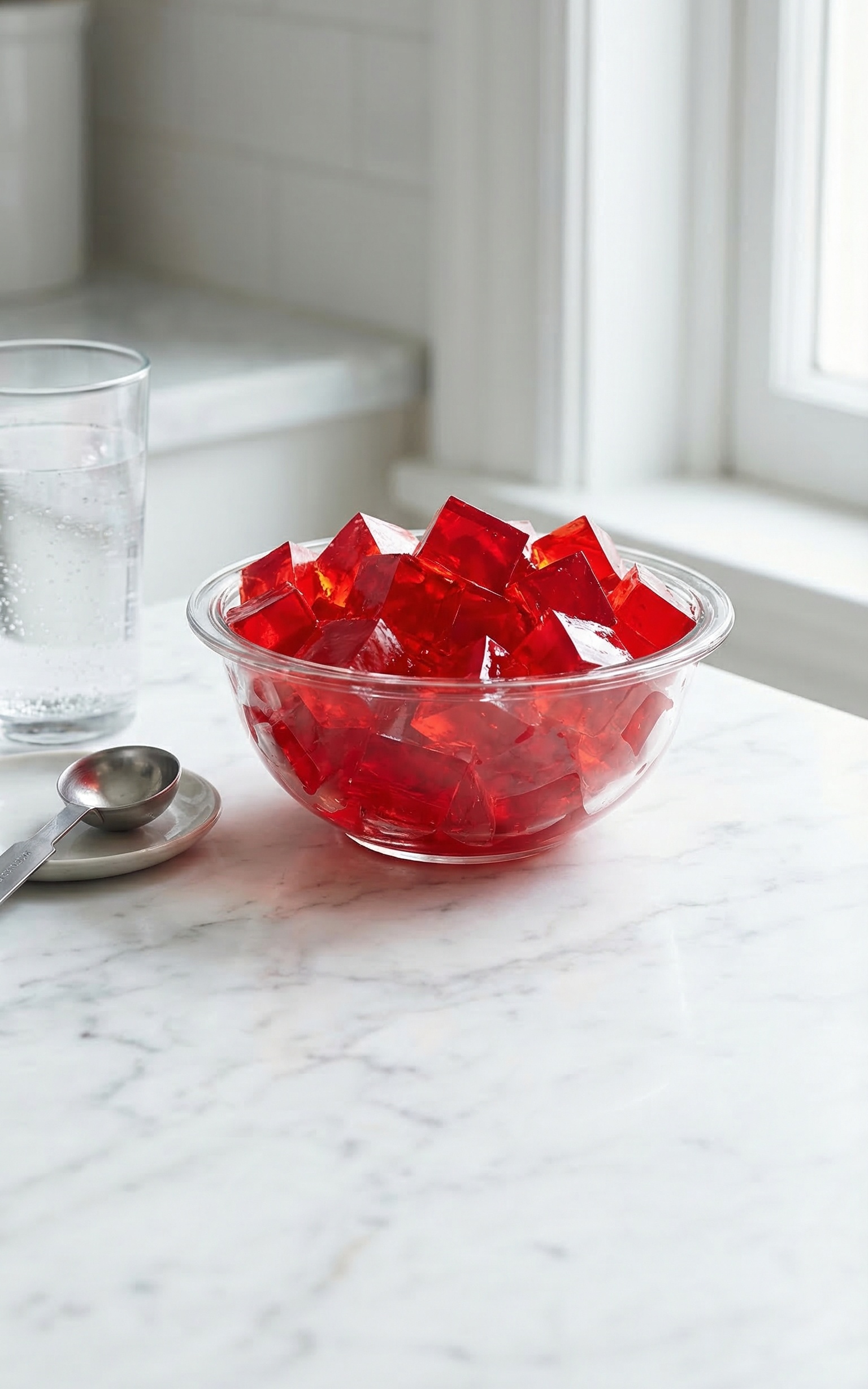
Gelatin for weight loss
Discover the simple gelatin trick to suppress appetite, stay full, and lose weight naturally
by Sonya M.
Are you tired of the constant battle with hunger? What if the secret to sustainable weight loss wasn't a restrictive diet, but a simple, science-backed 'trick' that takes less than a minute? In Gelatin for Weight Loss, Sonya M. reveals the transformative power of a common pantry staple. By understanding the biological mechanisms of physical satiety and hormonal appetite control, you can finally take charge of your cravings. This isn't a fad; it's a strategic biohack that uses gelatin to trigger your body’s natural 'full' signals, leading to a 20% reduction in calorie intake without the pain of deprivation. Moving beyond the science, this comprehensive guide provides a practical protocol for timing, dosing, and mixing. Whether you are looking to stop late-night snacking, manage emotional eating, or simply improve your gut and joint health, you will find the tools you need here. From savory soups to delicious sugar-free treats, these recipes make the process enjoyable and easy to maintain. Stop fighting your biology and start working with it. Embark on a 30-day challenge that will redefine your relationship with food and help you achieve the healthy body you deserve.
- Self-Help
- Wellness & Fitness
- Cookbook
- Personal Growth & Habits
- Life Transitions
- Quick & Easy Meals
The Fullness Factor: How Gelatin Mimics a Large Meal
Imagine sitting down to dinner and, for the first time in years, feeling like you genuinely don't need to finish everything on your plate. Not because you're white-knuckling it through willpower, and not because you've eaten a massive snack beforehand. Instead, something subtle has shifted in your gut. There's a quiet heaviness there, a sense of fullness that arrived before the first bite of your actual meal. That's the gelatin trick at work, and understanding the biology behind it is what separates this strategy from every other appetite-control gimmick you've tried before.
This chapter is about one core idea: your brain doesn't need calories to feel full. It needs volume. And gelatin, when properly prepared and timed, delivers that volume in a way that is low-calorie, practical, and backed by real physiological science. Let's break down exactly how this works from the inside out.
The Biological Trigger: Your Stomach Has a Stretch Sensor
Your stomach is not just a passive storage bag. It is an intelligent, mechanically sensitive organ lined with specialized nerve endings called mechanoreceptors, or more specifically, gastric stretch receptors. These receptors function like pressure sensors embedded in the stomach wall, and their entire job is to monitor how much space is being occupied at any given moment.
When your stomach begins to fill, whether with food, liquid, or a thick gel-like substance, these stretch receptors fire signals upward through the vagus nerve, heading directly toward the brain. The hypothalamus, which is the region of the brain responsible for regulating hunger and appetite, receives those signals and begins dialing down the urgency to eat. The remarkable thing here is that this process is largely independent of caloric content. Research confirms that gastric stretch receptors respond to volume, not nutrition. Your brain doesn't care, at least initially, whether your stomach is full of a three-course meal or a glass of thickened water. The stretch signal is the stretch signal.
This is the core biological mechanism that makes the gelatin trick legitimate. When you consume a tablespoon of unflavored gelatin mixed into warm liquid, the gelatin doesn't just sit there like water would. It begins to form a viscous, gel-like mass. As this gel settles in your stomach, it physically occupies space and activates those stretch receptors before you've consumed a single calorie of your actual meal. The result is a pre-meal reduction in hunger that is measurable, real, and rooted in basic human physiology.
Think of it this way: your stomach is sending a fax to your brain, and the message reads, "We're filling up here — slow down." Gelatin just happens to send that fax early, giving you a head start on feeling satisfied before dinner even begins.
Clinical Evidence: Why Viscosity Is the Key
Not all liquids behave the same way in your digestive system, and this distinction is critical to understanding why gelatin works better than simply drinking a glass of water before a meal. The concept at play here is gastric emptying rate — the speed at which the contents of your stomach move into the small intestine.
Thin, watery liquids empty from the stomach very quickly. If you drink a plain glass of water before dinner, your stomach processes and moves that liquid out within 10 to 20 minutes. Any stretch-receptor signal it generated is already fading by the time you sit down to eat. Thick, viscous substances, on the other hand, take significantly longer to empty. Studies examining gastric emptying rates consistently show that increased viscosity leads to a prolonged feeling of fullness because the substance stays in the stomach longer, maintaining that stretch-receptor stimulation over a more extended window of time.
Gelatin, when dissolved in warm water and allowed to cool slightly, creates exactly this kind of thickened, viscous consistency. It doesn't pass through your stomach in minutes the way plain water does. Instead, it lingers, continuing to occupy space and sustain that satiety signal during the critical window when you're actually eating your meal. This is a meaningful difference in practical terms. The fullness you feel isn't a fleeting illusion — it has a physiological foundation that persists through the first portion of your meal, which is precisely when most overeating decisions are made.
It's also worth noting that the satiety effect from gelatin is time-limited. Research suggests the fullness effect typically lasts around 60 to 90 minutes, which means the timing of your pre-meal dose matters considerably. This isn't a weakness of the approach — it's simply something to account for in your protocol, which is exactly what the next section addresses.
The Pre-Meal Protocol: Timing, Dosing, and Preparation
The gelatin trick only works if you execute it correctly. Vague instructions like "eat some gelatin before meals" won't get you results. What follows is the specific, evidence-informed protocol that gives this strategy its effectiveness.
The Dosage
The standard dose is 1 tablespoon (approximately 9 to 10 grams) of unflavored gelatin powder mixed into 8 to 10 ounces of warm liquid. This amount provides roughly 25 calories and around 6 grams of protein, making it a low-cost caloric investment for the satiety return it generates. More is not necessarily better here. Doubling the dose doesn't double the effect and may make the liquid uncomfortably thick or difficult to consume quickly.
The Liquid
Warm liquid is non-negotiable. Gelatin requires heat to properly dissolve — ideally water or broth between 130°F and 170°F. Cold liquid will cause the gelatin to clump and bloom unevenly, leaving you with an unpleasant, lumpy mixture that doesn't disperse correctly in your stomach. Warm water works perfectly, but warm broth (especially bone broth) can add a pleasant savory flavor and a small boost of additional minerals, which many people find makes the pre-meal routine more enjoyable and sustainable.
The Mixing Method
Here's a practical tip that makes a genuine difference: use a handheld milk frother to mix your gelatin into the liquid. Stirring with a spoon often leaves clumps settled at the bottom of the glass, particularly if the water isn't quite hot enough. A milk frother disperses the gelatin powder quickly and evenly throughout the liquid in about 15 to 20 seconds, creating a smooth, consistent texture. This small tool costs under $10 and removes one of the most common preparation frustrations that causes people to abandon the routine early.
The Timing
Consume your gelatin mixture 20 to 30 minutes before your largest meal of the day. This window is carefully chosen for two reasons. First, it gives the gelatin time to form its gel-like consistency in the stomach and begin activating stretch receptors before you start eating. Second, it keeps you within the 60 to 90-minute satiety window, ensuring the fullness effect is still fully active when you sit down to eat. If you consume the gelatin too early — say, 45 to 60 minutes before dinner — you risk moving past the peak satiety window and losing much of the benefit.
Most people find it easiest to prepare their gelatin mixture in the kitchen while they're starting dinner preparations. Mix it, drink it, and by the time the meal is on the table, the timing works out almost perfectly.
Expected Outcomes: What You Should Actually Feel
Managing expectations honestly is important here, because the gelatin trick doesn't produce a dramatic, immediate sensation. It's subtle — and that subtlety is actually a feature, not a bug.
Within about 15 minutes of consuming your gelatin mixture, most people notice what can best be described as a quiet heaviness in the gut. It's not the uncomfortable fullness of having eaten too much. It's more like a gentle awareness that the stomach is occupied — a dampening of that frantic, urgent hunger that often drives overeating at dinner. The desperate "I need to eat everything right now" feeling softens into something more manageable.
In practical terms, this means you'll likely serve yourself a smaller portion instinctively, eat more slowly, and stop eating sooner without having to consciously fight your appetite. User reports and modest clinical data suggest that consistent use of this protocol leads to an average reduction in meal-time calorie intake of around 15 to 20 percent, which, compounded over weeks and months, translates into meaningful weight management results. Realistic expectations look like 3 pounds in 30 days for many consistent users — not dramatic, but genuinely sustainable.
It's equally important to be clear about what gelatin does not do. It does not burn fat, boost your metabolism, or replace a balanced diet. The weight management benefit comes entirely from the calorie deficit created by eating less at meals. Gelatin is a tool for appetite management, and a legitimately effective one at that — but it works in service of a calorie deficit, not instead of one.
Common Pitfalls: Why It Sometimes Doesn't Work
People try the gelatin trick, feel disappointed, and conclude that it doesn't work for them. In most cases, the problem isn't the gelatin — it's the preparation or the timing. Here are the most frequent mistakes to avoid.
- Using water that is too cold. This is the single most common error. Cold water prevents gelatin from fully blooming and dissolving, resulting in a clumpy, inconsistent mixture that doesn't form a proper gel in the stomach. Always use warm to hot liquid.
- Waiting too long to eat after taking the gelatin. If more than 40 to 45 minutes pass between your gelatin dose and your meal, the satiety window begins to close. You'll lose the benefit and may actually feel hungry again by the time you sit down, which can lead to frustration and abandonment of the protocol.
- Using flavored gelatin products with added sugar. Many commercial gelatin products are loaded with added sugars and artificial ingredients that undermine the calorie-control goal entirely. Stick with plain, unflavored gelatin powder from a quality source.
- Expecting too much, too fast. The gelatin trick is a gradual appetite management tool, not a dramatic intervention. Give the protocol at least two weeks of consistent use before evaluating whether it's working for you.
- Skipping the frother and stirring by hand. Inadequate mixing creates an unpleasant texture that makes the routine feel like a chore. A smooth, well-mixed gelatin drink is far easier to consume consistently over weeks and months.
Tracking Your Progress: The Hunger Scale
One of the most useful tools for evaluating whether the gelatin protocol is working for you is a simple self-assessment method called the 1-10 Hunger Scale. Rather than relying solely on the bathroom scale — which can fluctuate for many reasons unrelated to appetite — this approach gives you direct, real-time data about the tool's effectiveness.
Here's how to use it:
- Immediately before consuming your gelatin mixture, pause and check in with your hunger. Rate it on a scale from 1 (not hungry at all) to 10 (ravenously hungry). Write this number down.
- After you've consumed the gelatin, set a timer for 20 minutes. When the timer goes off, rate your hunger again on the same 1-10 scale.
- Track both numbers in a simple notebook or notes app over the course of a week.
Most people using this correctly will notice a consistent drop of 2 to 3 points on the hunger scale between their pre-gelatin rating and their 20-minute post-gelatin rating. If you're starting dinner at a 7 or 8 on the hunger scale and arriving at the table at a 4 or 5, you are far less likely to overeat. That data, tracked consistently over time, becomes motivating evidence that the protocol is doing exactly what it's supposed to do — even on days when the scale hasn't moved.
The hunger scale also helps you identify patterns. You might notice that your pre-gelatin hunger spikes on days when lunch was light, or that the satiety effect is stronger when you use broth instead of plain water. These insights let you fine-tune the protocol to your personal physiology rather than following a one-size-fits-all approach.
A Simple Start Is a Sustainable Start
The gelatin trick succeeds precisely because it works with your body's existing biology rather than against it. You are not suppressing hunger through sheer willpower. You are not dramatically restricting calories in a way that leaves you depleted and miserable. You are simply sending your brain an early fullness signal through a low-calorie, easy-to-prepare tool that has been used in various forms for centuries.
The science is clear, the protocol is specific, and the expectations are honest. One tablespoon of unflavored gelatin, dissolved in warm liquid, consumed 20 to 30 minutes before your largest meal, will not transform your body overnight. But practiced consistently, tracked thoughtfully, and combined with balanced eating habits, it becomes a genuinely useful lever in your overall weight management strategy — one that costs almost nothing, takes less than two minutes to prepare, and doesn't require you to be hungry all the time.
That's a tool worth understanding. And now that you know how the physical fullness mechanism works, the next logical question is: what else is gelatin doing inside your body to support appetite control? Because volume expansion is only half the story. The hormonal side of this equation is just as compelling — and that's exactly where we're headed next.
Hormonal Harmony: GLP-1 and the Protein Power of Gelatin
So now you know the physical side of the equation. Gelatin creates a gel-like mass in your stomach, activates stretch receptors, and sends an early "we're filling up" signal to your brain before your meal even begins. That mechanism is real, it's measurable, and it works. But here's the thing: the physical fullness from stomach volume is only one h…